How Does the Internal Aerodynamics of the Wall-mounted Centrifugal Fan Optimize Airflow Under High-Resistance Conditions?
The core performance of a Wall-mounted Centrifugal Fan is dictated by its impeller geometry and the volute casing design, which work in tandem to manage the airflow transition from axial intake to radial discharge.
-
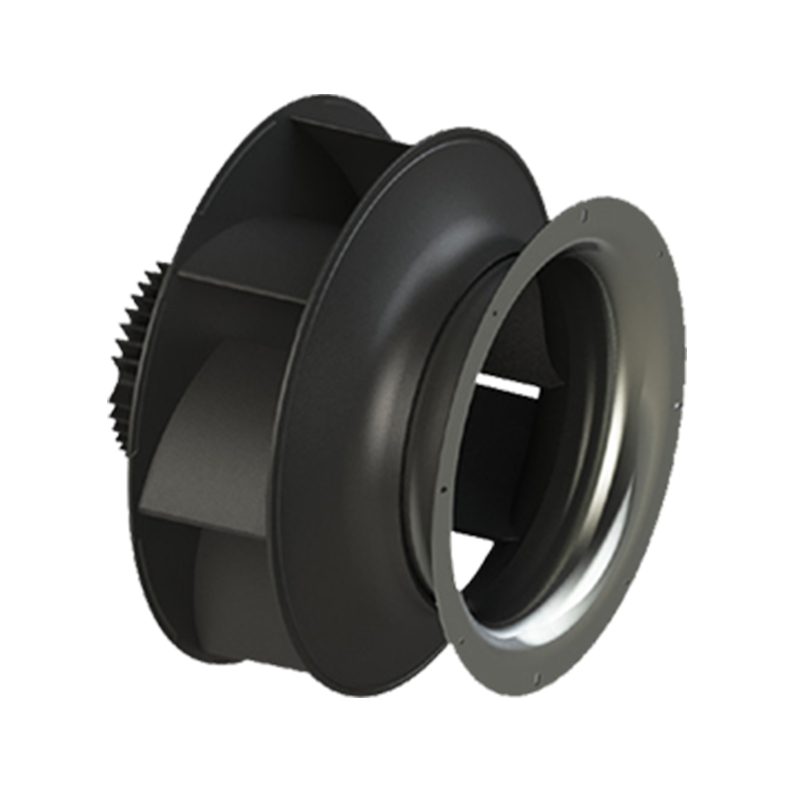
Centrifugal Force and Pressure Development: As the motor spins the impeller of the Wall-mounted Centrifugal Fan, air enters the center of the fan wheel and is flung outward by centrifugal force. This movement creates a low-pressure zone at the inlet, drawing in more air, while building high static pressure at the perimeter. This "pressure-heavy" airflow is the defining characteristic of centrifugal technology. It allows the fan to overcome the "system effect" resistance often found in wall-mounted applications where the air must immediately navigate a 90-degree turn or pass through a protective weather cowl. The air-tight seal between the inlet cone and the rotating impeller is a critical engineering tolerance; any leakage here results in recirculation, which significantly degrades the efficiency of the Wall-mounted Centrifugal Fan.
-
Impeller Blade Configuration (Backward vs. Forward): Engineering a Wall-mounted Centrifugal Fan involves choosing the right blade curvature for the specific application. Backward-curved impellers are favored for their high efficiency and non-overloading power characteristics. They are ideal for clean air ventilation where energy consumption is a primary concern. Conversely, forward-curved blades are used when the unit must remain compact while delivering a high volume of air at lower speeds. In wall-mounted scenarios, space is often a luxury, so forward-curved designs allow for a smaller footprint. However, modern high-performance units are increasingly adopting "mixed-flow" or optimized backward-curved plastic impellers to reduce the weight load on the wall mounting points while maintaining the high pressure required for localized exhaust.
-
Vibration Mitigation and Acoustic Engineering: Because a Wall-mounted Centrifugal Fan is directly attached to the structure of a building, vibration management is paramount. If the fan is not perfectly balanced, the mechanical oscillations can resonate through the wall, creating intrusive structural noise. Manufacturers utilize dynamic balancing at the G2.5 or G6.3 ISO standards to ensure smooth rotation. Furthermore, the housing of a quality Wall-mounted Centrifugal Fan often includes internal acoustic lining or is shaped to minimize air turbulence at the discharge point. Reducing "swirl" at the exit not only lowers the decibel level but also ensures that the air is expelled cleanly away from the building's intake vents, preventing the short-circuiting of stale air back into the premises.
What Structural and Electrical Integration Standards Define a High-Performance Wall-mounted Centrifugal Fan?
The physical mounting and electrical control of a Wall-mounted Centrifugal Fan must be engineered to withstand both the mechanical stresses of operation and the environmental conditions of the installation site.
-
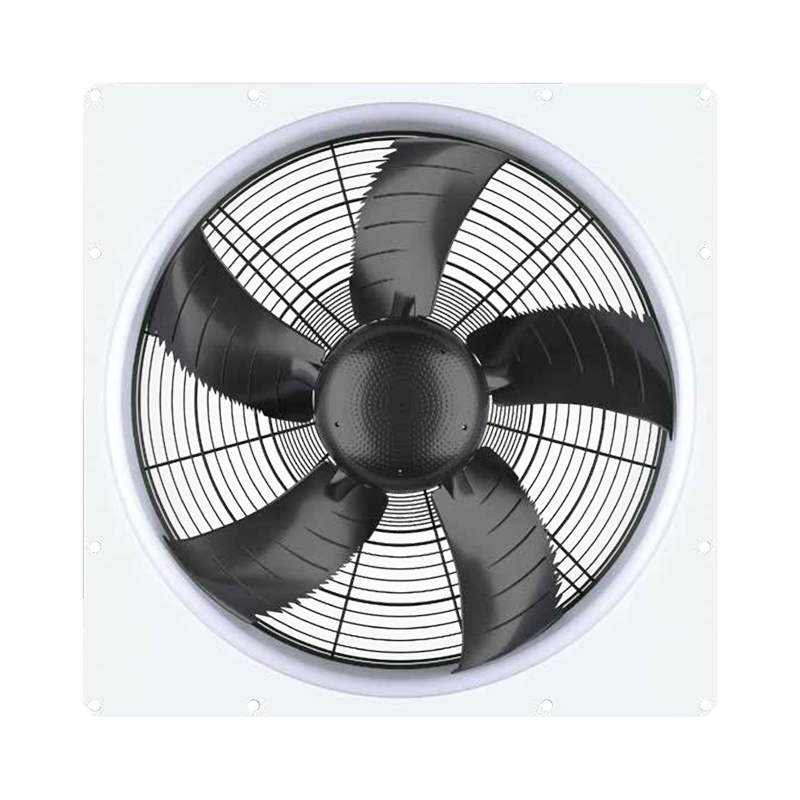
Robust Mounting Plates and Casing Durability: The "Wall-mounted" prefix implies that the entire weight of the motor, impeller, and housing is supported by a vertical plane. A professional-grade Wall-mounted Centrifugal Fan features a heavy-duty mounting plate with pre-drilled, reinforced holes to distribute the weight across multiple fasteners. To prevent rust in outdoor installations, the casing is often finished with an epoxy powder coating or made from stainless steel. In industrial settings where chemical vapors are present, the Wall-mounted Centrifugal Fan may utilize explosion-proof motors and spark-resistant aluminum impellers. The transition from the fan discharge to the wall penetration must be sealed with high-grade gaskets to prevent moisture ingress into the wall cavity, which could lead to structural rot or mold growth.
-
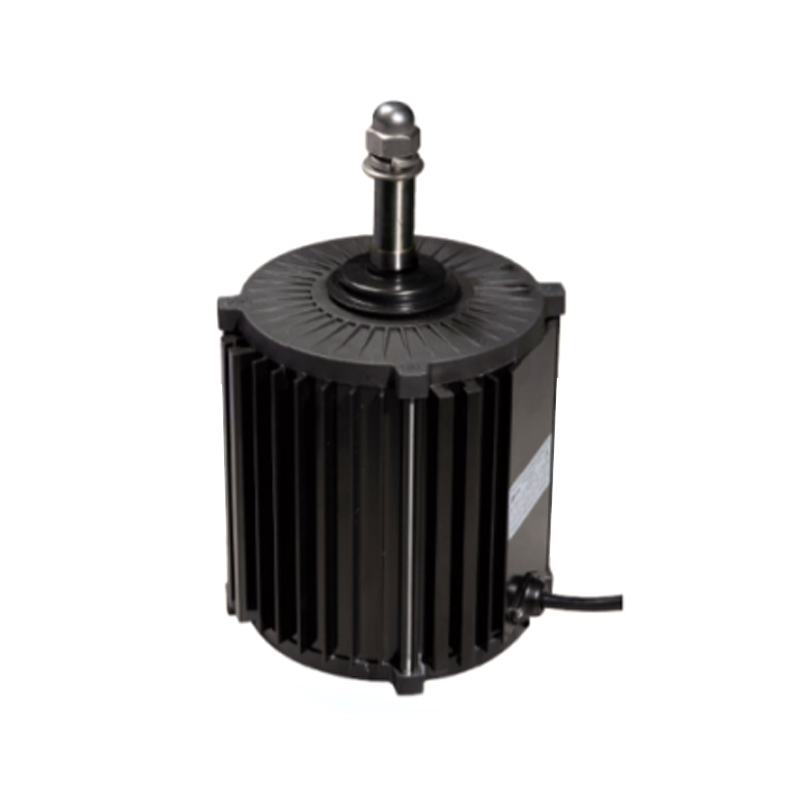
Motor Technology and Thermal Management: Most modern Wall-mounted Centrifugal Fans utilize external rotor motors, where the impeller is mounted directly onto the rotating outer shell of the motor. This design is exceptionally compact and allows for superior cooling, as the moving air passes directly over the motor surface. For applications requiring precise airflow control, Electronically Commutated (EC) motors are the gold standard. An EC-driven Wall-mounted Centrifugal Fan can adjust its speed based on real-time sensors (such as CO2 or humidity levels), drastically reducing energy waste. Internal thermal protection, such as bimetallic switches or thermistors, is integrated into the windings to prevent motor burnout in the event of a blocked impeller or electrical surge.
-
Environmental Protection and Maintenance Access: A Wall-mounted Centrifugal Fan located on an exterior wall must have an Ingress Protection (IP) rating of at least IP44 or IP55 to guard against rain and dust. The electrical connection box is typically mounted on the exterior of the casing for easy access but must be fully gasketed. From a maintenance perspective, high-quality units are designed with a "swing-out" or removable motor-impeller assembly. This allows technicians to clean the blades and inspect the bearings without completely dismantling the fan from the wall. Regular cleaning is essential because dust accumulation on centrifugal blades can lead to imbalance, which eventually causes bearing failure and increased noise.
How Does the Installation Strategy Affect the Overall Efficiency and Service Life of a Wall-mounted Centrifugal Fan?
The effectiveness of a Wall-mounted Centrifugal Fan is not solely dependent on the unit itself but also on how it is integrated into the building's ventilation strategy.
-
Inlet and Outlet Positioning for Maximum Lift: To achieve the rated performance of a Wall-mounted Centrifugal Fan, the air intake must be unobstructed. If the fan is placed too close to a ceiling or a corner, the resulting "starved" intake will cause turbulence and a sharp drop in static pressure. Ideally, there should be a straight section of "equivalent diameter" before the air enters the eye of the centrifugal impeller. On the discharge side, if the Wall-mounted Centrifugal Fan is exhausting directly into the atmosphere, a back-draft damper is essential. This prevents cold air or pests from entering the building when the fan is not in operation. The angle of the discharge cowl also plays a role; it should be directed downward to prevent rain from entering the centrifugal housing during heavy storms.
-
Electrical Synchronization and Control Logic: Integrating a Wall-mounted Centrifugal Fan into a Building Management System (BMS) requires compatible control signals, typically 0-10V or PWM. In multi-fan installations, synchronization is key to preventing "pressure wars" between different units. If one Wall-mounted Centrifugal Fan is significantly more powerful than another in the same zone, it can create a localized vacuum that hinders the performance of the smaller units. Properly calibrated speed controllers ensure that the fan operates at the "Best Efficiency Point" (BEP) on its performance curve. Running a centrifugal fan too far to the left of its curve can lead to "surge," a condition where the air periodically stalls and reverses, causing high vibration and potential mechanical damage.
-
Long-term Reliability through Bearing Selection: The bearings are the primary wear component in any Wall-mounted Centrifugal Fan. High-end manufacturers specify sealed-for-life ball bearings with high-temperature grease to ensure maintenance-free operation for up to 40,000 or 50,000 hours. In vertical wall-mounted orientations, the bearings must be able to handle both radial and some axial thrust loads. Using low-quality sleeve bearings in a Wall-mounted Centrifugal Fan is often a recipe for early failure, especially if the fan is used in continuous 24/7 cycles. By selecting units with high-quality SKF or NSK bearings and ensuring the impeller remains balanced through regular inspections, the operational life of the ventilation system is greatly extended, providing consistent air quality without the need for frequent replacements.



 English
 中文简体
中文简体 русский
 Español

 OEM/ODM HVAC Axial Fan Manufacturers