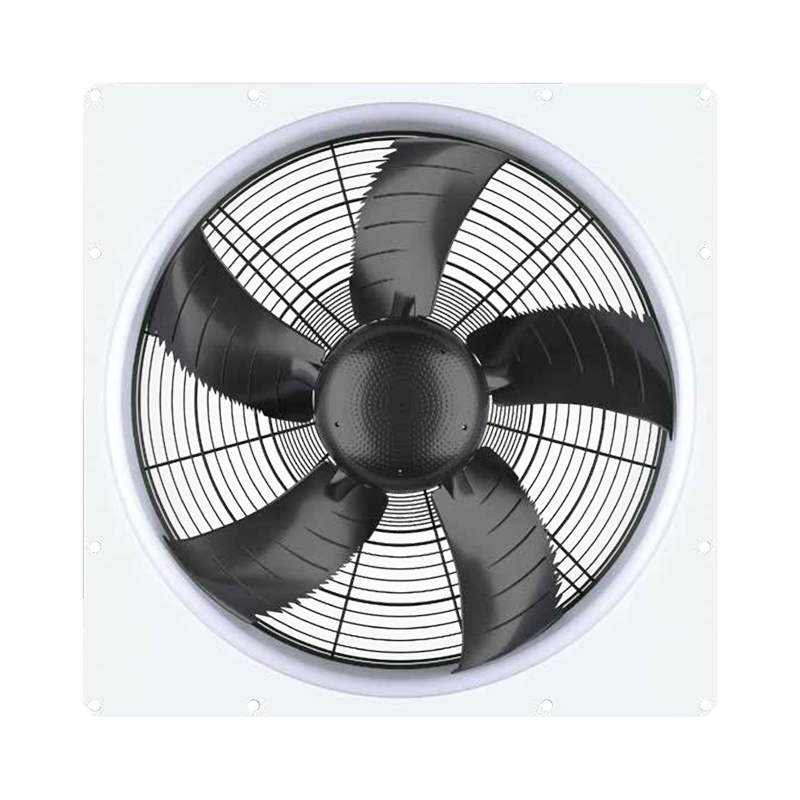
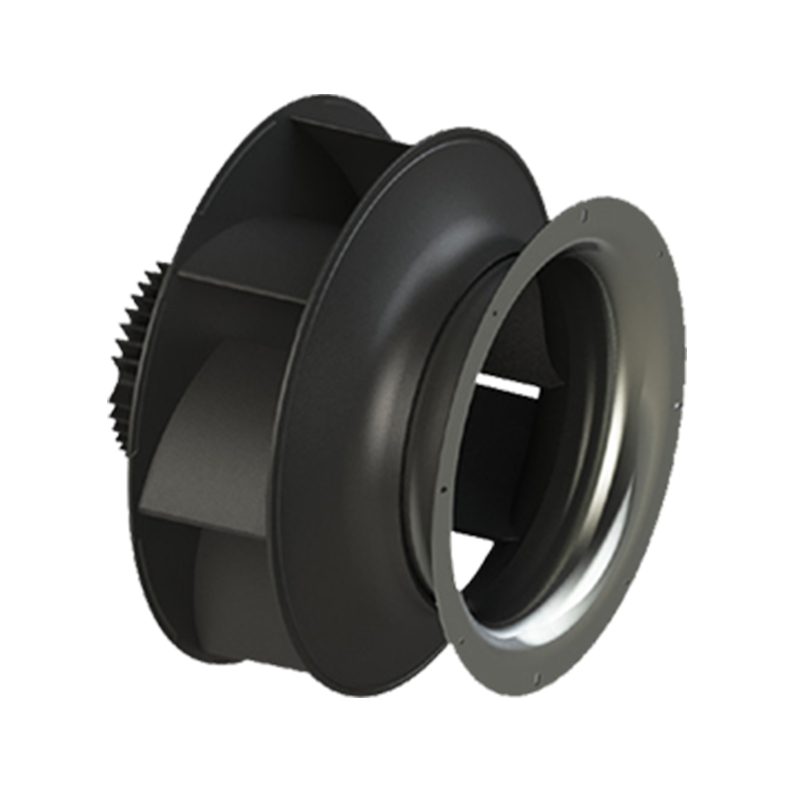
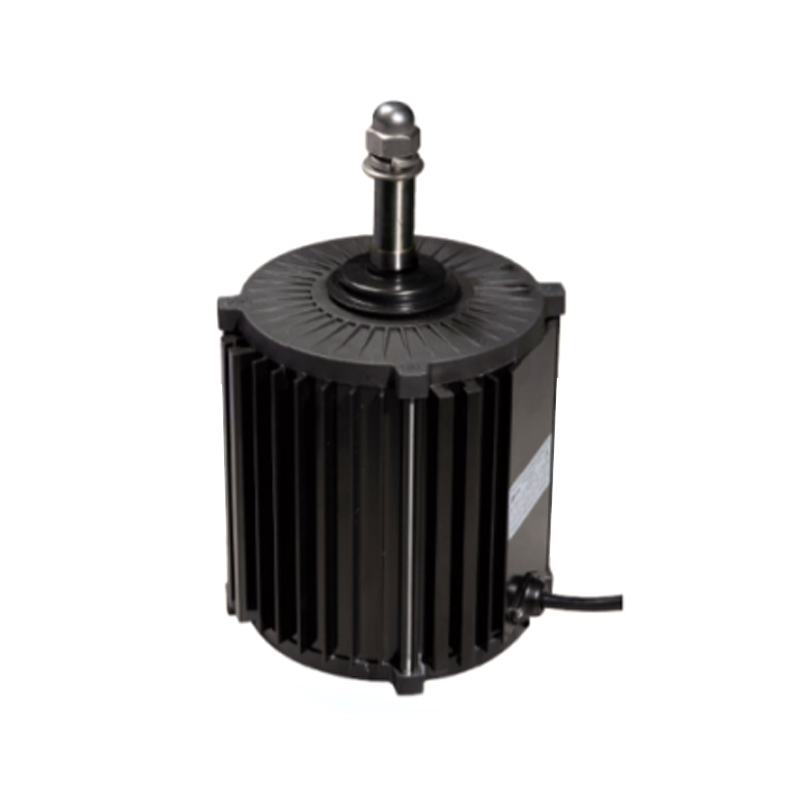
The mechanical efficiency of an "air source heat pump" is fundamentally dependent on the performance of its Heat Pump Fan. This critical component serves as the primary driver for moving large volumes of ambient air across the evaporator coils, facilitating the extraction or rejection of thermal energy. A high-performance Heat Pump Fan is not merely a rotating blade; it is a sophisticated assembly involving "aerodynamic blade profiles," "high-torque motors," and "intelligent control systems." By optimizing the "airflow velocity" and ensuring "laminar flow" across the heat exchanger fins, the Heat Pump Fan directly dictates the Coefficient of Performance (COP) of the entire heating or cooling system. Modern engineering focuses on minimizing "vortex shedding" and "turbulent kinetic energy" at the blade tips, which are the primary sources of both energy loss and acoustic disturbance. Consequently, the integration of a precision-engineered Heat Pump Fan is essential for maintaining operational stability in diverse climatic conditions, ranging from sub-zero winter environments to extreme summer heat.
What Are the Core Aerodynamic Principles Behind High-Efficiency Heat Pump Fan Blades?
The design of the "Heat Pump Fan blade" is the most significant factor in determining how much air can be moved per watt of electricity consumed. Engineers utilize "Computational Fluid Dynamics" (CFD) to refine the geometry of these blades, ensuring they can handle the high static pressure required in compact heat pump housings.
-
Advanced Blade Geometry and Serrated Edge Technology: In premium Heat Pump Fan units, the blades are often designed with "bionic-inspired serrated edges" or "winglets" at the tips. These features are specifically intended to break up large air vortices into smaller, less energetic ones, which significantly contributes to "noise reduction." The curvature of the "Heat Pump Fan blade" is calculated to maintain a constant "angle of attack" relative to the incoming air, preventing "stall conditions" that would otherwise decrease the volume of air moved. By using lightweight "composite materials" or "glass-fiber reinforced polymers," the Heat Pump Fan reduces the "rotational inertia," allowing for faster response times and lower startup power requirements. This structural integrity ensures that even when the "air source heat pump" is running at maximum capacity during a cold snap, the Heat Pump Fan remains balanced and vibration-free.
-
Optimizing Airflow Distribution Across the Evaporator Coil: A Heat Pump Fan must do more than just spin; it must ensure that air is distributed evenly across the entire surface area of the "heat exchanger." If the airflow is concentrated in one section, the "thermal exchange" becomes inefficient, leading to "frost buildup" in winter or "high discharge pressures" in summer. The "shroud design" or "venturi ring" surrounding the Heat Pump Fan is engineered to eliminate "recirculation," where air leaks back over the tips of the blades instead of being pushed through the system. This "sealed airflow path" ensures that every cubic meter of air moved by the Heat Pump Fan contributes to the heating or cooling load, thereby maximizing the system's "energy efficiency ratio" (EER). Furthermore, the pitch of the Heat Pump Fan is often adjustable or specifically tuned for either "vertical discharge" or "horizontal discharge" configurations to suit specific installation constraints.
How Do Variable Speed Motors and Electronic Commutation Enhance the Control of a Heat Pump Fan?
The transition from traditional AC motors to "Electronically Commutated Motors" (ECM) or "Brushless DC" (BLDC) motors has revolutionized the functionality of the "Heat Pump Fan." This shift allows for "infinitely variable speed control," which is vital for matching the fan's output to the real-time thermal demand of the building.
-
Dynamic Speed Modulation and Energy Conservation: Unlike older models that operate on a simple on/off basis, a modern Heat Pump Fan equipped with a "variable speed driver" can modulate its RPM (revolutions per minute) based on the ambient temperature and the refrigerant pressure. During mild weather, the Heat Pump Fan can run at a lower speed, consuming significantly less power while still providing sufficient airflow for "heat extraction." This "part-load efficiency" is a cornerstone of modern "inverter heat pump technology." Because power consumption in a fan follows the "affinity laws"—where power is proportional to the cube of the fan speed—reducing the Heat Pump Fan speed by just 20% can result in nearly a 50% reduction in its electricity usage. This precision control also prevents the "thermal shock" to the system that can occur with sudden high-speed starts.
-
Integrated Diagnostics and Protection Mechanisms: The "fan motor" within a high-grade Heat Pump Fan assembly often includes integrated sensors for "over-temperature protection," "voltage surge suppression," and "locked rotor detection." These safety features ensure that if the Heat Pump Fan becomes obstructed by debris or ice, the system can automatically shut down or attempt a "de-icing cycle" to protect the motor windings. Additionally, the communication protocols between the Heat Pump Fan and the main "heat pump controller" allow for predictive maintenance. By monitoring the "current draw" and "vibration patterns" of the "Heat Pump Fan," the system can alert technicians to potential bearing wear or blade imbalances before a total failure occurs. This level of "intelligent fan management" is crucial for the reliability of "residential and commercial heat pump systems."
What Technical Parameters Define the Acoustic Signature and Durability of a Heat Pump Fan?
The "sound power level" of a Heat Pump Fan is one of its most scrutinized technical specifications, especially in high-density residential areas where "noise pollution" is a concern. Achieving a "low-decibel" rating requires a holistic approach to the "mechanical assembly" of the fan.
-
Acoustic Dampening and Vibration Isolation: The Heat Pump Fan is the largest moving part in the outdoor unit, making it the primary source of "mechanical vibration." To mitigate this, manufacturers use "vibration isolation mounts" made of high-grade EPDM rubber or specialized springs to decouple the "fan motor" from the chassis. The "blade pitch" and "spacing" are also meticulously designed to avoid "tonal noise"—the annoying humming sound that occurs when fan blades pass by structural supports at a specific frequency. By using "uneven blade spacing," engineers can spread the acoustic energy across a wider frequency spectrum, making the Heat Pump Fan sound more like "white noise" than a distinct mechanical drone. This "psychoacoustic engineering" ensures that the Heat Pump Fan can operate at high speeds without disturbing the inhabitants of the building or their neighbors.
-
Weather Resistance and Material Longevity: Because the Heat Pump Fan is exposed to the elements 24/7, its construction materials must withstand "UV radiation," "corrosive salt air" (in coastal regions), and "extreme temperature cycling." Many "Heat Pump Fan blades" are treated with "anti-corrosive coatings" or are made from inherently stable "thermoplastics." The "bearings" inside the "fan motor" are typically "permanently lubricated" and sealed to prevent the ingress of dust or moisture (often rated to IP55 or higher). This "weatherproofing" ensures that the Heat Pump Fan maintains its "aerodynamic profile" over its 15-to-20-year lifespan. Without these durability features, the blades could warp or accumulate dirt, leading to an "unbalanced fan" that increases energy consumption and noise levels over time.
|
Specification Category
|
Residential Heat Pump Fan
|
Commercial/Industrial Fan
|
High-Performance Silent Fan
|
|
Blade Diameter
|
450mm - 600mm
|
800mm - 1200mm
|
500mm - 650mm
|
|
Motor Type
|
AC or BLDC (Inverter)
|
High-Torque 3-Phase AC
|
Premium EC Motor
|
|
Airflow Capacity
|
3,000 - 6,000 m³/h
|
15,000 - 40,000 m³/h
|
4,000 - 7,500 m³/h
|
|
Noise Level (dB)
|
50 - 65 dB(A)
|
70 - 85 dB(A)
|
35 - 48 dB(A)
|
|
Blade Material
|
Reinforced Plastic
|
Aluminum Alloy
|
Bionic Composite
|
|
Speed Range
|
500 - 1,200 RPM
|
300 - 900 RPM
|
300 - 1,000 RPM
|
|
Ingress Protection
|
IP44 / IP54
|
IP55 / IP66
|
IP55
|
|
Core Application
|
Split Systems / Monoblocs
|
Large Rooftop Units
|
High-End Residential / Low-Noise Zones
|
-
Efficiency Testing and Compliance Standards: Every Heat Pump Fan must undergo rigorous testing to comply with international standards such as "ISO 5801" for industrial fans and "ERP (Energy-related Products) directives" in Europe. These tests measure the "static efficiency" and the "total efficiency" of the fan assembly. Engineers also perform "salt spray tests" and "thermal shock tests" to simulate decades of outdoor exposure. The data gathered from these tests allows for the creation of "fan curves," which installers use to determine the optimal "static pressure" for a specific Heat Pump Fan configuration. Ensuring the Heat Pump Fan operates within its "peak efficiency island" on the fan curve is the most effective way to guarantee the long-term cost-effectiveness of the "air source heat pump."



 English
 中文简体
中文简体 русский
 Español

 OEM/ODM HVAC Axial Fan Manufacturers