


 English
 中文简体
中文简体 русский
 Español
News
What is an axial fan and how does it differ from a centrifugal fan?
What is an Axial Fan?
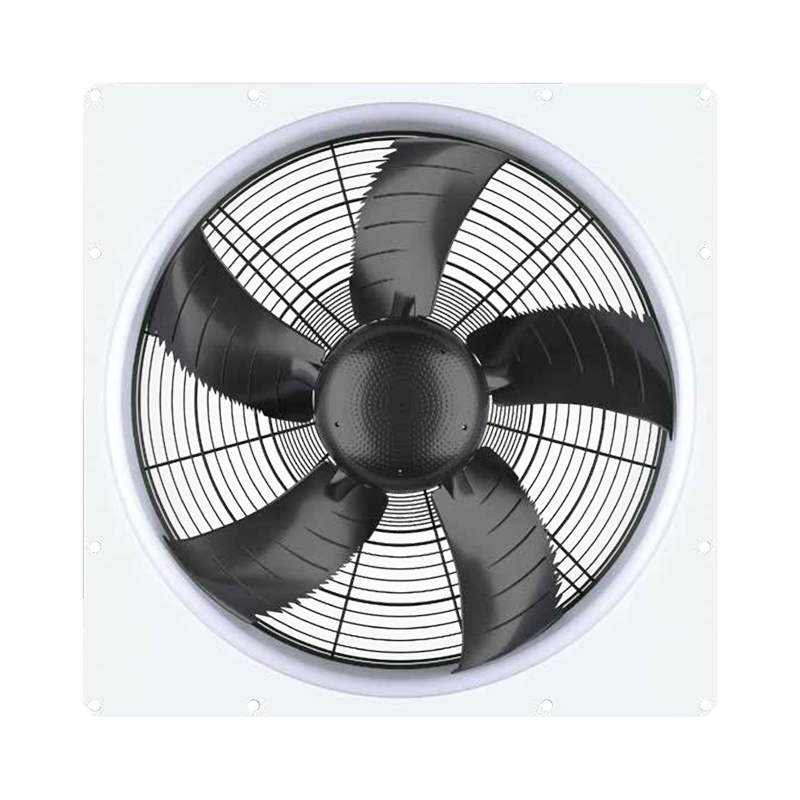
An axial fan is a type of mechanical device designed to move air by means of rotating blades, typically arranged along an axis that is parallel to the fan shaft. The air flows through the fan in the same direction as the axis, which is why it is called an “axial” fan. Axial fans are commonly used in industrial, commercial, and residential applications for purposes such as ventilation, cooling, and exhaust.
Axial fans have several advantages. They can provide large volumes of airflow with relatively low pressure increases. This makes them ideal for applications that require efficient, high-flow air circulation, such as cooling systems for machinery, HVAC (Heating, Ventilation, and Air Conditioning) systems, and general air circulation in various environments. Their simple construction and stable operation have contributed to their widespread use.
Definition of an Axial Fan
An axial fan is defined by its design, which directs air flow in parallel with the axis of the fan. This results in a specific set of performance characteristics, such as the ability to move a large volume of air while producing relatively low pressure compared to other types of fans, such as centrifugal fans. The fan blades are often arranged in a circular or curved configuration, which helps generate the airflow efficiently.
Working Principle of an Axial Fan
The core principle behind the operation of an axial fan lies in its ability to use rotating blades to move air along the axis of the fan. The air enters the fan housing, where the blades rotate and impart kinetic energy to the air. The rotation of the blades pushes the air in a straight line along the axis of the fan. This process is a direct result of the pressure difference created by the blades’ motion, which forces air to move from the inlet to the outlet.
How It Works:
- Air Intake: Air enters the fan through the intake side, which is typically situated at the front of the fan.
- Blade Rotation: The fan blades are powered by an electric motor, which causes them to rotate. As the blades move, they create a low-pressure area in front of them, which draws in more air.
- Air Flow Along the Axis: The rotating blades push the air along the axis of the fan. This flow is primarily axial, meaning the air moves in the same direction as the fan’s shaft.
- Air Discharge: Finally, the air exits the fan from the outlet side, where it can be directed into ducts, ventilation systems, or cooling areas.
This design makes axial fans most effective in situations where large volumes of air need to be moved with relatively little resistance.
Structure of an Axial Fan
The structure of an axial fan is relatively simple compared to other types of fans like centrifugal fans, but its design is crucial to its performance. The main components of an axial fan include:
Blades
The blades of an axial fan are the key components responsible for moving air. These blades are typically made from lightweight materials such as aluminum or composite materials, allowing for easy rotation with minimal energy consumption.
- Blade Design: The blades are designed to be either straight, curved, or twisted, depending on the specific application. Curved or twisted blades are used for enhanced airflow efficiency.
- Blade Pitch: The angle at which the blades are set relative to the airflow direction is known as the blade pitch. The pitch can be adjustable in some fans, which allows for variable airflow control.
- Blade Length and Diameter: The length and diameter of the blades determine how much air can be moved. Larger blades generally produce more airflow, but they may require more power to operate effectively.
The blades of an axial fan are mounted around a central hub, which is connected to the motor.
Casing
The casing of the axial fan is the outer housing that contains the fan blades and motor. Its purpose is to direct the airflow into and out of the fan while also ensuring the stability and efficiency of the airflow.
- Shape and Material: The casing is typically cylindrical or conical and is made of durable materials like steel or plastic, depending on the specific application and the environmental conditions the fan will operate under.
- Functionality: The casing helps guide the incoming and outgoing air, preventing turbulence that could reduce the fan’s efficiency. It also provides protection for the internal components, especially the rotating blades and motor.
Electric Motor
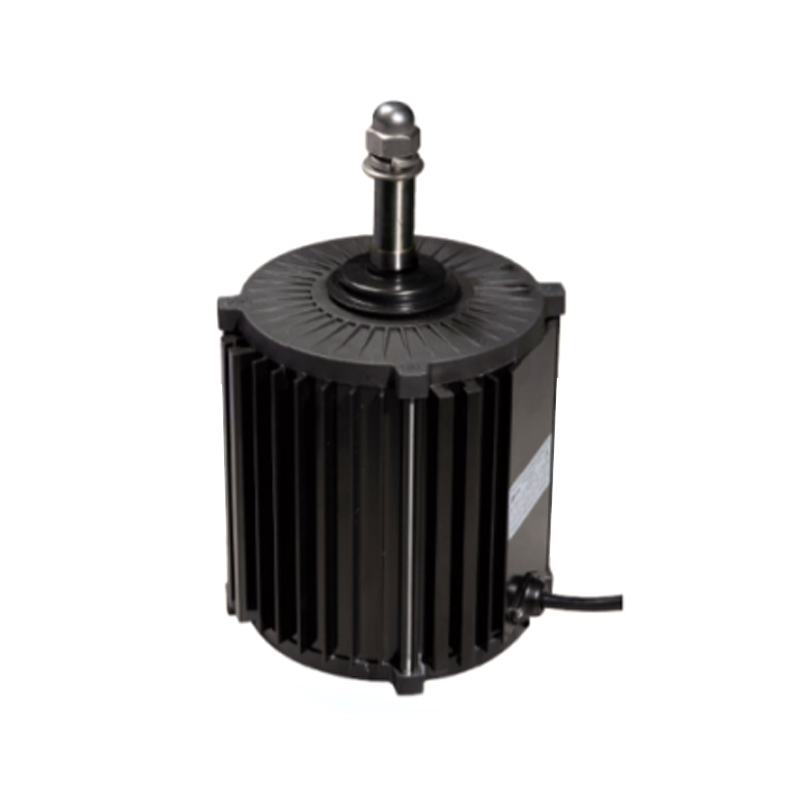
The electric motor is the driving force behind the fan’s operation. It is responsible for rotating the fan blades at a specific speed to create the necessary airflow.
- Motor Power: The power of the motor depends on the size of the fan and the required airflow. For larger fans, industrial-grade motors are used to generate more power and achieve the desired performance.
- Motor Efficiency: Motor efficiency plays a crucial role in determining the overall energy consumption of the fan. More efficient motors consume less electricity to generate the same amount of airflow.
- Integration with the Blades: In many axial fans, the electric motor is integrated into the structure of the fan, either within the casing or directly attached to the blade hub. This integration helps reduce the fan’s overall size and simplifies the design.
Performance and Efficiency of an Axial Fan
Airflow and Pressure
Axial fans are designed to move large volumes of air with relatively low resistance. As a result, they are most suitable for applications that require high-flow, low-pressure systems. For example:
- Cooling systems: Cooling applications often require large volumes of air to cool machinery or heat exchangers, but they do not typically require high pressure.
- Ventilation: Large industrial and commercial buildings use axial fans to circulate air efficiently and maintain comfortable environments.
While axial fans excel in moving air over large areas, they are not as effective at generating high pressure as centrifugal fans, making them less suitable for applications that require air to be moved through long or narrow ducts.
Energy Efficiency
Axial fans are generally energy-efficient because they require less power to operate compared to fans that operate under higher pressure. This is because they move air through larger openings and do not need to overcome significant resistance. The motor efficiency also plays a key role in ensuring the overall energy efficiency of the fan.
- Variable-Speed Drives: Many modern axial fans use variable-speed drives (VSD), which allow the fan to adjust its speed depending on the airflow requirements. This further enhances energy savings and optimizes the fan’s performance based on real-time demand.
Table: Components of an Axial Fan
| Component | Function | Details |
|---|---|---|
| Blades | Move the air through the fan | Can be straight, curved, or twisted; determine airflow rate. |
| Casing | Directs the airflow into and out of the fan | Usually cylindrical or conical, made from steel or plastic. |
| Electric Motor | Powers the rotation of the blades | Varies in size and power; drives the fan blades at set speeds. |
| Hub | Central connection for the blades | Connects the blades to the motor, facilitating rotation. |
| Fan Housing | Protects internal components and ensures smooth airflow | Provides support for motor and casing, directs airflow. |
Applications of Axial Fans
Axial fans are versatile and find applications across various industries. Some of the common uses include:
- Industrial Cooling: Axial fans are used to cool equipment in industries such as power generation, petrochemicals, and manufacturing. They provide consistent airflow to maintain optimal operating temperatures.
- Ventilation Systems: In buildings, axial fans are used in HVAC systems to circulate air and maintain air quality. They are often found in large-scale commercial or residential applications.
- Exhaust Systems: Axial fans are used for exhaust ventilation, removing hot air, smoke, or fumes from industrial or commercial environments.
- Agricultural Ventilation: Large-scale axial fans are used in agriculture for controlling temperature and humidity in environments like greenhouses or animal barns.
Differences Between Axial Fans and Centrifugal Fans
Axial and centrifugal fans are both widely used for air movement in various industries, but they operate based on different principles and are suited to different types of applications.
1. Direction of Airflow
Axial Fan: The Airflow Moves Along the Axis
In an axial fan, the air moves parallel to the shaft of the fan, which means it flows along the axis of the fan. The blades of the fan are arranged in such a way that they push the air directly along the same line as the motor shaft. This airflow design makes axial fans particularly effective for applications where large volumes of air need to be moved quickly but without a significant increase in pressure.
- Flow Direction: Air enters the fan at the intake, and as the blades rotate, it moves along the length of the fan and exits in the same direction.
- Performance: Axial fans can move a substantial amount of air, making them ideal for tasks that require high airflow but with low pressure increases, such as ventilation and cooling.
Centrifugal Fan: The Airflow Moves Perpendicular to the Axis
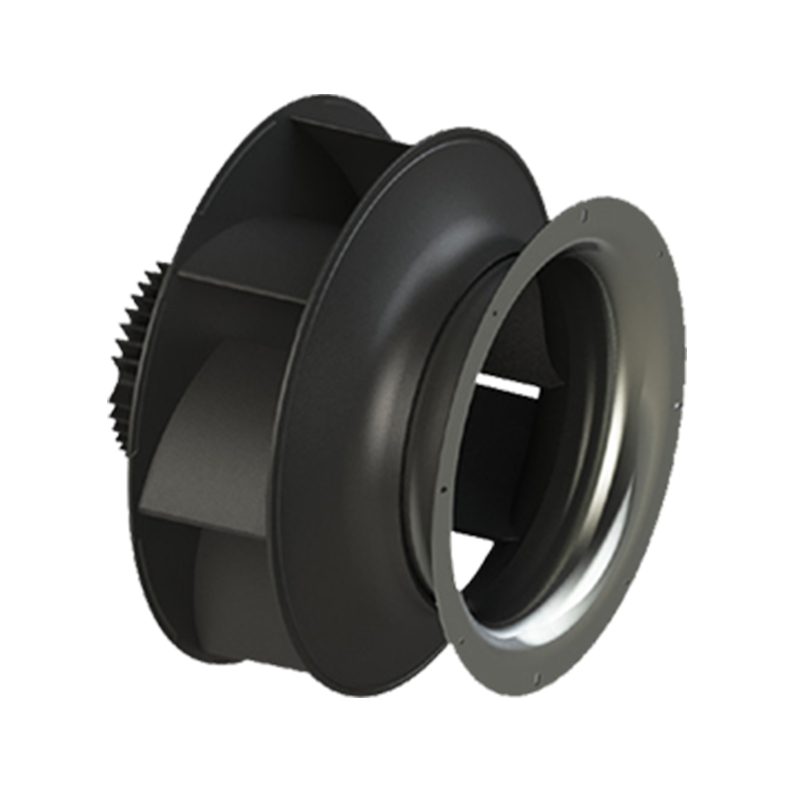
Centrifugal fans work by accelerating air in a circular motion. The air enters the fan from the center, where the blades throw it outward along a perpendicular path to the axis of rotation. This change in direction creates the high-pressure airflow that centrifugal fans are known for.
- Flow Direction: In centrifugal fans, the air moves perpendicular to the axis, exiting the fan at a 90-degree angle from where it entered.
- Performance: The change in direction of airflow allows centrifugal fans to create higher pressure compared to axial fans, making them suitable for applications requiring air to be moved through ducts or other high-resistance environments.
2. Flow Rate and Pressure
Axial Fan: High Airflow with Low Pressure
One of the standout features of axial fans is their ability to deliver high airflow. Due to their design, axial fans can move a large volume of air with relatively low pressure. This makes them particularly effective for systems where the primary concern is moving a large quantity of air with minimal resistance.
- Airflow: Axial fans are designed for large volumes of air movement, which is why they are used in applications like industrial ventilation and cooling systems.
- Pressure: However, because the pressure generated is low, axial fans are not suited for systems that require air to be pushed through long ducts or systems with significant resistance.
Centrifugal Fan: High Pressure with Lower Airflow
In contrast, centrifugal fans are designed to generate higher pressure. This is achieved by the centrifugal force that is created when the air is forced outward by the spinning blades. The increase in pressure allows centrifugal fans to push air over longer distances or through more complex ducting systems.
- Pressure: Centrifugal fans can provide higher pressure, making them ideal for applications that require air to be moved through high-resistance environments, such as long ductwork or exhaust systems.
- Airflow: However, the tradeoff for higher pressure is typically a lower airflow. While centrifugal fans can move air through narrow or obstructed spaces, they do not have the same airflow capacity as axial fans.
3. Application Scenarios
Axial Fan Applications: High Airflow, Low Pressure
Given their high airflow and low pressure characteristics, axial fans are ideal for applications that require large volumes of air but without the need to overcome significant resistance. Some of the most common uses for axial fans include:
- Industrial Ventilation Systems: Used to circulate air in factories, warehouses, or large-scale industrial settings. Axial fans are perfect for these environments because they can quickly and efficiently move large volumes of air.
- Air Conditioning Systems: In both residential and commercial settings, axial fans are often used for the circulation of air within air conditioning systems, ensuring consistent cooling performance.
- Cooling Equipment (e.g., Power Generator Cooling): Axial fans help maintain the temperature of equipment such as power generators or electronic systems, ensuring optimal performance.
- Ventilation and Air Exchange in Large Buildings: Axial fans are commonly installed in large commercial buildings, such as office complexes and shopping malls, to ensure the circulation of air and improve indoor air quality.
Centrifugal Fan Applications: High Pressure, Lower Airflow
Centrifugal fans, with their higher pressure capabilities, are better suited for applications where air must be forced through narrow ducts, long distances, or high-resistance systems. Some common applications for centrifugal fans include:
- Industrial Exhaust Systems: Often used in manufacturing or chemical plants, where fumes, dust, or smoke need to be expelled from the building. The high pressure of centrifugal fans ensures that air can be moved through long or complicated exhaust systems.
- HVAC Systems: Centrifugal fans are used in heating, ventilation, and air conditioning systems that require higher air pressure to force air through ducts and vents.
- Smoke Exhaust and Air Transportation: In commercial kitchens, fire safety systems, and other industries requiring smoke removal or air transportation over longer distances, centrifugal fans provide the necessary high pressure.
4. Energy Efficiency and Power Consumption
Axial Fan: High Energy Efficiency
Axial fans are typically more energy-efficient than centrifugal fans because they are designed to operate in low-pressure environments. The relatively low resistance in these systems means that the fan requires less power to move a large volume of air, making axial fans suitable for applications where energy conservation is important.
- Power Consumption: Axial fans generally consume less power due to their lower pressure requirements. They can move large volumes of air without significantly increasing the workload of the motor.
- Efficiency: This efficiency makes axial fans ideal for large-scale ventilation and cooling applications, where the primary goal is to move as much air as possible while keeping energy consumption low.
Centrifugal Fan: Lower Energy Efficiency
On the other hand, centrifugal fans are designed to work in high-pressure environments, which means they require more power to operate. The fan motor has to work harder to overcome the resistance and create the necessary pressure to move air through narrow or obstructed ducts.
- Power Consumption: The energy consumption of centrifugal fans is typically higher due to the greater work required to generate pressure.
- Efficiency: As a result, centrifugal fans are generally less energy-efficient than axial fans. However, they are still the preferred choice in applications where high-pressure airflow is required, even at the cost of increased power consumption.
5. Noise Level
Axial Fan: Higher Noise Levels
Because axial fans operate by moving large amounts of air in a short time, they tend to create more aerodynamic noise. The fast-moving air interacts with the blades, generating sound that can be noticeable in certain environments.
- Noise Generation: The high speed of the airflow through the fan can cause whistling or humming noises, especially in large fans.
- Mitigation: In noise-sensitive environments, such as offices or hospitals, additional soundproofing measures may be needed to reduce the noise produced by axial fans.
Centrifugal Fan: Lower Noise Levels
Centrifugal fans generally produce less noise than axial fans because the airflow is directed smoothly along the sides of the fan and changes direction more gradually. The absence of fast-moving air over the blades helps reduce the overall noise generated.
- Smooth Airflow: The design of the centrifugal fan creates a more consistent airflow pattern, which results in quieter operation.
- Applications: For environments that require low noise levels, such as libraries, clean rooms, or quiet office spaces, centrifugal fans are often the preferred choice.
Summary Table: Key Differences Between Axial and Centrifugal Fans
| Feature | Axial Fan | Centrifugal Fan |
|---|---|---|
| Direction of Airflow | Airflow moves along the axis of the fan | Airflow moves perpendicular to the fan axis |
| Airflow | High airflow with low pressure | Lower airflow with high pressure |
| Pressure | Low pressure | High pressure |
| Applications | Ventilation, cooling, HVAC, large buildings | Exhaust systems, HVAC, industrial exhaust |
| Energy Efficiency | High efficiency, lower power consumption | Lower efficiency, higher power consumption |
| Noise Level | Generally higher noise levels | Typically quieter operation |
How to Choose the Right Fan
Choosing the right fan is crucial to ensure the system operates efficiently and meets the specific needs of the application. Fans come in various types, with axial and centrifugal fans being two of the most common. Understanding the key factors involved in selecting a fan can significantly impact both the performance and longevity of the system.
1. Based on Application Needs
The first step in selecting a fan is understanding the specific requirements of the application. Each fan type is optimized for certain functions, and choosing the wrong type can lead to inefficiencies, high operational costs, and premature failure. Let’s break down the considerations based on airflow, pressure, and system function.
If High Airflow with Low Pressure is Needed
-
Axial Fan: If the application requires high airflow but does not involve overcoming significant resistance or pressure, an axial fan is the ideal choice. Axial fans are excellent for moving large volumes of air at relatively low pressure. This makes them well-suited for applications like ventilation systems, cooling systems, and industrial air circulation.
-
Common Applications:
- Industrial ventilation: Large factories, warehouses, and manufacturing plants use axial fans to circulate fresh air and maintain a safe working environment.
- Air conditioning: Axial fans are frequently used in HVAC systems for large buildings to help regulate temperature and maintain indoor air quality.
Axial fans are less complex and more energy-efficient when large amounts of air need to be moved with minimal pressure.
If Higher Pressure is Required
-
Centrifugal Fan: If the application demands higher pressure, such as when the air needs to be transported over long distances or through narrow ducts, a centrifugal fan would be a better choice. Centrifugal fans are designed to produce higher pressure, which allows them to move air through more resistance.
-
Common Applications:
- HVAC systems: In larger buildings or industrial applications, centrifugal fans are used to overcome ductwork resistance and ensure consistent airflow.
- Exhaust systems: Centrifugal fans are commonly used to move air through long duct networks, such as in industrial exhaust systems or smoke removal systems.
- Air transportation: Applications such as pneumatic conveying and material handling systems benefit from the higher-pressure capabilities of centrifugal fans.
Centrifugal fans provide greater flexibility when dealing with complex airflow paths and require additional space for ducting.
2. Consider Space Limitations
When selecting a fan, space limitations play a significant role in the decision-making process. Not all fans are designed to fit in the same type of space, so it is essential to consider how much room is available for installation.
Axial Fans: Compact and Space-Saving
-
Simple Design: One of the key advantages of axial fans is their relatively simple and compact design. The airflow moves along the axis of the fan, and the fan blades are typically positioned in a circular or slightly inclined configuration. This streamlined design allows axial fans to take up less physical space compared to centrifugal fans.
-
Space-Efficient Installation: Due to their small footprint, axial fans are ideal for space-constrained installations. They can be placed in locations with limited room, such as tight corners, small utility rooms, or systems with minimal clearance. In addition, they do not require complicated ducting systems for air movement.
-
Applications: This space-efficient design makes axial fans perfect for residential HVAC systems, small commercial cooling applications, and compact machinery that require airflow without needing a large installation footprint.
Centrifugal Fans: Larger Footprint Due to Complex Design
-
Complex Structure: Centrifugal fans, on the other hand, tend to be bulkier due to their more complex internal design. The fan blades are typically arranged to force air in a circular direction, requiring additional components like a volute casing and more extensive ductwork to direct airflow. The larger construction and need for associated ducting can make centrifugal fans unsuitable for installations with limited space.
-
Installation Space: Centrifugal fans may require more installation space both for the fan unit itself and for the necessary ducting system to guide airflow. This can pose challenges in small rooms or buildings with space constraints.
-
Applications: Centrifugal fans are better suited for industrial environments where there is ample room for larger fans and additional ducting systems. They are also used in situations where high-pressure airflow is needed, but space is not a primary concern.
3. Performance Parameter Calculations
After considering the application requirements and space limitations, the next critical factor is calculating the performance parameters of the fan. These parameters directly influence the efficiency, operating costs, and maintenance needs of the system. The key performance parameters include airflow, pressure, power consumption, and efficiency.
Airflow (CFM or m³/h)
Airflow is one of the most important factors to consider when selecting a fan. This parameter tells you how much air the fan will move within a given period and directly influences the fan’s capacity to handle the application’s ventilation or cooling needs.
-
For Axial Fans: Axial fans provide high airflow and are designed for situations where large volumes of air are required. If the airflow requirements are significant, axial fans can offer a more cost-effective solution due to their ability to move large volumes of air with relatively low power consumption.
-
For Centrifugal Fans: Although centrifugal fans do not provide the same high airflow as axial fans, they can be designed to handle specific airflow rates with higher pressure. When calculating airflow requirements, you need to ensure that the centrifugal fan can maintain adequate airflow while overcoming resistance, particularly in ducted or high-pressure systems.
Static Pressure (Pa or In. H₂O)
Pressure refers to the force exerted by the fan to move the air through a system, particularly when the air has to overcome resistance from ducts, filters, or other obstructions.
-
For Axial Fans: Axial fans operate efficiently at low-pressure conditions. If the system does not require high-pressure air movement, an axial fan is generally the best option. Their ability to move large volumes of air at low pressure makes them ideal for ventilation systems in large, open spaces.
-
For Centrifugal Fans: Centrifugal fans excel in situations where high pressure is required. If the application involves long ducts, narrow pipes, or systems with significant resistance, a centrifugal fan is more suited due to its ability to create the necessary pressure to move air through these systems.
Power Consumption and Efficiency
Understanding the power consumption and efficiency of a fan is critical to optimizing long-term operational costs. Fans consume energy to operate, and choosing the right fan can save significant amounts on electricity costs over time.
-
For Axial Fans: Because axial fans are designed to move air with low pressure, they generally have high energy efficiency. They can provide a large airflow without consuming excessive power, making them an energy-efficient choice for many applications.
-
For Centrifugal Fans: Due to the higher pressure requirements, centrifugal fans tend to consume more power to generate the necessary airflow and pressure. While they are more efficient in high-pressure systems, they are generally less energy-efficient than axial fans when used in low-pressure environments.
Maintenance Costs
Maintenance is another important factor in choosing the right fan. The complexity of the fan’s design, its operating conditions, and the environment in which it is used all impact how often maintenance will be required.
-
For Axial Fans: Due to their simpler design and fewer components, axial fans generally have lower maintenance costs. Regular maintenance mainly involves checking the blades and motor, cleaning air intakes, and ensuring that airflow paths are not obstructed.
-
For Centrifugal Fans: The more complex design of centrifugal fans may lead to higher maintenance costs. This is particularly true in applications with high pressure or extreme conditions (such as dusty or wet environments) where the fan components may experience more wear and tear. Regular checks of the fan’s bearings, motor, and casing may be required.
Key Factors in Choosing the Right Fan
| Factor | Axial Fan | Centrifugal Fan |
|---|---|---|
| Airflow | High airflow, low pressure | Lower airflow, high pressure |
| Pressure | Low pressure | High pressure |
| Application | Ventilation, cooling, large open spaces | Exhaust, HVAC, long ducts, high resistance systems |
| Space Requirements | Compact design, requires less installation space | Larger size, needs more space and ducting |
| Energy Efficiency | High efficiency, low power consumption | Lower efficiency, higher power consumption |
| Maintenance | Simple design, low maintenance costs | Complex design, higher maintenance costs |
| Cost | Generally lower upfront cost | Higher upfront cost due to complexity |
Maintenance and Care of Axial Fans
To ensure that an axial fan operates at peak efficiency throughout its lifespan, regular maintenance is essential. Neglecting to care for key components can lead to performance degradation, higher energy costs, and even premature failure of the system. The maintenance of axial fans can be divided into several key categories, including regular inspections, motor and drive system checks, and replacing worn parts. By following a structured maintenance approach, you can keep your axial fan running smoothly and extend its service life.
1. Regular Inspections and Cleaning
Regular inspections and cleaning are crucial to the longevity and efficiency of axial fans. Dust, dirt, and debris can accumulate over time, negatively impacting the fan’s performance. These contaminants can cause mechanical wear, increase energy consumption, and even lead to overheating if left unchecked.
Cleaning the Fan Blades
The blades of the axial fan are the primary components responsible for moving air. Over time, dust and other particles can accumulate on the surface of the blades. This accumulation can alter the blade’s aerodynamics, leading to inefficient airflow and increased power consumption.
-
Frequency of Cleaning: The frequency of cleaning depends on the environment in which the fan operates. In industrial settings with high dust levels, cleaning should be done more frequently—every 1 to 3 months. In cleaner environments, this can be extended to every 6 months to a year.
-
Cleaning Method: Use a soft cloth or brush to remove dust and dirt from the blades. If the buildup is stubborn, a mild detergent solution can be used to clean the blades without damaging them. Be cautious not to scratch or damage the surface of the blades, as this could affect airflow efficiency.
Cleaning the Casing
The casing of the axial fan also requires regular cleaning. If the casing is clogged with debris or if air intake areas are blocked, the fan’s performance will be hindered.
-
Inspection and Cleaning: Check the air intake and exhaust sections of the fan casing for any blockages. Use compressed air or a vacuum to remove debris and ensure unobstructed airflow. Clean the outer surfaces of the casing with a damp cloth or a brush.
-
Lubrication of the Casing: In some cases, especially with larger industrial fans, lubrication may be required in the casing to ensure smooth operation of the fan components. However, this depends on the specific fan design.
Removing Oil Buildup
In environments where fans are used for cooling equipment (like generators or machinery), oil and grease buildup can occur on the blades and casing.
-
Use of Degreasers: If there is an accumulation of grease or oil, using a degreasing solution can help clean these areas. Be sure to use an appropriate degreaser to prevent damage to the fan’s materials.
-
Safety Precautions: When using chemical cleaning agents, always follow safety guidelines, including using gloves and goggles, and ensure the fan is turned off before cleaning.
2. Inspect the Electric Motor and Drive Parts
The electric motor and drive system are the heart of the axial fan, as they provide the necessary power to rotate the blades. Regular inspection and maintenance of these components are essential to avoid motor failure, electrical problems, or mechanical issues.
Motor Inspection for Unusual Noises or Vibration
The motor is a moving part that can experience wear and tear over time. It is important to regularly inspect the motor for any signs of malfunction. Unusual noises or vibrations are often the first indicators of a problem.
-
Vibration Check: Use a vibration meter to check for irregular vibrations that may indicate an imbalance in the fan blades or motor. Vibrations can cause mechanical damage and accelerate wear on bearings and other moving parts.
-
Noise Check: Listen for any unusual noises coming from the motor, such as grinding, squeaking, or humming. These sounds often point to issues such as misalignment, bearing failure, or internal friction.
-
Alignment: Ensure that the motor is properly aligned with the fan’s shaft. Misalignment can cause strain on the motor and lead to premature wear. Misalignment is often the cause of excess noise and vibrations, and it can reduce the fan’s efficiency.
Lubricating the Motor and Bearings
Lubrication is essential to ensure smooth operation and prevent excessive wear on the motor’s bearings and moving parts.
-
Lubrication Frequency: Motors and bearings should be lubricated as per the manufacturer’s recommendations. Typically, lubrication is needed every 3 to 6 months, depending on usage. If the fan is used in harsh conditions (e.g., high humidity or extreme temperatures), more frequent lubrication may be required.
-
Type of Lubricant: Use the recommended lubricant or grease type for the motor. The wrong type of lubricant can cause damage or increased wear. Always check the motor’s manual for the specific lubricant specifications.
-
Checking Lubrication Levels: Some motors have a sight glass or grease fitting to allow you to check or refill lubrication levels. Regularly inspect and top up lubrication as needed.
Inspecting the Drive System
The drive system, including the belt, pulleys, and coupling, transfers power from the motor to the fan blades. Any issues with the drive system can affect the motor’s performance and cause energy loss or damage.
-
Belt Tension: Check the belt for proper tension. If the belt is too loose or too tight, it can cause inefficient power transmission or increase wear on the motor and fan. Adjust the tension according to the manufacturer’s guidelines.
-
Pulley Alignment: Ensure that the pulleys are properly aligned and that there is no excessive wear or damage. Misalignment of pulleys can cause uneven wear and tear, leading to increased maintenance costs and downtime.
-
Check for Wear: Over time, belts and pulleys can wear out. Inspect them regularly for cracks, fraying, or signs of degradation. Replace any worn or damaged components promptly to avoid breakdowns.
3. Replace Worn Parts
Just like any other mechanical system, axial fans experience wear and tear. Worn-out components, especially the fan blades, bearings, and seals, can compromise the fan’s performance and efficiency. Replacing these worn parts at the first sign of damage is crucial to extending the life of the fan.
Replacing Damaged or Worn Fan Blades
The fan blades are constantly subjected to mechanical stress and airflow resistance. Over time, this can lead to cracks, chips, or warping. Damaged blades will affect airflow efficiency and could cause imbalances in the fan.
-
Signs of Damage: If you notice cracks, chips, or excessive wear on the fan blades, it is important to replace them as soon as possible. Damaged blades can cause vibrations, increase energy consumption, and even cause the fan to stop working altogether.
-
Blade Replacement: If the blades need to be replaced, ensure that the new blades match the specifications of the fan model. Replacing the blades with incompatible parts can lead to operational issues.
Replacing Bearings and Seals
The bearings and seals in the fan motor and drive system should be inspected regularly. Bearings that are worn out or seals that are damaged can result in leaks, excessive noise, or vibrations.
-
Bearing Replacement: If the bearings show signs of wear (e.g., noise, heat, or irregular movement), they should be replaced promptly to avoid motor damage. Bearings should be replaced according to the manufacturer’s recommendations.
-
Seals and Gaskets: Check for any leaks or wear in the seals and gaskets of the fan. A damaged seal can lead to energy losses and contamination of internal components. Replace any damaged seals immediately to maintain fan efficiency.
Other Components to Replace
Other components of the fan, such as motor capacitors, voltage controllers, and fan guards, should be inspected periodically. These parts may not require frequent replacement but should be checked for any signs of malfunction.
-
Capacitors: Capacitors help regulate motor startup. If the motor fails to start or exhibits inconsistent performance, the capacitor may be faulty and should be replaced.
-
Fan Guards: Inspect fan guards for any damage. If they are bent or broken, they should be replaced to ensure the fan’s safety and maintain its efficiency.
Key Maintenance Tasks for Axial Fans
| Maintenance Task | Frequency | Key Actions |
|---|---|---|
| Blade Cleaning | Every 1–3 months (industrial) or 6 months to a year (clean environments) | Use soft cloth/brush; mild detergent if needed |
| Casing Cleaning | Every 3–6 months | Remove debris with vacuum/compressed air |
| Lubricate Motor & Bearings | Every 3–6 months | Check lubrication levels and top up as needed |
| Motor and Drive System Check | Monthly | Check for unusual noises, vibrations, alignment |
| Belt and Pulley Inspection | Every 6 months | Check tension, alignment, and wear |
| Blade Replacement | As needed (if damaged) | Replace with compatible blades |
| Bearing and Seal Replacement | As needed (if worn) | Replace bearings and seals when they show signs of wear |
Recommended Products
The variety of models, to meet the development needs of various regions in the world.



Recommended News
CONTACT US

QUICK LINKS
CONTACT INFORMATION
- Email: [email protected]
- Tel: +86-575-86287301
- FAX: +86-0575-86287300
- Address: Provincial High-tech Industrial Park, Xinchang County, Zhejiang Province, China.
© 2025 Zhejiang Kemao Holding Group Co., Ltd.
All Rights Reserved.
 OEM/ODM HVAC Axial Fan Manufacturers
