

 English
 中文简体
中文简体 русский
 Español
News
Home / News / Industry News / How Do Industrial Axial Fans Optimize Airflow in Heavy Duty Applications?
Industrial ventilation remains a critical foundation for modern manufacturing, processing, and warehousing environments. Among the various technologies utilized to move massive volumes of air, the industrial axial fan stands out as a highly efficient and reliable solution. Unlike centrifugal designs that redirect airflow at a right angle, axial fans move air parallel to the shaft, driving a straight and continuous aerodynamic stream. This article provides a comprehensive and detailed examination of how these powerful machines function, where they are deployed, how to select them for demanding environments, and how they optimize energy consumption under heavy duty conditions.
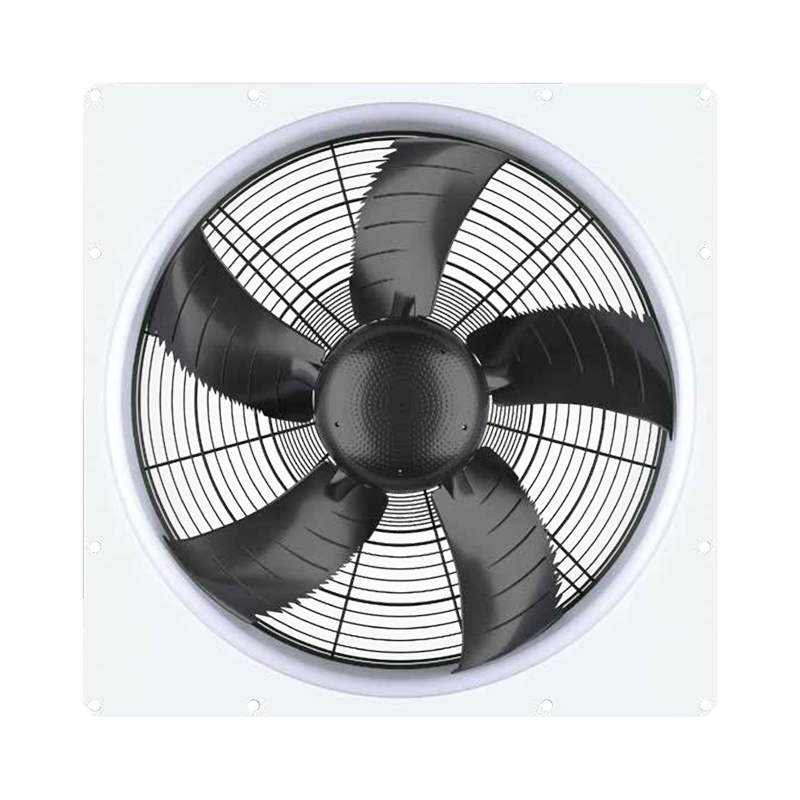
Understanding the mechanics of an industrial axial flow fan requires looking at basic aerodynamic principles. The primary objective of an axial fan is to generate a high volume of airflow at relatively low static pressure. The design resembles a traditional airplane propeller, featuring a hub with multiple aerodynamic blades mounted onto a central rotating shaft.
As the electric motor drives the shaft, the fan blades rotate rapidly within a cylindrical casing. This rotation creates a pressure differential. The intake side experiences a lower pressure zone, which draws ambient air into the housing. The blades then capture this incoming air, accelerating it along the path of the rotating axis and pushing it out through the discharge end at a higher velocity. Because the air travels straight through the unit, energy losses associated with direction changes are minimized.
The efficiency of this process is heavily influenced by the airfoil design of the blades. Modern industrial fan manufacturers utilize advanced computational fluid dynamics to shape the blades, ensuring they minimize turbulence and noise while maximizing thrust. By adjusting the blade pitch angle, operators can modify the performance characteristics of the fan, balancing the volume of air delivered against the power consumed by the drive motor.
In heavy duty setups, these fans must maintain consistent performance despite fluctuating ambient pressures. The cylindrical housing, often referred to as the fan shroud or casing, is engineered with extremely tight tolerances. This tight clearance between the blade tips and the inner wall of the casing prevents backflow, which is the tendency of pressurized air to slip back around the tips of the blades toward the inlet. By controlling backflow, the industrial axial fan achieves a much higher static efficiency, allowing it to perform reliably in demanding dust extraction, cooling, and ventilation tasks.
To survive the rigorous demands of industrial environments, axial fans must be built with exceptionally durable components. A standard residential or commercial fan cannot withstand the continuous operation, high temperatures, and abrasive atmospheres common in factories and processing plants. A heavy duty industrial axial fan consists of several key structural elements designed for longevity and resilience.
The outer shell, or casing, does far more than simply hold the components together. It is a critical aerodynamic element that guides the airflow and protects the rotating assembly. Heavy duty casings are typically manufactured from heavy gauge steel, stainless steel, or aluminum, and are often hot-dip galvanized or coated with epoxy to resist corrosion.
There are two primary casing designs: tube axial and vane axial. Tube axial fans feature a simple cylindrical housing around the impeller. Vane axial fans include stationary guide vanes positioned either before or after the impeller. These vanes straighten the swirling air column created by the rotating blades, converting rotational energy into useful static pressure and improving overall system efficiency.
The impeller is the heart of the axial fan, consisting of the central hub and the attached blades. In industrial settings, these components are fabricated from cast aluminum, high-strength steel, or fiber-reinforced plastics. Aluminum is highly favored because of its excellent strength-to-weight ratio and spark-resistant properties, which are essential in volatile environments.
The blades can be fixed, adjust-at-rest, or variable-pitch during operation. Adjustable pitch blades allow facility engineers to fine-tune the airflow capacity as the ventilation requirements of the building change over time. The structural attachment of the blades to the hub is designed to handle immense centrifugal forces, ensuring that the components do not deform or fail even during continuous high-speed rotation.
Axial fans are driven by electric motors, which are coupled to the impeller in one of two configurations: direct drive or belt drive. In a direct drive configuration, the impeller is mounted directly onto the shaft of the electric motor. This setup eliminates transmission losses, reduces maintenance requirements because there are no belts to wear out, and results in a more compact footprint.
In a belt drive configuration, the motor is mounted externally, and power is transmitted via a system of pulleys and belts. This design is highly beneficial when dealing with high-temperature air streams or hazardous gases, as the sensitive electric motor is isolated from the harsh environment inside the duct. It also allows operators to change the fan speed easily by changing the pulley sizes, providing flexibility in system balancing.
|
Component Part |
Common Materials |
Primary Purpose in the System |
|---|---|---|
|
Fan Casing |
Heavy Gauge Carbon Steel, Stainless Steel, Aluminum |
Guides airflow, contains the impeller, and provides duct connections |
|
Impeller Blades |
Cast Aluminum, High Strength Steel, Fiber Reinforced Plastic |
Generates the pressure differential to move air axially |
|
Guide Vanes |
Galvanized Steel, Structural Plate |
Straightens swirling discharge air to recover static pressure |
|
Shaft and Bearings |
Alloy Steel, Heavy Duty Ball or Roller Bearings |
Supports the rotating impeller and transmits mechanical torque |
|
Motor Mount |
Welded Steel Plate |
Secures the motor to prevent vibration and maintain alignment |
Not all axial fans are created equal. Depending on the pressure requirements, space limitations, and environmental factors, different styles of industrial axial fans are utilized. The three primary classifications are propeller fans, tube axial fans, and vane axial fans. Understanding the distinctions between these types is critical for proper system design.
Propeller fans are the simplest and most common type of axial flow device. They feature a basic impeller mounted within an orifice ring or a simple wall panel. These fans are designed to move large quantities of air against virtually zero static pressure. They are most frequently found in wall-mounted exhaust applications where they draw air directly from a large room and discharge it straight to the outdoors. Because they lack a sophisticated housing, they cannot be connected to long runs of ductwork, as the resistance of the duct would quickly stall the airflow.
Tube axial fans represent the next level of performance. By enclosing the propeller inside a cylindrical tube, the aerodynamic efficiency is significantly enhanced. The tube helps direct the airflow and allows the fan to be bolted directly into a duct system. Tube axial fans can handle moderate static pressures, making them suitable for medium-duty ventilation, fume hood exhaust, and localized spot cooling in factories. They are highly versatile and can be installed in horizontal, vertical, or angled positions within the ducting network.
Vane axial fans are the most sophisticated and efficient class of axial fans. As mentioned previously, they incorporate aerodynamic guide vanes within the casing. These guide vanes eliminate the rotational swirl of the air, ensuring that the discharge stream is highly directed and laminar. Vane axial fans are capable of generating relatively high static pressures while maintaining the high volume capability inherent to axial designs. This makes them the ideal choice for massive industrial HVAC systems, mine ventilation, tunnel ventilation, and high-capacity drying processes where long duct runs and complex filtration systems create substantial resistance.
The versatility and high-volume capacity of industrial axial fans make them indispensable across a vast spectrum of industrial sectors. Wherever there is a need to remove heat, moisture, dust, or toxic fumes from a large enclosed space, these machines are likely at work.
In heavy manufacturing facilities, such as automotive assembly lines, metal fabrication shops, and machinery plants, heat and airborne particulates accumulate rapidly. Industrial axial exhaust fans are installed along the rooflines and outer walls to continuously evacuate stale, hot air and replace it with fresh outdoor air. This continuous air exchange is vital for maintaining worker safety and comfort, which directly influences productivity and reduces the risk of heat-related workplace injuries.
Furthermore, localized axial cooling fans are often directed at specific work zones or machinery stations. For example, in metal casting or heat treatment areas, powerful high-velocity spot cooling fans are used to lower the temperature of machinery and cool down freshly molded parts. This localized air movement helps accelerate manufacturing cycles and protects sensitive electronic control panels from overheating.
Chemical plants, petrochemical refineries, and pharmaceutical manufacturing facilities often operate in highly corrosive and volatile atmospheres. In these settings, specialized industrial axial fans are utilized to exhaust hazardous vapors, solvent fumes, and explosive gases. These fans are constructed using spark-resistant materials, such as cast aluminum impellers, and are paired with explosion-proof motors that prevent any electrical spark from contacting the chemical stream.
Corrosion resistance is also paramount in these environments. Standard carbon steel would degrade rapidly when exposed to acid fumes or chlorine gas. Therefore, chemical-grade axial fans are fabricated from stainless steel or coated with advanced fluoropolymer or epoxy finishes. These protective coatings ensure that the fans can run continuously in highly aggressive chemical environments without suffering structural degradation that could lead to catastrophic failure.
Power plants, including coal-fired, natural gas, and nuclear facilities, generate tremendous amounts of waste heat that must be managed to maintain plant efficiency. Industrial axial fans play a crucial role in the cooling towers of these stations. Massive wet and dry cooling towers use giant axial fans, often exceeding several meters in diameter, to draw ambient air through water spray or heat exchangers, facilitating rapid heat rejection into the atmosphere.
In addition to cooling towers, axial fans are used in power plants for boiler draft applications and generator room ventilation. The reliability of these fans is critical to the continuous operation of the electrical grid. A failure in the cooling tower fan system can lead to a drop in turbine efficiency or even force an unscheduled shutdown of the entire power generator, resulting in substantial financial losses and power disruptions.
Modern agricultural facilities, such as commercial greenhouses, poultry houses, and livestock barns, rely heavily on controlled ventilation to maintain optimal growth conditions. Large-diameter wall-mounted axial fans are used to regulate temperature, humidity, and carbon dioxide levels. In livestock facilities, continuous airflow is essential to remove ammonia fumes and keep animal mortality rates low during hot summer months.
In the food processing sector, axial fans are used in large-scale drying, freezing, and storage operations. For instance, in grain silos, axial aeration fans blow dry air through the stored crops to prevent moisture buildup, mold growth, and insect infestation. In industrial freezing tunnels, high-capacity axial fans circulate sub-zero air at high velocities over food products to achieve rapid flash freezing, preserving food quality and safety.
Choosing the correct industrial axial fan for a specific application requires a detailed analysis of several technical variables. Specifying an incorrect fan can lead to poor ventilation performance, excessive energy consumption, high noise levels, and premature mechanical failure. Facility managers and design engineers must carefully evaluate several critical criteria.
The first step in any selection process is determining the required volumetric flow rate, typically measured in cubic feet per minute or cubic meters per hour, and the total system resistance, known as static pressure, measured in inches of water gauge or pascals. Engineers must calculate the pressure losses that occur as air travels through hoods, ductwork, bends, filters, dampers, and silencers.
Once these two values are established, they are plotted on a fan performance curve. Each fan model has a unique curve that shows the relationship between airflow and static pressure at various rotational speeds. The goal is to select a fan that operates near its point of peak efficiency for the required duty point. Selecting a fan that operates too close to its stall region, which is the high-pressure, low-flow portion of the curve, can cause unstable airflow, severe vibration, and potential structural damage to the blades.
The temperature of the air stream being handled is a primary factor in choosing fan materials and drive configurations. Standard axial fans are designed to operate in ambient temperatures up to about forty degrees Celsius. For high-temperature applications, such as exhaust systems for industrial ovens, kilns, or emergency fire smoke control, specialized high-temperature axial fans are required. These units utilize heat-resistant steel alloys, high-temperature bearings, and cooling wheels that dissipate heat along the shaft to protect the motor.
In addition to temperature, the presence of abrasive dust, moisture, or corrosive chemicals must be identified. Abrasive particulates in the air stream can quickly erode the leading edges of fan blades, leading to imbalance and vibration. In such cases, the blades must be equipped with wear-resistant liners or fabricated from hardened materials. For highly humid or marine environments, marine-duty motors, moisture drains, and specialized marine paint systems are specified to prevent rust and electrical failures.
Industrial facilities must comply with strict occupational health and safety regulations regarding noise exposure. Axial fans are inherently louder than centrifugal fans of equivalent capacity because of the high tip speeds of the blades and the turbulence generated at the blade tips. Therefore, noise control must be considered during the initial design phase.
Engineers can mitigate fan noise by selecting larger fans running at lower rotational speeds to achieve the desired airflow, as fan noise is highly dependent on tip speed. Additionally, the installation of silencers or attenuators directly upstream and downstream of the fan can significantly reduce airborne noise. Enclosing the fan housing in acoustic insulation or mounting the entire assembly on vibration isolators prevents the transmission of structure-borne noise and vibration through the building ductwork and walls.
With energy costs representing a significant portion of an industrial facility's operating budget, optimizing the efficiency of ventilation systems is more important than ever. Because axial fans often run continuously, even small improvements in operating efficiency can translate into substantial financial savings over time.
Historically, when airflow requirements changed, facilities used mechanical dampers to restrict the flow. However, throttling the air with a damper is highly inefficient, as the fan motor continues to run at full speed against increased resistance. This is equivalent to driving a car with one foot flat on the gas pedal while using the brakes to control the vehicle speed.
The modern standard for flow control is the integration of Variable Frequency Drives. A variable frequency drive modifies the electrical frequency supplied to the motor, allowing the rotational speed of the fan to be adjusted precisely to match real-time demand. According to the fan affinity laws, the power consumed by a fan is proportional to the cube of its shaft speed. This means that reducing the fan speed by only twenty percent can cut the energy consumption by nearly fifty percent, resulting in an exceptionally fast return on investment for the variable frequency drive hardware.
Aerodynamic losses within the ductwork adjacent to the fan can drastically reduce overall system efficiency. Poorly designed duct transitions, sharp bends near the fan inlet, or abrupt discharges create turbulence and system effect losses. Ensuring a straight run of ductwork both before and after the fan allows the air velocity profile to stabilize, minimizing friction losses and pressure drops.
At the fan level, installing aerodynamic inlet bells or cones helps smooth the transition of air entering the housing, reducing entry losses. On the discharge side, utilizing expanding outlet diffusers slows down the air velocity gradually, converting kinetic energy back into static pressure. This static pressure recovery reduces the work required by the fan motor to push the air through the downstream system.
Mechanical friction is a major contributor to energy waste. Over time, dust accumulation on the fan blades can cause the impeller to become unbalanced. Even a slight imbalance generates parasitic vibrations that strain the bearings, increase motor heat, and consume extra electrical power. Implementing a regular maintenance program that includes cleaning the blades and performing dynamic balancing ensures the fan rotates smoothly with minimal friction.
Lubrication of bearings is equally critical. Under-lubricated bearings run hot and create mechanical drag, while over-lubricating can damage the bearing seals and attract abrasive dust. Using high-quality, temperature-appropriate lubricants and following the manufacturer's specified service intervals minimizes mechanical resistance. Additionally, for belt-driven units, keeping the belts properly tensioned and aligned prevents slippage and energy transmission losses, which can otherwise account for up to five percent of total motor power.
A proactive maintenance schedule is essential to prevent unplanned downtime, protect capital equipment, and ensure a safe working environment. Because industrial axial fans are dynamic machines operating at high speeds, they require systematic inspection and servicing.
Routine monitoring can catch developing issues before they lead to catastrophic mechanical failure. Operators should perform daily visual and auditory checks on all running fans. Unusual rattling, squealing, or grinding noises are immediate indicators of bearing wear, belt slippage, or impeller rubbing.
Vibration monitoring is one of the most effective tools for predictive maintenance. By permanently mounting vibration sensors on the bearing housings, maintenance teams can track vibration levels continuously. A sudden or gradual increase in vibration signals that the impeller has accumulated dirt, lost a balance weight, or that the structural mounting bolts have started to loosen. Addressing these issues early prevents damage to the shaft and motor.
On a monthly or quarterly basis, the fan should be shut down and locked out following strict safety protocols to allow for a thorough physical inspection. The impeller blades must be inspected for signs of erosion, corrosion, cracks, or structural deformation. Any buildup of process dust or grease must be thoroughly cleaned off the blades using appropriate solvents and non-abrasive tools to restore the original aerodynamic profile and maintain balance.
For belt-driven configurations, the belts must be checked for wear, cracking, and proper tension. Loose belts will slip, causing loss of fan speed and generating heat that degrades the pulleys, while overly tight belts put excessive radial load on the bearings, leading to premature bearing failure. Belt alignment should be verified using a laser alignment tool to ensure the pulleys are perfectly coplanar.
+-------------------------------------------------------------+
|               AXIAL FAN MAINTENANCE CHECKLIST               |
+-----------------------------+-------------------------------+
| Task Description            | Recommended Frequency         |
+-----------------------------+-------------------------------+
| Visual & Auditory Checks    | Daily                         |
| Vibration Monitoring        | Continuous / Weekly           |
| Impeller Cleaning & Inspection| Monthly                       |
| Belt Tensioning & Alignment | Quarterly                     |
| Bearing Lubrication         | As per Manufacturer Hours     |
| Electrical Connection Check | Annually                      |
+-----------------------------+-------------------------------+
Once a year, a comprehensive audit of the entire fan assembly and its electrical control system should be conducted. This includes checking the electrical connections inside the motor terminal box for tightness and inspecting the power cables for insulation wear. Motor winding resistance and insulation integrity should be measured using a megohmmeter to identify any degradation in the motor insulation.
The structural integrity of the fan casing, duct connections, and mounting framework must also be evaluated. Weld joints should be inspected for stress cracks, especially in high-vibration applications. Anti-corrosive coatings should be touched up to prevent rust from compromising the structural thickness of the metal housing. Finally, the flexible duct connectors, which isolate the fan vibration from the building ductwork, should be inspected for tears or air leaks, and replaced if they show signs of dry rot or physical damage.
Even with meticulous maintenance, industrial fan installations can encounter operational difficulties. Having a structured troubleshooting framework allows facility technicians to quickly identify the root causes of issues and implement effective corrective actions, minimizing production delays.
If a fan is running but failing to deliver the specified volume of air, the first step is to check the rotational direction of the impeller. Because axial blades are aerodynamic airfoils, they will still move some air even when running backward, but at a fraction of their rated capacity and efficiency. This is a common issue after electrical maintenance where motor phases may have been reversed.
Another potential cause of low airflow is excessive system resistance. If filters are clogged, dampers are stuck closed, or ductwork has been modified with restrictive bends, the static pressure of the system may exceed the capabilities of the fan, causing it to run in a stalled condition. Inspecting and cleaning all air filters, verifying damper operation, and measuring the static pressure at the fan inlet and outlet can help pinpoint where the restriction lies.
High vibration is a highly destructive condition that must be resolved immediately to prevent damage to the fan bearings, shaft, and supporting structure. The most common cause of vibration is impeller imbalance due to material buildup or erosion of the blade material. Cleaning the blades and performing a field balance of the rotating assembly will resolve this issue.
If the impeller is balanced but vibration persists, the issue may be mechanical misalignment. In direct-drive fans, the motor shaft and the impeller hub must be perfectly aligned. In belt-drive systems, misaligned pulleys or worn sheaves can generate significant vibration. Additionally, check for structural resonance, where the rotational speed of the fan matches the natural frequency of the mounting steelwork. This can be resolved by stiffening the supporting structure or adjusting the fan operating speed slightly using a variable frequency drive.
When an axial fan generates noise levels that exceed acceptable thresholds, the source must be systematically identified. If the noise is a low-frequency rumble, it is typically related to aerodynamic turbulence. This can occur if the air entering the fan is highly turbulent due to a sharp duct bend located too close to the inlet. Installing flow straighteners or expanding the duct section before the fan can help smooth the airflow and reduce turbulence-induced noise.
A high-pitched squeal or whine is usually mechanical in nature, indicating dry or failing bearings, or slipping drive belts. Applying lubrication or replacing worn bearings and adjusting belt tension will typically eliminate these high-frequency sounds. If the noise is airborne and cannot be eliminated at the source, installing silencers or wrapping the ductwork in heavy acoustic lagging will help contain the sound waves and protect the surrounding environment.
Through proper selection, aerodynamic optimization, and systematic maintenance, industrial axial fans provide highly efficient, long-lasting ventilation performance. Their ability to move large volumes of air reliably under harsh conditions makes them a cornerstone of modern industrial infrastructure.
The variety of models, to meet the development needs of various regions in the world.

© 2025 Zhejiang Kemao Holding Group Co., Ltd.
All Rights Reserved.
 OEM/ODM HVAC Axial Fan Manufacturers