How Does Lightweight Aluminum Construction Enhance Motor Longevity?
One of the primary challenges in fan engineering is the strain that heavy components place on the drive motor. Why is the material density of an Aluminum Blade Centrifugal Fan so critical for long-term reliability? Aluminum is approximately one-third the weight of steel, which directly impacts the starting torque required to bring the fan up to speed.
By utilizing high-strength aluminum alloys, manufacturers can:
-
Reduce Bearing Wear: Lighter impellers exert less radial and axial load on the motor bearings, significantly extending their service life.
-
Lower Energy Surges: The reduced mass allows for a smoother start-up cycle, minimizing peak electrical demand during the initial rotation phase.
-
Improve Dynamic Balance: Precision-cast aluminum blades are easier to balance to G2.5 or higher standards, reducing vibration-induced fatigue on the entire housing.
What are the Technical Specifications of a Professional Aluminum Blade Centrifugal Fan?
To ensure the fan meets the specific pressure and airflow requirements of an industrial facility, its technical parameters must be meticulously documented. The following table outlines the core specifications of our high-performance Aluminum Blade Centrifugal Fan series.
|
Feature Attribute
|
Technical Specification Details
|
|
Blade Material
|
5052 or 6061-T6 High-Strength Aluminum Alloy
|
|
Impeller Type
|
Backward Inclined / Airfoil Profile
|
|
Drive Type
|
Direct Drive or Belt-Driven (V-Belt)
|
|
Static Pressure Range
|
200 Pa to 3500 Pa (Application Specific)
|
|
Operating Temperature
|
-40°C to +85°C (Standard) / Up to 150°C (Custom)
|
|
Balance Grade
|
ISO 1940 G2.5 / G6.3 Standards
|
|
Corrosion Protection
|
Natural Oxide Layer / Epoxy or Powder Coating
|
|
Explosion-Proof Rating
|
Spark-Resistant Construction (AMCA Type B/C)
|
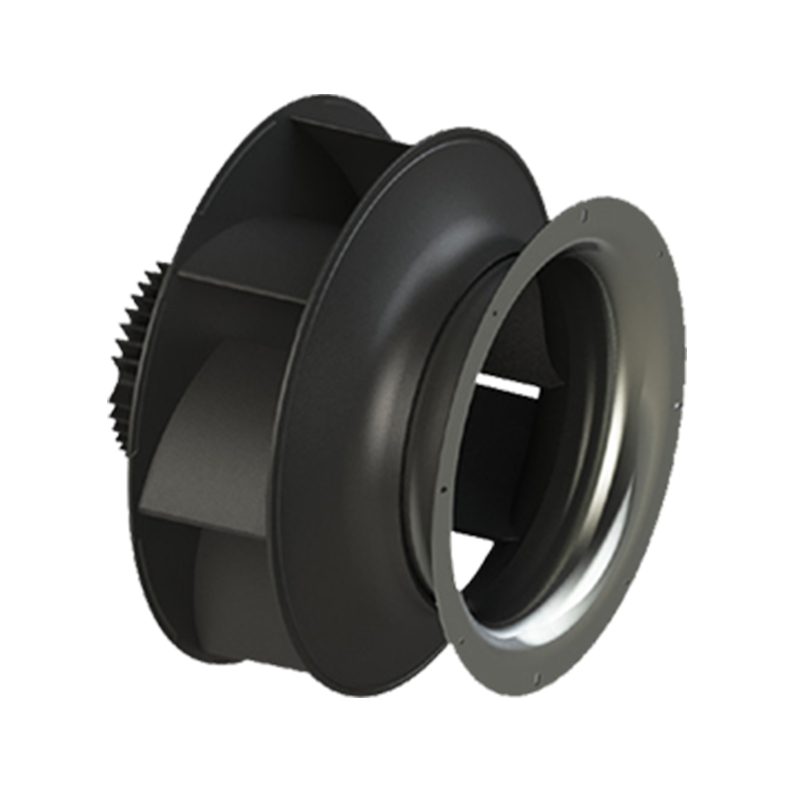
Can the Airfoil Blade Design Maximize Aerodynamic Efficiency?
The shape of the fan blade is just as important as its material. How does the "Airfoil" geometry of an Aluminum Blade Centrifugal Fan optimize air movement? Aluminum’s malleability allows for complex, high-precision casting and extrusion processes that are difficult to achieve with heavy steel plates.
The airfoil design functions similarly to an aircraft wing, creating a pressure differential that pulls air through the system with minimal turbulence. This results in:
-
Increased Static Efficiency: More electrical energy is converted into air pressure rather than wasted as heat or noise.
-
Quiet Operation: Smoother airflow patterns reduce the "vortex noise" often associated with flat-bladed centrifugal fans.
-
Broad Performance Curve: The fan can maintain stable operation over a wider range of system pressures, preventing "stall" or "surge" conditions.
Why is Spark-Resistant Construction Essential for Hazardous Environments?
In industries dealing with volatile gases or combustible dust, the risk of ignition is a constant safety concern. Why is the Aluminum Blade Centrifugal Fan the preferred choice for explosion-proof applications? According to AMCA (Air Movement and Control Association) standards, aluminum is classified as a non-ferrous, spark-resistant material.
In the event of a mechanical failure where the impeller strikes the fan housing, an aluminum blade is far less likely to produce a high-energy spark compared to a steel-on-steel collision. This inherent safety feature makes these fans the standard for:
-
Chemical Processing Plants: Handling corrosive and flammable vapors.
-
Paint Spray Booths: Where solvent-laden air must be exhausted safely.
-
Grain Elevators: Where airborne dust creates a significant explosion risk.
How Does Corrosion Resistance Impact the Maintenance Cycle?
Traditional steel fans require frequent repainting and surface treatment to prevent rust. How does an Aluminum Blade Centrifugal Fan simplify the maintenance schedule? Aluminum naturally develops a thin, tenacious oxide layer upon exposure to air, which protects the underlying metal from further oxidation.
This makes the fan particularly resilient in:
-
High-Humidity Environments: Such as swimming pool ventilation or food processing facilities.
-
Coastal Regions: Where salt-laden air can quickly degrade ferrous metals.
-
Waste Water Treatment: Where hydrogen sulfide and other corrosive gases are present. By reducing the need for anti-corrosion coatings, the fan maintains its structural integrity and aerodynamic profile without the risk of "scaling" or material loss over time.
Is Variable Frequency Drive (VFD) Integration More Effective with Aluminum Blades?
Modern ventilation systems rely on VFDs to adjust fan speed based on real-time demand. Why does a Aluminum Blade Centrifugal Fan respond better to frequency changes? The answer lies in rotational inertia.
Because the aluminum impeller has significantly less mass, it can accelerate or decelerate almost instantaneously in response to signal changes from the VFD. This responsiveness allows for much tighter control over building pressure and airflow, leading to:
-
Precision Climate Control: Maintaining exact temperatures in sensitive cleanrooms or data centers.
-
Enhanced Energy Savings: Reducing speed during off-peak hours with immediate effect.
-
Reduced Mechanical Stress: Frequent speed changes place less strain on the shaft and coupling when the rotating mass is minimized.
What Role Does Precision Die-Casting Play in Component Consistency?
Consistency in blade weight and shape is vital for a vibration-free fan. How does the manufacturing process of the Aluminum Blade Centrifugal Fan ensure this uniformity? Most professional-grade aluminum impellers are produced using precision die-casting or automated robotic welding.
Die-casting ensures that every blade is an exact replica of the master mold, with tolerances measured in microns. This level of repeatability means that replacement blades or entire impellers can be swapped out without the need for extensive field balancing. Furthermore, the absence of heavy weld beads (typical in steel fans) ensures that the airflow remains laminar across the entire surface of the impeller.
Can Advanced Housing Designs Complement Aluminum Blade Performance?
While the blades do the work, the housing directs the energy. How should the scroll housing be engineered to match the capabilities of an Aluminum Blade Centrifugal Fan? The housing is usually designed with a logarithmic spiral shape to convert the high-velocity air leaving the blade tips into static pressure.
To match the longevity of the aluminum blades, the housing is often constructed from heavy-gauge galvanized steel or stainless steel, depending on the environment. For specialized applications, the entire fan—both housing and impeller—can be made from aluminum to create an ultra-lightweight unit suitable for rooftop installations where weight limits are a primary concern.
Why is Heat Dissipation Superior in Aluminum Alloy Components?
In certain industrial processes, the air being moved is significantly warmer than ambient temperature. How does the thermal conductivity of the Aluminum Blade Centrifugal Fan manage this heat? Aluminum has a thermal conductivity rate several times higher than that of steel.
As the impeller rotates, it effectively acts as a heat sink, dissipating thermal energy from the air stream and the shaft. This helps keep the motor bearings cooler and prevents the buildup of localized heat that could lead to material expansion or mechanical interference. For high-temperature applications, specialized heat-dissipation disks can be added to the shaft to further protect the drive components.
Is Your Ventilation System Optimized for Modern Efficiency Standards?
The choice of a fan is a long-term commitment to energy efficiency and safety. Are you ready to upgrade to a solution that prioritizes both performance and durability? The Aluminum Blade Centrifugal Fan represents the intersection of advanced material science and aerodynamic engineering. By reducing rotational weight, eliminating spark risks, and providing natural resistance to the elements, this fan ensures that your industrial or commercial ventilation system operates at peak efficiency with minimal downtime. Whether you are designing a new facility or retrofitting an existing air handler, the aluminum centrifugal solution provides the reliability and precision required for the most demanding air-moving challenges.



 English
 中文简体
中文简体 русский
 Español

 OEM/ODM HVAC Axial Fan Manufacturers