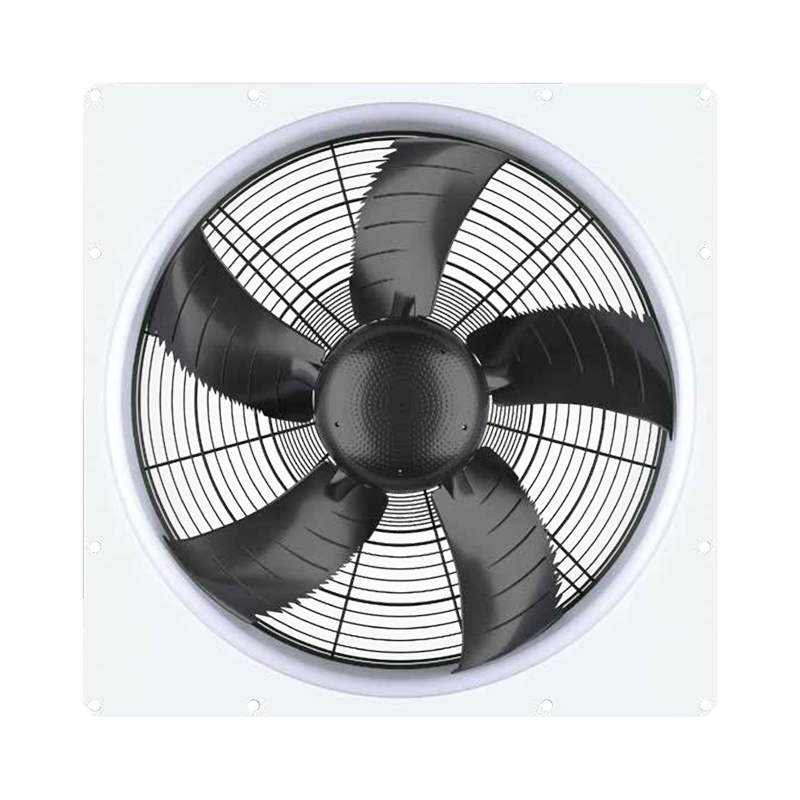
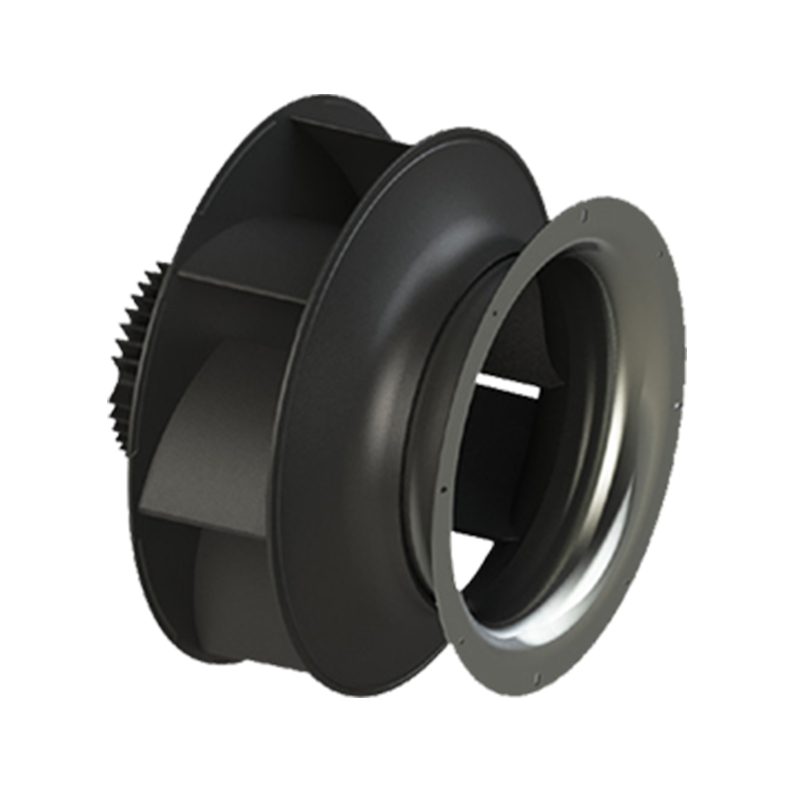
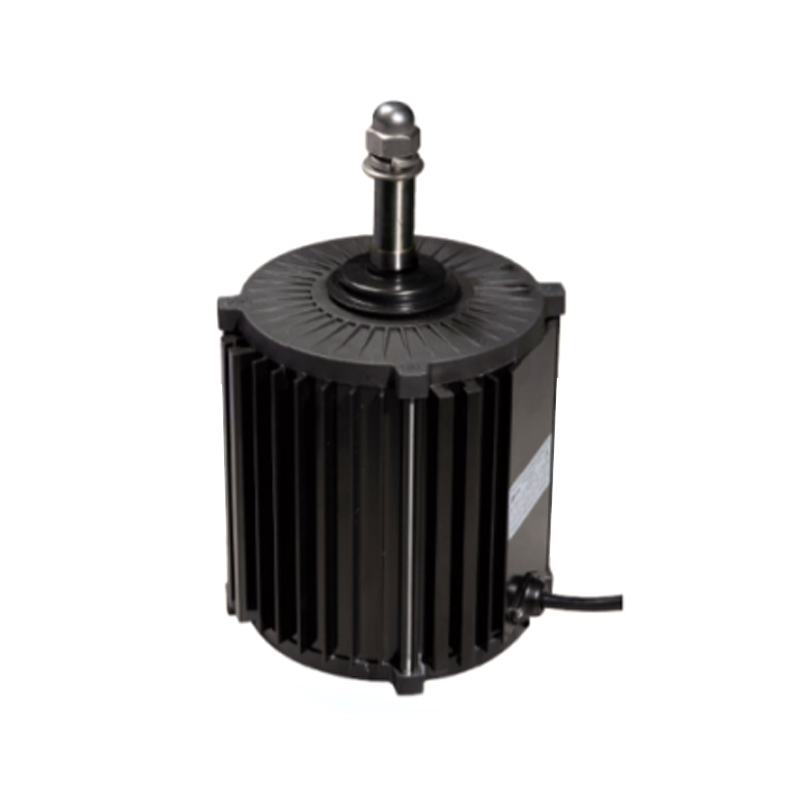
An axial fan motor is an electric motor specifically designed to power an axial fan, a type of fan that moves air parallel to the axis of rotation, similar to a propeller or household ceiling fan. The motor is typically a single-phase or three-phase induction motor, a brushless DC motor (ECM), or a shaded-pole motor, depending on the application requirements. The fan blades are mounted directly on the motor shaft or on a hub attached to the shaft. When the motor rotates, the blades accelerate air in the axial direction, creating a flow that moves through the fan without changing direction. This is fundamentally different from centrifugal fans, which draw air in axially and discharge it radially. Axial fans excel at moving large volumes of air against relatively low resistance, making them ideal for ventilation, cooling of electronic enclosures, condenser cooling in refrigeration systems, engine cooling, and countless other applications where high flow rates are more important than high pressure.
The global market for axial fan motors has grown steadily over the past decade, driven by several trends. First, the proliferation of electronics and computing devices has created relentless demand for compact, efficient cooling solutions. Every smartphone, laptop, desktop computer, server, and gaming console contains at least one axial fan motor. Second, the push for energy efficiency in buildings has led to widespread adoption of energy-efficient EC (electronically commutated) axial fan motors in HVAC systems, reducing electricity consumption and operating costs. Third, the growth of electric vehicles and hybrid vehicles has created new applications for axial fan motors in battery cooling, power electronics cooling, and cabin ventilation. Fourth, industrial automation and the Internet of Things have increased the need for reliable cooling in control cabinets, data centers, and telecommunications equipment. The following sections explore in depth why axial fan motors are so widely used and what factors should be considered when selecting these critical components.
Why Axial Fan Motors Dominate Air Movement Applications
Simple, Efficient Design for High-Volume Airflow
The fundamental advantage of axial fan motors is their ability to move large volumes of air with relatively low power consumption. This efficiency comes from the simple, direct airflow path. Air enters the fan axially, is accelerated by the rotating blades, and exits axially without changing direction. There are no sharp turns or complex flow passages that create pressure losses. In contrast, centrifugal fans draw air in axially but then turn it 90 degrees and accelerate it radially before discharging it. This change in direction creates additional pressure losses and reduces efficiency for low-pressure applications. For applications where the primary requirement is moving a high volume of air against minimal resistance, such as cooling a room, ventilating a building, or dissipating heat from a condenser coil, an axial fan motor is almost always the most efficient choice. The fan blades themselves can be optimized for specific airflow and pressure requirements through careful design of blade angle, blade profile, number of blades, and tip clearance. The motor must provide sufficient torque to accelerate the blades to operating speed and maintain that speed against the aerodynamic load. Modern axial fan motors, particularly electronically commutated (EC) motors, achieve efficiencies of 70-80% or higher, significantly better than shaded-pole or permanent split capacitor motors of comparable size.
Compact Footprint and Flexible Mounting Options
Axial fan motors are inherently compact. The motor is mounted directly in the airflow path, with the fan blades attached to its shaft. The entire assembly can be as thin as the motor housing plus the blade depth. This slim profile allows axial fans to be installed in tight spaces where centrifugal fans would not fit. For example, a typical computer case fan is only 25mm thick but can move 50-100 cubic feet of air per minute. A ceiling fan motor is only a few inches tall but can move air across an entire room. This compactness also enables axial fans to be mounted in arrays, with multiple fans operating in parallel to achieve higher airflow or provide redundancy. The mounting options for axial fan motors are highly flexible. They can be mounted in a panel cutout with the motor housing secured by screws, mounted on brackets, suspended from structures, or integrated into equipment housings. Many axial fan motors are available with flanges, mounting plates, or vibration-damping mounts that simplify installation and reduce noise transmission. For applications requiring protection from dust, moisture, or other contaminants, axial fan motors can be enclosed in housings with screens, filters, or weatherproof covers.
Quiet Operation and Low Noise Characteristics
For many applications, particularly in residential, commercial, and office environments, noise is a critical consideration. Axial fan motors can be designed for remarkably quiet operation. The noise generated by an axial fan has two primary components: aerodynamic noise from the blades passing through the air, and mechanical noise from the motor bearings and electrical components. Aerodynamic noise can be minimized by optimizing blade shape, increasing the number of blades, reducing tip speed, and using swept or scalloped blade designs. Many modern axial fan blades feature complex three-dimensional geometries that reduce turbulence and noise while maintaining airflow. Mechanical noise is minimized by using high-quality bearings, precision-balanced rotors, and vibration-isolating mounts. Ball bearings, sleeve bearings, and fluid-dynamic bearings each have different noise characteristics and service lives. For the quietest operation, fluid-dynamic bearings, which use a thin film of oil to support the rotor without metal-to-metal contact, are often used in premium fans for home electronics and office equipment. The result is an axial fan motor that can operate at sound pressure levels as low as 15-25 decibels, barely audible in a quiet room.
Long Service Life and Reliability
Axial fan motors are designed for continuous operation over years or even decades. The expected service life of a quality axial fan motor is typically 30,000 to 80,000 hours at rated operating conditions. For a fan running continuously, this is 3.5 to 9 years of uninterrupted operation. For fans that cycle on and off, the service life can be even longer. The primary life-limiting component in an axial fan motor is the bearing system. Sleeve bearings, which are simple and quiet, have a shorter service life, typically 30,000-40,000 hours. Ball bearings, which are noisier but more durable, can achieve 50,000-80,000 hours or more. Fluid-dynamic bearings offer an excellent combination of quiet operation and long life. Beyond the bearings, other potential failure modes include winding insulation breakdown from heat, capacitor failure (in AC motors), and electronic component failure (in EC motors). Quality axial fan motors are designed with conservative temperature ratings, ample safety margins, and robust components to maximize reliability. For critical applications, redundant fan configurations can be used so that if one fan fails, the other continues to provide cooling, preventing equipment overheating and downtime.
Key Types of Axial Fan Motors
AC Induction Motors (Shaded Pole and PSC)
AC induction motors are the traditional choice for axial fans. They are simple, rugged, and inexpensive. Shaded-pole motors are the most basic type, using a copper shading ring to create a rotating magnetic field. They are low-cost and reliable but have poor efficiency (10-20%) and are typically used only for very small fans where efficiency is not a primary concern. Permanent split capacitor (PSC) motors use a capacitor to create a phase shift, improving starting torque and efficiency (30-50%). They are commonly used for ceiling fans, ventilation fans, and condenser fans in refrigeration and air conditioning equipment. PSC motors are relatively simple, have no electronic components to fail, and are suitable for applications where variable speed is not required. However, their efficiency is modest compared to modern EC motors, and they operate at fixed speeds unless equipped with external speed controls.
Electronically Commutated (EC) Motors
EC motors, also known as brushless DC motors, represent the state of the art in axial fan motor technology. They use permanent magnets in the rotor and electronic controllers to switch current to the stator windings, eliminating the brushes and commutator of traditional DC motors. EC motors offer several significant advantages over AC induction motors. Efficiency is much higher, typically 70-80% or more, which translates directly into energy savings and reduced heat generation within the motor. EC motors can be controlled over a wide speed range, from zero to maximum, allowing the fan to be precisely matched to cooling requirements. This speed control capability enables demand-based ventilation, where the fan runs only as fast as needed, saving energy and reducing noise. EC motors are also quieter than AC motors of comparable size because they eliminate the hum and vibration associated with AC line frequency. The primary disadvantage of EC motors is higher initial cost, due to the electronic controller. However, for applications where the fan runs continuously or for extended periods, the energy savings from the higher efficiency typically pay back the additional cost within 1-3 years.
Applications Across Industries
Electronics and IT Cooling
The most familiar application of axial fan motors is in electronics cooling. Desktop computers use axial fans in the power supply, on the CPU heat sink, and as case fans to exhaust warm air. Laptops use smaller, thinner axial fans. Servers in data centers rely on arrays of high-performance axial fans to maintain operating temperatures. Network switches, routers, and telecom equipment all contain axial fans. In these applications, the key requirements are compact size, low noise, reliability, and increasingly, energy efficiency. EC motors are becoming standard in high-end electronics cooling because of their efficiency and speed control capabilities.
HVAC and Refrigeration
Heating, ventilation, and air conditioning systems use axial fan motors in multiple locations. Condenser fans in air conditioning units and refrigerators push air across the condenser coil, removing heat from the refrigerant. Evaporator fans circulate air across the cooling coil and into the conditioned space. Ventilation fans exhaust stale indoor air and bring in fresh outdoor air. In these applications, efficiency, reliability, and noise are all important. EC motors are increasingly replacing PSC motors in HVAC applications because of their energy savings and the ability to adjust fan speed based on demand.
Automotive and Transportation
Modern vehicles contain multiple axial fan motors. The radiator cooling fan draws air through the radiator to remove heat from the engine coolant. In electric and hybrid vehicles, additional fans cool the battery pack and power electronics. Cabin ventilation fans move air through the heating and air conditioning system. In heavy-duty vehicles such as buses, trucks, and construction equipment, axial fans are used for engine cooling and hydraulic oil cooling. The automotive environment is demanding, with exposure to vibration, temperature extremes, dust, and moisture. Axial fan motors for automotive applications must be rugged, sealed against contaminants, and capable of operating reliably for the life of the vehicle.
Industrial and Commercial Equipment
Industrial equipment relies on axial fan motors for cooling motors, drives, control cabinets, and other heat-generating components. Welding equipment, variable frequency drives, uninterruptible power supplies, and industrial computers all require forced air cooling. Commercial equipment such as vending machines, commercial refrigerators, and food display cases use axial fans for refrigeration. Medical equipment including MRI machines, CT scanners, and patient monitors use axial fans for cooling sensitive electronics. In these applications, reliability and long service life are paramount, as equipment downtime can be expensive or dangerous.
Choosing the Right Axial Fan Motor
Matching Motor Type to Application Requirements
The first decision when selecting an axial fan motor is the motor type. For applications where initial cost is the primary concern and the fan runs only intermittently, a shaded-pole or PSC motor may be appropriate. For applications where the fan runs continuously or for long periods, the higher efficiency of an EC motor will pay for itself in energy savings. For applications requiring variable speed, such as demand-controlled ventilation or temperature-based cooling, an EC motor is the best choice. For applications with extreme environmental conditions, such as outdoor installations or dusty industrial environments, a motor with sealed bearings and a high IP rating should be selected.
Considering Airflow, Pressure, and Noise Requirements
The fan must be selected to provide the required airflow at the required static pressure. Axial fans are generally not suitable for high-pressure applications; if the system resistance is high, a centrifugal fan may be more appropriate. The fan performance curve, provided by the manufacturer, shows the relationship between airflow and static pressure. The operating point of the system, where the fan curve and system resistance curve intersect, determines the actual airflow. Noise is also a critical consideration for many applications. Larger fans running at lower speeds are generally quieter than smaller fans running at higher speeds for the same airflow. Selecting a fan with a safety margin in airflow allows the fan to be run at lower speed, reducing noise.
The axial fan motor may not be glamorous, but it is indispensable. From the silent fan cooling a laptop processor to the powerful blower ventilating a factory, these motors enable the technology that powers modern life. Their simple, efficient design makes them the most effective solution for moving large volumes of air against low resistance. Their compact size allows them to fit into spaces where other fan types cannot go. Their quiet operation makes them suitable for homes, offices, and other noise-sensitive environments. Their reliability ensures that critical equipment stays cool, preventing failures and downtime. As technology advances, axial fan motors continue to improve. EC motors offer unprecedented efficiency and control. Bearing technology extends service life and reduces noise. Aerodynamic optimization increases airflow while reducing power consumption. For engineers designing cooling and ventilation systems, for facilities managers maintaining buildings, and for homeowners seeking comfort, the axial fan motor is a technology that delivers. It is the quiet workhorse of the modern world, and it will continue to play a vital role for decades to come. Whether you are specifying components for a new data center, maintaining an HVAC system, or simply replacing a fan in your computer, understanding axial fan motors is essential. They are small, they are unassuming, and they are absolutely critical to the way we live and work.



 English
 中文简体
中文简体 русский
 Español

 OEM/ODM HVAC Axial Fan Manufacturers