


 English
 中文简体
中文简体 русский
 Español
News
How to Choose the Right Axial Fan Motor for Your Application?
What Is an Axial Fan Motor?
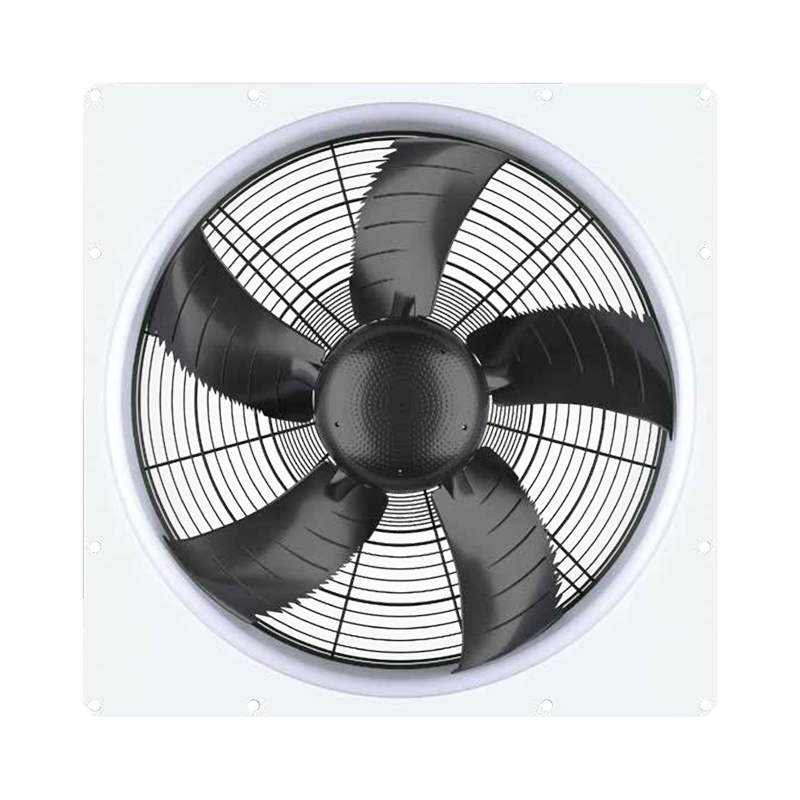
An axial fan motor is an electric motor specifically designed to drive the impeller or propeller of an axial fan. The motor converts electrical energy into mechanical rotation, which spins the fan blades to move air in a direction parallel to the motor's shaft. Axial fan motors are available in various configurations—AC, DC, and EC (electronically commutated)—each with distinct characteristics, advantages, and applications.
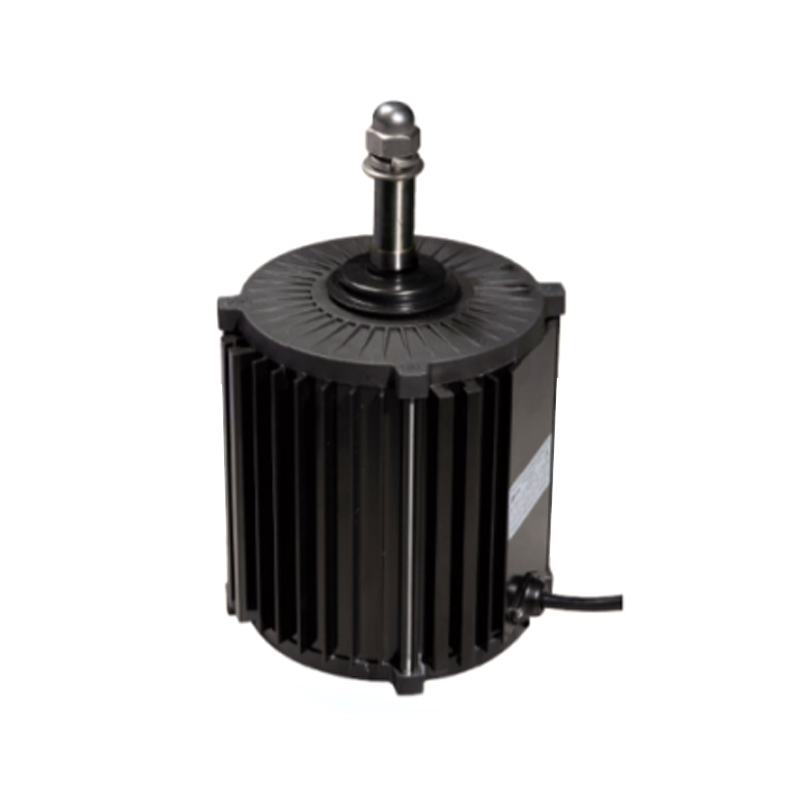
The motor's design directly influences the fan's airflow capacity, pressure capability, noise level, and energy consumption. In many modern axial fan assemblies, the motor is integrated into the fan hub—a configuration known as an external rotor motor, where the rotor revolves around a stationary stator. This design allows fan blades to be mounted directly onto the rotating outer shell, creating a compact, efficient unit. External rotor motors are particularly common in axial fans for HVAC, refrigeration, and industrial ventilation applications.
Axial fan motors are available with various protection classes (such as IP54, IP55, and IP68), operating temperature ranges (from -40°C to 300°C with custom options), and diameter ranges (from 200 mm to over 2,000 mm). The choice of motor type and specifications depends on the specific requirements of the application, including airflow volume, static pressure, environmental conditions, and efficiency targets.
How Does an Axial Fan Motor Work?
The working principle of an axial fan motor is straightforward yet effective. The motor drives an impeller—a set of blades arranged around a central hub—which rotates to create a pressure difference that draws air in and pushes it out in a straight line parallel to the motor shaft. This design is highly efficient for moving large volumes of air when there is low resistance in the flow path.
The impeller blades are powered by an electric motor that converts electrical energy into mechanical rotation. In an axial fan, the air is conveyed in axial direction in parallel with the rotating motor shaft. The motor's rotation speed, torque, and power output determine the fan's airflow and pressure capabilities.
Modern axial fan motors often incorporate advanced technologies such as electronic commutation, which allows for precise speed control and improved efficiency. The integration of the motor directly into the fan hub (external rotor design) eliminates the need for an output shaft and greatly reduces the overall footprint of the motor and impeller assembly. This design also improves heat dissipation, as the rotating impeller acts as a heat sink.
Types of Axial Fan Motors: AC, DC, and EC
Axial fan motors are broadly classified into three main categories: AC motors, DC motors, and EC motors. Each type has distinct characteristics that make it suitable for different applications. Understanding these differences is the first step in selecting the right motor for your needs.
AC Axial Fan Motors
AC (alternating current) motors are the traditional choice for axial fans. They are characterized by a simple structure, stable operation, and cost-effectiveness. AC motors operate directly from the mains power supply, making them easy to install and integrate into existing systems.
AC induction motors have electrical windings in the stator that are supplied with alternating current to produce a rotating magnetic field. With a fixed line frequency, AC motors have a limited speed range, so they are designed to operate at the peak efficiency point on their performance curve. Outside of this range, efficiency tends to drop off significantly.
However, AC motors have inherent limitations. They are less energy-efficient than DC and EC motors due to slippage—a portion of electrical energy is wasted as heat. Additionally, regulating the speed of an AC fan requires expensive and space-consuming variable frequency drives (VFDs). AC motors also typically have a lower efficiency at part-load conditions, which is significant because most HVAC systems operate at speeds below 80% for most of their operating time.
AC axial fans are commonly used in industrial ventilation, cooling towers, and HVAC base systems where cost is a primary consideration and variable speed control is not critical.
DC Axial Fan Motors
DC (direct current) motors, particularly brushless DC (BLDC) motors, offer significant advantages over traditional AC motors. They are characterized by small size, light weight, and high efficiency. DC motors eliminate the carbon brushes and commutators found in traditional motors, reducing friction, heat generation, and wear over time.
BLDC motors with electronic commutation can be operated in a wide speed range without much decrease in efficiency. They are also more reliable and have a longer service life compared to AC motors, making them an attractive choice for applications requiring continuous operation.
EC Axial Fan Motors
EC (electronically commutated) motors represent the most advanced technology in axial fan motors. An EC motor is essentially a brushless DC motor with a built-in "control brain"—a highly integrated intelligent PCBA control board. It converts AC voltage to DC and runs a fan efficiently at the appropriate speed.
EC motors combine the best of both AC and DC technology by using AC power with a brushless DC motor. They offer several compelling advantages:
Energy Efficiency: EC motors achieve motor efficiency of approximately 90%, eliminating the energy loss from brush friction and the additional electricity needed to excite the rotor magnetic field. They deliver 30% to 50% energy efficiency improvement compared to traditional AC systems. In today's high electricity costs, this savings translates directly to real money for businesses.
Precision Control: Built-in intelligent chips support 0-10V/PWM speed regulation signals, with fast response and high control accuracy. EC fans can be programmed to deliver exactly the amount of air required based on real-time conditions, optimizing energy consumption.
Longer Lifespan: EC axial fans can exceed 60,000 hours of service life. In real-world conditions operating at part load, fan packages can exceed 150,000 hours.
Lower Noise: EC motors operate more quietly than AC motors, making them ideal for noise-sensitive environments. Some advanced EC axial fans achieve near-silent operation with biomimetic blade designs.
Plug and Play: Standardized interface design with built-in protection functions (over-voltage, over-current, over-temperature) simplifies installation and debugging.
EC axial fans are increasingly becoming the new standard for the industry, particularly in data centers, smart buildings, and precision cooling systems.
Axial Fan Motor vs Centrifugal Fan Motor: Understanding the Difference
While both axial and centrifugal fans are used for air movement, they serve different purposes and require different motor characteristics. Understanding these differences is essential for selecting the right fan and motor for your application.
Axial fans are designed to move air parallel to the axis around which the fan blades rotate. They excel at moving large volumes of air efficiently at low pressures. The design of their blades is similar to airplane propellers, directing airflow in a straight line along the fan's axis. Axial fans generally produce lower noise levels, especially at low speeds. They are commonly used in HVAC systems, refrigeration, cooling towers, chillers, and various industrial processes that require high airflow rates.
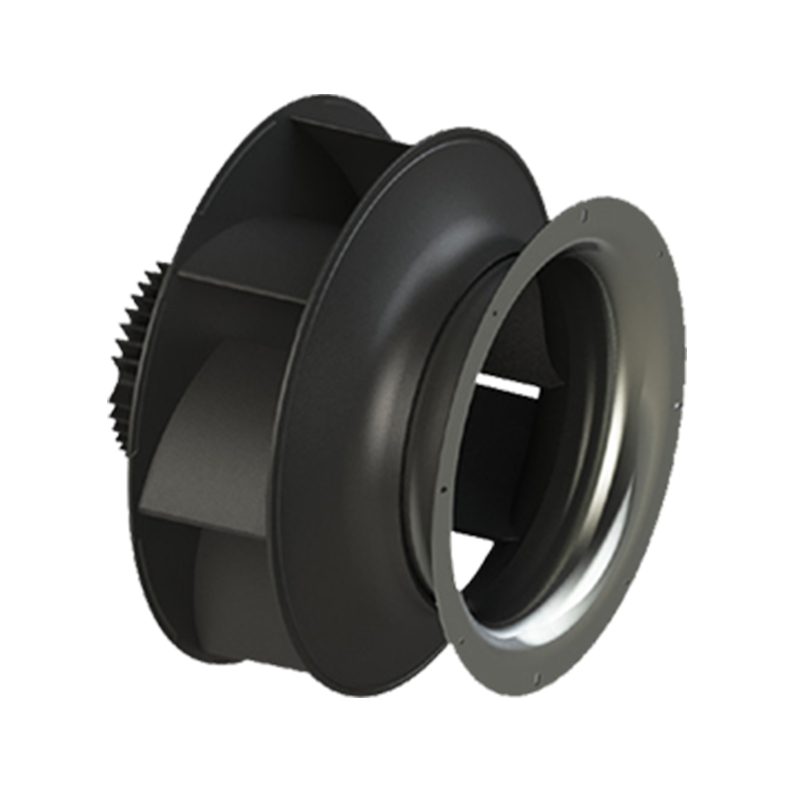
Centrifugal fans, also known as radial fans, move air perpendicular to the fan's axis. They are designed to generate high pressure and are used where airflow resistance is higher or where air needs to be forced through ductwork or restrictive media. Centrifugal fans have a larger footprint and can achieve efficiencies up to 88%.
Axial fan designs are flat and light but produce low pressure, while centrifugal blower designs produce high pressure but are bulky and heavy. Axial fans drive air under low static pressure conditions in parallel with their axis of rotation and are mainly used for cooling of coils. Centrifugal fans drive larger volumes of air under high static pressure conditions at a right angle to their axis of rotation.
When choosing between axial and centrifugal fan motors, consider the required airflow, static pressure, available space, and noise constraints of your application.
Energy Efficiency: The Driving Force Behind Motor Selection
Energy efficiency is perhaps the most important consideration when selecting an axial fan motor. With energy costs rising and environmental regulations becoming more stringent, the efficiency of the motor directly impacts both operating costs and carbon footprint.
In commercial buildings, more than 25 percent of the energy consumed is used for heating and air-conditioning. Fans account for a significant portion of this energy use—anywhere from 20 to 60 percent. Improving fan motor efficiency can therefore yield substantial energy savings.
EC motors achieve the highest efficiency levels, with motor efficiency reaching approximately 90%. Part-load efficiency is particularly important because most HVAC systems run at speeds below 80% for most of their operating time. EC fans with brushless DC motors can achieve impressive efficiency at full speed, often exceeding the IE4 Super-Premium standard. However, EC fans can experience a drop in efficiency at part load, potentially falling below IE3 levels once operating speeds fall under 60%. Pairing a high-efficiency motor with a drive provides a clear advantage, as it maintains its efficiency even at lower operating speeds.
EC motors have an almost flat efficiency curve that varies relatively little across the speed range, making them particularly well-suited for applications with variable airflow requirements.
For the highest efficiency, some manufacturers are now offering IE5 synchronous reluctance (SynRM) motors, delivering ultra-premium energy efficiency. These motors represent the cutting edge of motor efficiency and are increasingly being adopted in high-performance fan applications.
Key Applications of Axial Fan Motors
Axial fan motors are used across a wide range of industries and applications. Understanding the specific requirements of each application helps in selecting the right motor type and specifications.
HVAC Systems
Heating, ventilation, and air conditioning (HVAC) systems are one of the largest users of axial fan motors. Axial fans are commonly used in heat pumps, condensers, commercial evaporators, cooling towers, and condensing units. Axial fans generally produce lower noise levels, especially at low speeds, making them suitable for office buildings and residential applications.
In HVAC applications, EC motors are increasingly preferred due to their energy efficiency and precise speed control. EC axial fans integrate electronic commutation technology, delivering 30%-50% energy efficiency improvement and exceeding 60,000-hour lifespan.
Data Centers and Telecommunications
Data centers and telecom facilities require continuous, reliable cooling to maintain optimal operating temperatures for servers and networking equipment. Cooling axial fans play a critical role in dissipating heat from electronic components. The market is witnessing an increasing demand for these fans in IT and telecommunications.
In data centers, EC axial fans with intelligent control interfaces can automatically adjust speed based on real-time temperature conditions, delivering exactly the amount of air required. This demand-based air supply optimizes energy consumption and reduces operating costs.
Industrial Ventilation
Industrial facilities—including factories, warehouses, and tunnels—require robust ventilation systems to maintain air quality and safe temperatures. Axial fans are used for general ventilation, smoke extraction, and fresh air injection in both commercial and industrial environments.
Industrial axial fans are available with various motor types, including AC, EC, and DC, and can be customized with different materials (steel, stainless steel, aluminum, FRP) to suit harsh conditions including high humidity, dust, and corrosive environments.
Refrigeration and Cooling
Axial fans are essential in refrigeration applications, including chillers, shock freezers, and evaporators. They are also used in condensers and cooling towers. The ability to operate at low speeds with low noise makes axial fans particularly suitable for these applications.
EC axial fans are increasingly used in refrigeration due to their energy efficiency and ability to maintain performance across a wide range of operating conditions.
Automotive and Electric Vehicles
The automotive industry is a growing market for axial fan motors. Applications include engine cooling, air conditioning, cabin ventilation, and battery cooling. The global automotive fan motor market is expected to witness a CAGR of 6.7% from 2025 to 2035.
Axial flux motors are particularly well-suited for automotive applications where axial distances are preferably minimized, such as in ceiling fans and condenser cooling fans.
Agriculture and Animal Husbandry
Axial fans are used in agriculture and animal husbandry for ventilation in barns, greenhouses, and other agricultural facilities. These applications require reliable, durable fans that can operate in dusty and humid conditions.
Key Factors to Consider When Selecting an Axial Fan Motor
Choosing the right axial fan motor involves evaluating several critical factors. Here are the key considerations to guide your decision.
Airflow Requirements
Determine the amount of air that must be moved. Airflow is typically measured in cubic feet per minute (CFM) or cubic meters per hour (m³/h). Axial fans are available with airflow ranges from 50,000 to 830,000 m³/h. The required airflow depends on the size of the space, the heat load, and the desired air change rate.
Static Pressure
Static pressure is the resistance to airflow that the fan must overcome. Axial fans are designed for low to medium static pressure applications. Static pressure requirements typically range up to 5,000 Pa. Higher static pressure applications may require centrifugal fans instead of axial fans.
Space Constraints
Consider the available space for the fan installation. Axial fans are generally more compact than centrifugal fans, making them suitable for space-constrained applications. External rotor motor designs offer even more compact configurations.
Environmental Conditions
Consider the operating environment, including temperature, humidity, dust, and corrosive elements. Axial fan motors are available with various protection classes (IP54, IP55, IP68) and operating temperature ranges (-40°C to 300°C with custom options).
Power Supply
Verify voltage, phase, and frequency compatibility with your local power supply. AC motors operate directly from mains power, while DC and EC motors require appropriate power conversion. If the customer does not have 3-phase power available, a fan requiring a motor under 3 horsepower is recommended—single-phase motors above 3 hp are more expensive, have larger frames, and consume significantly more power.
Efficiency Requirements
Consider the energy efficiency requirements for your application. EC motors offer the highest efficiency, followed by DC motors, with AC motors being the least efficient. If energy savings and sustainability are priorities, EC motors are the best choice.
Speed Control
Determine whether variable speed control is required. EC motors offer the most precise speed control, with support for 0-10V/PWM signals and Modbus communication. AC motors require external variable frequency drives for speed control.
Noise Constraints
Consider the acceptable noise level for your application. Axial fans generally produce lower noise levels than centrifugal fans. EC motors also tend to operate more quietly than AC motors. For noise-sensitive applications, look for fans with optimized blade profiles that minimize turbulence and noise emissions.
Service Life and Maintenance
Consider the expected service life and maintenance requirements. EC axial fans can exceed 60,000 hours of service life. Motors with sealed-for-life bearings require minimal maintenance.
Maintenance and Troubleshooting of Axial Fan Motors
Proper maintenance is essential for ensuring the longevity and reliability of axial fan motors. Understanding common problems and their solutions helps minimize downtime and repair costs.
Common Problems and Solutions
Motor Fails to Start: This may be a power issue, such as a loose power plug, damaged power cord, or abnormal power supply voltage. It may also be a motor malfunction, such as a short circuit or open circuit in the motor winding, stuck bearings, or damaged starting capacitors.
Motor Overheating: Common causes include incorrect wiring, loose wiring connections, or a clogged cooling fan cover on the back of the motor. A normal motor will operate at approximately 174°F.
High Running Current: Check electrical connections and ensure the fan is running smoothly without shaking vigorously. Also check that the fan blade is not rubbing against the casing.
Excessive Noise or Vibration: This may be caused by impeller imbalance due to soiling or material decomposition. Check the wiring configuration and remove any blockage.
Maintenance Best Practices
Regular Inspection: Regular inspections are advisable to check for signs of wear, lubrication issues, or misalignment. Systemair axial fans without VDD need to be maintained after 20,000/40,000 hours of operation (depending on the type of motor bearing) or at the latest after 5 years.
Proper Lubrication: Proper lubrication is crucial to minimize friction and prevent premature bearing failure. Use high-quality lubricants specifically designed for your bearing type.
Regular Cleaning: Cleaning fan motor bearings regularly is vital for removing dirt and debris that can lead to wear. Use a soft brush or compressed air to eliminate contaminants.
The Future of Axial Fan Motors
The axial fan motor industry is undergoing significant transformation driven by technological advancements, regulatory pressures, and changing market demands.
Electrification and Thermal Management: Advances in motor control and power electronics enable finer speed modulation and energy savings. Electrification in automotive platforms and densification in data and telecom infrastructures are pushing fans into new duty cycles and environmental exposures.
Sustainability: Emphasis on sustainability is emerging as a critical differentiator, with lower-loss motors, recyclable materials, and end-of-life planning gaining prominence. Energy-efficient fans contribute to cost savings and align with sustainability initiatives.
Smart and Connected Fans: The integration of automation and remote monitoring enables facility managers to optimize fan performance and track critical metrics in real time. EC fans with intelligent control interfaces and Modbus compatibility are becoming the standard.
High-Efficiency Motor Technologies: The adoption of IE5 synchronous reluctance motors and other ultra-premium efficiency technologies is increasing. These motors offer even greater energy savings and reduced operating costs.
The global axial motor market is expected to grow significantly, reflecting the increasing demand for energy-efficient, reliable, and intelligent axial fan motors across multiple industries.
Frequently Asked Questions About Axial Fan Motors
What is an axial fan motor?
An axial fan motor is an electric motor designed to drive the impeller of an axial fan. It converts electrical energy into mechanical rotation, spinning the fan blades to move air parallel to the motor's shaft. Axial fan motors are available in AC, DC, and EC configurations, each with distinct characteristics and applications.
What is the difference between AC, DC, and EC axial fan motors?
AC motors are the traditional choice—simple, stable, and cost-effective, but less energy-efficient. DC motors (particularly brushless DC) offer higher efficiency and smaller size. EC motors combine AC power with brushless DC motor technology, achieving the highest efficiency (up to 90%), precise speed control, and longer service life. EC motors are increasingly becoming the industry standard.
What is an EC motor and why is it more efficient?
An EC (electronically commutated) motor is a brushless DC motor with an integrated intelligent controller. It converts AC voltage to DC and runs the fan efficiently at the appropriate speed. EC motors eliminate carbon brushes and commutators, reducing friction and heat generation. They achieve motor efficiency of approximately 90% and deliver 30% to 50% energy savings compared to traditional AC systems.
How do I choose the right axial fan motor for my application?
Consider airflow requirements, static pressure, space constraints, environmental conditions, power supply, efficiency requirements, speed control needs, noise constraints, and expected service life. EC motors are generally the best choice for energy efficiency and precise control, while AC motors may be suitable for cost-sensitive applications without variable speed requirements.
What is the difference between an axial fan and a centrifugal fan?
Axial fans move air parallel to their axis of rotation and are designed for high airflow at low pressures. They are flat, light, and quiet. Centrifugal fans move air perpendicular to their axis and are designed for high pressure applications. They are bulkier and heavier but can handle higher resistance. Axial fans are typically used for cooling and general ventilation, while centrifugal fans are used for ducted systems and applications requiring higher pressure.
How long do axial fan motors last?
EC axial fans can exceed 60,000 hours of service life. In real-world conditions operating at part load, fan packages can exceed 150,000 hours. AC motors typically have a shorter service life, especially under continuous operation.
What maintenance do axial fan motors require?
Regular inspection for signs of wear, lubrication issues, or misalignment is recommended. Proper lubrication is crucial for bearing life. Bearings should be cleaned regularly to remove dirt and debris. Systemair axial fans without VDD need maintenance after 20,000/40,000 hours of operation or at the latest after 5 years, depending on the bearing type.
Can axial fan motors be used with variable speed drives?
Yes. EC motors have built-in speed control capabilities supporting 0-10V/PWM signals and Modbus communication. AC motors require external variable frequency drives (VFDs) for speed control. Some axial fan packages feature integrated VFDs directly on the motor for compact, efficient speed control.
Are axial fan motors noisy?
Axial fans generally produce lower noise levels than centrifugal fans, especially at low speeds. EC motors also tend to operate more quietly than AC motors. For noise-sensitive applications, fans with optimized blade profiles that minimize turbulence and noise emissions are available, with some achieving noise levels as low as 63 dBA.
What is an external rotor motor in axial fans?
In an external rotor motor, the rotor revolves around a stationary stator. This design allows fan blades to be mounted directly onto the rotating outer shell, creating a compact, efficient unit. External rotor motors are particularly common in axial fans for HVAC, refrigeration, and industrial ventilation applications.
What are the common problems with axial fan motors?
Common problems include motor failure to start (due to power issues, short circuits, or stuck bearings), motor overheating (due to incorrect wiring or clogged cooling), high running current, and excessive noise or vibration (due to impeller imbalance or soiling). Regular maintenance and inspection help prevent these issues.
What is the market outlook for axial fan motors?
The global axial motor market, Brushless DC Axial Fan market, and EC Axis Fan market are all experiencing significant growth driven by increasing demand for energy-efficient, reliable, and intelligent fan solutions across multiple industries.
Recommended Products
The variety of models, to meet the development needs of various regions in the world.



Recommended News
CONTACT US

QUICK LINKS
CONTACT INFORMATION
- Email: [email protected]
- Tel: +86-575-86287301
- FAX: +86-0575-86287300
- Address: Provincial High-tech Industrial Park, Xinchang County, Zhejiang Province, China.
© 2025 Zhejiang Kemao Holding Group Co., Ltd.
All Rights Reserved.
 OEM/ODM HVAC Axial Fan Manufacturers
