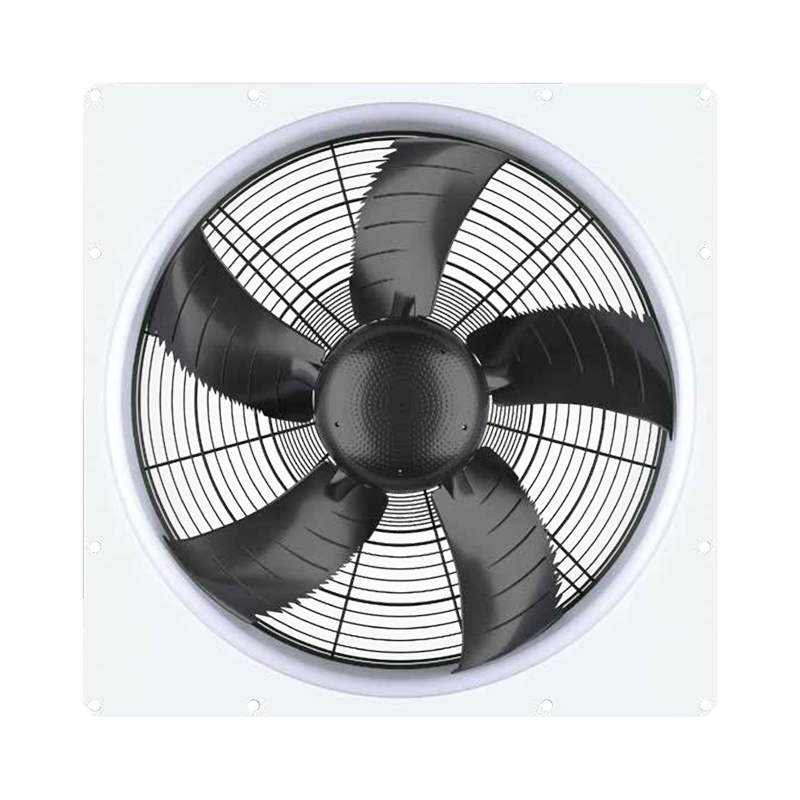
Industrial and commercial ventilation layouts often face spatial limitations that make traditional floor-mounted or inline duct blower systems impractical. When floor space is at a premium and overhead ducting is restricted, the wall-mounted centrifugal fan emerges as a highly effective engineering solution. Unlike axial designs that move air straight through parallel to the shaft, centrifugal fans pull air inward and push it outward at a ninety-degree angle. This configuration generates significantly higher static pressure, allowing the ventilation system to overcome resistance caused by extensive ducting, filters, and dampers. This article provides a comprehensive and detailed examination of the design, components, applications, and selection parameters of these specialized radial flow air movers.
Understanding the Working Principle of Wall Mounted Centrifugal Fans
The operational success of a wall-mounted centrifugal fan relies on the transformation of kinetic energy into potential pressure energy. To comprehend this thermodynamic process, one must examine the specific fluid dynamics occurring inside the fan scroll housing during operation.
The Centrifugal Force and Radial Airflow Path
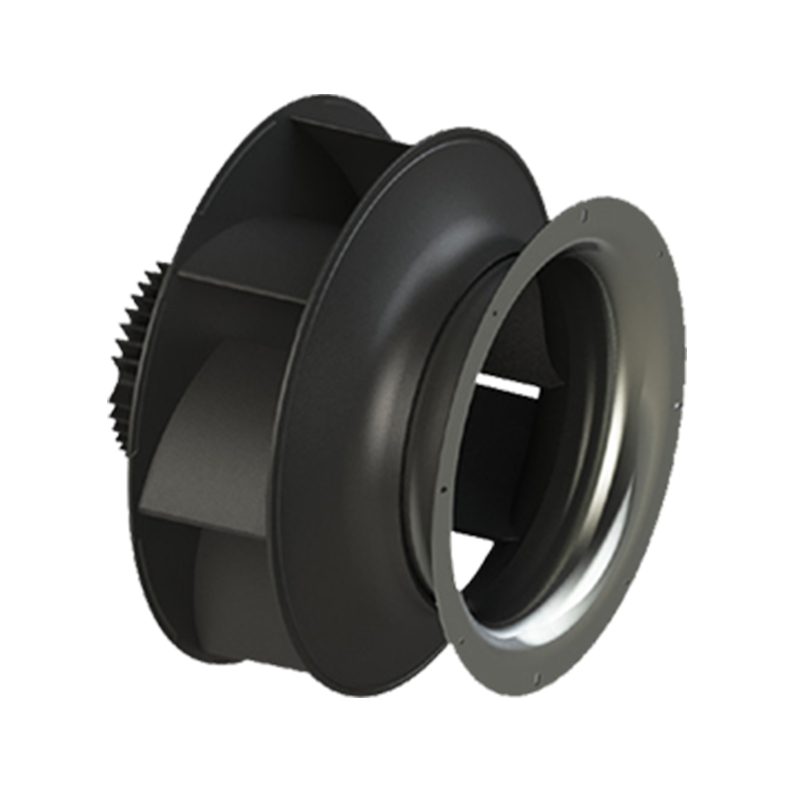
Air enters the wall-mounted centrifugal fan through an inlet cone located on the front face of the unit, traveling parallel to the rotating shaft. As the air meets the rapidly spinning impeller, it is immediately caught by the blades. The rotation of the impeller forces the air molecules to spin with the rotor. This rotational movement subjects the air to intense centrifugal force, which flings the air outward away from the center of the shaft toward the outer edge of the fan casing.
As the air is thrown radially outward, it collects in the scroll-shaped housing, which is also referred to as the volute. The unique, expanding geometry of the scroll housing gradually increases in cross-sectional area toward the discharge outlet. This expanding path slows down the high-velocity air stream, converting the velocity pressure of the air into static pressure. The pressurized air is then discharged through the outlet at a ninety-degree angle relative to the inlet direction, allowing it to navigate complex duct bends or exhaust directly through thick exterior walls.
How Impeller Blades Generate Pressure Differentials
The continuous movement of air is driven by a constant pressure differential established between the fan inlet and the surrounding environment. As the impeller blades force the air outward toward the scroll casing, a low-pressure zone is created at the center of the impeller hub, which is known as the fan eye. This localized vacuum is significantly lower than the atmospheric pressure of the room being ventilated.
Because fluids naturally flow from areas of higher pressure to areas of lower pressure, ambient air from the room is drawn into the fan eye to fill the void. This incoming air is subsequently accelerated by the blades and discharged, maintaining a continuous, non-pulsating stream of exhaust air. The magnitude of the pressure differential generated is directly determined by the rotational speed of the impeller and the specific design profile of the blades.
Key Component Materials and Engineering of Wall Mounted Centrifugal Fans
To withstand constant operation and survive exposure to outdoor weather elements on the exterior of building walls, wall-mounted centrifugal fans must be engineered from durable, high-grade materials. Every component part is selected to minimize wear, manage mechanical stresses, and resist environmental degradation.
Durable Scroll Housing and Inlet Cones
The outer housing of a wall-mounted centrifugal fan must be structurally rigid to prevent vibration-induced fatigue and to protect the internal rotating parts. Manufacturers typically construct these housings from heavy-gauge galvanized steel, stainless steel, or rotomolded UV-resistant polymers. Galvanized steel is highly cost-effective for general ventilation, while stainless steel is reserved for chemical exhaust and food processing plants where washdowns are frequent and sanitation is critical.
The inlet cone is designed with a precise aerodynamic radius to guide incoming air into the impeller with minimal turbulence. A poorly designed inlet cone creates eddies and flow separation at the blade tips, which increases energy consumption and generates excessive aerodynamic noise. High-performance wall fans utilize spun-aluminum or deep-drawn steel inlet cones to ensure smooth, laminar air entry.
Forward Curved Versus Backward Inclined Impellers
The design of the impeller blades defines the performance envelope and efficiency of the wall-mounted centrifugal fan. The two primary impeller configurations used in wall-mounted units are forward curved blades and backward inclined blades, each serving distinct application needs.
|
Impeller Blade Type
|
Aerodynamic Profile
|
Operational Characteristics
|
Ideal Application Scenarios
|
|
Forward Curved
|
Small, curved blades pointing in the direction of rotation
|
Operates at low speeds, quiet, handles moderate pressures
|
Clean air ventilation, commercial offices, compact systems
|
|
Backward Inclined
|
Flat or curved blades tilting away from the direction of rotation
|
High efficiency, self-limiting power curve, handles particulate matter
|
Industrial exhaust, high static pressure ducted systems, grease extraction
|
Forward curved impellers feature numerous small blades that curve forward in the direction of rotation. These impellers operate at relatively low rotational speeds, making them exceptionally quiet and well-suited for commercial office spaces and public buildings. However, they are sensitive to dust accumulation and can suffer from motor overload if the system static pressure drops below the design point.
Backward inclined impellers, including those with airfoil blade profiles, feature blades that lean away from the direction of rotation. These impellers are highly efficient and exhibit a self-limiting power characteristic, meaning the motor will not overload even if the fan operates against very low resistance. They can handle air streams containing light dust or moisture without significant buildup, making them the standard choice for heavy-duty industrial extraction.
Integrated Motor Mounts and Wall Brackets
Because these fans are mounted vertically on building walls rather than sitting on a flat floor, the structural engineering of the mounting brackets and motor support frame is of vital importance. The brackets must be designed to distribute the static weight of the fan assembly and the dynamic forces generated during startup and high-speed operation across a wide surface area of the wall.
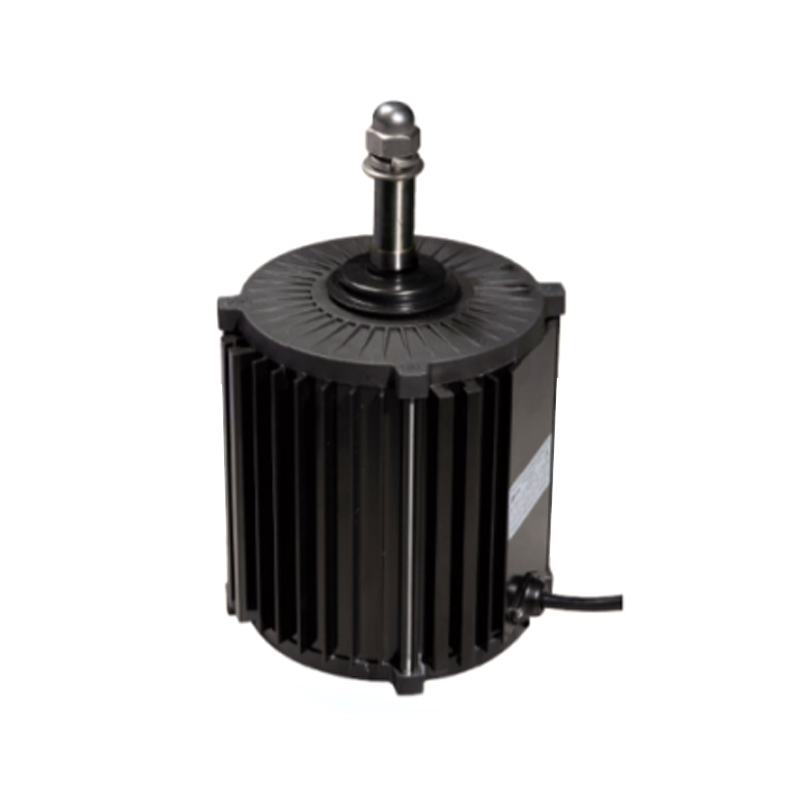
Heavy-duty wall-mounted centrifugal blowers are equipped with structural steel mounting frames that are hot-dip galvanized or powder-coated to prevent rust. These frames feature built-in vibration isolation grommets or spring mounts that separate the motor plate from the wall bracket. This separation prevents the transmission of motor hum and rotational vibration into the structural walls of the building, preserving the acoustic comfort of the indoor spaces.
Main Benefits of Installing Centrifugal Fans Directly on Walls
Integrating a wall-mounted centrifugal fan into a facility design offers several key advantages over alternative ventilation setups, particularly regarding spatial efficiency, pressure management, and air control.
Minimizing Footprint in Tight Commercial and Industrial Zones
In modern manufacturing facilities, commercial kitchens, and laboratories, every square meter of floor space is directly tied to productivity and revenue generation. Installing a floor-mounted blower system requires valuable floor area and necessitates the construction of protective safety barriers around the machine. Wall mounting solves this challenge by moving the entire ventilation apparatus off the ground.
By elevating the fan onto an exterior wall, facilities can utilize the space underneath for production equipment, workbenches, or storage racking. Furthermore, wall-mounted centrifugal units can be installed directly at the point of grease or fume generation, which minimizes the length of ducting required to transport contaminated air out of the building, reducing installation labor and material expenses.
Handling Moderate to High Static Pressure with Duct Resistance
Axial wall exhaust fans are effective at moving large volumes of air, but they lose performance rapidly when forced to push air through ductwork, louvers, or multi-stage filtration units. If a facility requires local exhaust hoods with fine particulate filters, the resistance in the system can easily stall an axial fan.
A wall-mounted centrifugal fan excels in these high-resistance environments. The radial acceleration of the air allows the fan to build the static pressure needed to overcome the resistance of long duct runs, elbows, electrostatic precipitators, and active carbon filters. This ensures that the designed exhaust volume is maintained, keeping the work zone free of contaminants regardless of the complexity of the filtration system.
Directional Air Exhaust and Controlled Drafts
In many municipal areas, environmental and building codes prohibit the direct horizontal discharge of contaminated air or kitchen grease onto adjacent properties or public walkways. Because centrifugal fans discharge air at a ninety-degree angle to the inlet, they can be configured to exhaust air vertically upward or downward, even when mounted on a vertical wall.
By orienting the scroll housing discharge upward, the exhausted air is directed away from neighboring buildings and pedestrian zones, allowing fumes to dissipate harmlessly into the upper atmosphere. Additionally, the directed nature of centrifugal discharge prevents back-drafting, which is the tendency of wind blowing against the exterior wall of a building to force exhaust air back into the ventilation system.
Primary Applications of Wall Mounted Centrifugal Ventilation Systems
The unique ability of wall-mounted centrifugal fans to generate high pressure from a space-saving location makes them popular across diverse commercial and industrial sectors.
Commercial Kitchen Hoods and Food Preparation Facilities
In commercial restaurants and institutional kitchens, grease-laden air, high heat, and moisture must be removed continuously to maintain food safety standards and worker comfort. Standard exhaust fans would quickly become coated with grease, leading to motor failure and a significant fire hazard.
Wall-mounted centrifugal kitchen fans, often referred to as upblast fans, are specifically engineered for this demanding environment. These fans are mounted on the exterior wall of the kitchen, drawing greasy air through the interior hood ductwork. The motor is completely isolated from the grease-saturated exhaust air stream, cooled by clean outdoor air. The centrifugal action flings the grease out of the air stream into a integrated collection trap, while the air is directed upward away from the roof and wall surfaces, preventing structural damage and reducing fire risks.
Local Exhaust Ventilation for Chemical Storage and Laboratory Hoods
Chemical processing plants, solvent storage rooms, and scientific laboratories generate hazardous fumes that must be evacuated immediately to prevent inhalation risks. These chemical exhaust systems often incorporate scrubbers, particulate filters, and extensive duct networks to ensure that toxic substances are captured before release.
Wall-mounted centrifugal exhaust blowers are the standard choice for these local exhaust systems. Constructed with chemical-resistant materials like polypropylene or epoxy-coated stainless steel, these fans provide the necessary static suction to pull heavy chemical vapors through containment hoods and filters. The exterior wall mount ensures that the interior ductwork remains under negative pressure, which means that any small leak in the indoor duct system will draw clean air in rather than letting toxic fumes escape into the occupied building spaces.
Multi Level Warehouses and Industrial Workshop Clean Zones
In large logistics warehouses and manufacturing workshops, heat tends to accumulate near the ceiling, while heavy dust and fumes hover in the lower working zones. Maintaining air quality requires a combination of general dilution ventilation and targeted exhaust systems.
Wall-mounted centrifugal units can be positioned strategically along the building perimeter at different heights to establish a controlled airflow pattern. Lower units can extract heavy vapors and grinding dust from fabrication zones, while higher units evacuate the hot air blanket that builds up beneath the roof. The high-pressure capacity of these centrifugal fans allows them to exhaust through thick, insulated masonry walls and long architectural louvers without losing operational efficiency.
Vital Guidelines for Designing and Selecting the Right System
Specifying the correct wall-mounted centrifugal fan requires careful consideration of fluid dynamics, acoustic properties, and mechanical limits. A mismatch between the fan capabilities and the system requirements can lead to high energy costs, excessive noise, and inadequate air exchange.
Calculating Volumetric Flow Rates and System Resistance Curves
The selection process must always begin with an accurate calculation of the required volumetric flow rate, which is commonly measured in cubic meters per hour or cubic feet per minute. This target flow rate is determined by the volume of the space, the air change rate required by local building codes, and the specific contaminants being removed.
Once the target flow rate is established, the total static pressure of the system must be calculated by summing the pressure losses through every duct segment, fitting, hood, and filter. This calculation provides the system resistance curve. By overlaying this curve onto the performance curves provided by the fan manufacturer, engineers can identify the exact fan model and operating speed that will deliver the required airflow with the highest efficiency.
Acoustic Considerations and Vibration Isolation Methods
Centrifugal fans generate noise through both mechanical friction and aerodynamic turbulence. Because wall-mounted units are attached directly to the structural envelope of the building, any vibrational energy they produce can travel through the walls and resonate inside nearby office spaces or classrooms, creating a major noise nuisance.
To manage acoustic levels, design engineers should select fans that operate at the lower end of their speed range, as aerodynamic noise increases exponentially with impeller tip speed. Additionally, the fan housing should be isolated from the wall using heavy-duty elastomeric isolation pads or spring-loaded wall hangers. Flexible fabric connectors must be installed between the fan inlet/outlet and the metal ductwork to prevent the duct system from acting as an acoustic speaker, transmitting vibration throughout the entire facility.
Moisture and Corrosion Prevention in Humid Environments
When wall-mounted fans exhaust humid air from industrial wash bays, commercial laundries, or indoor swimming pools, condensation will occur inside the fan housing as the warm, moist exhaust air meets the colder outdoor temperatures. If this moisture is not managed, it will cause rapid rust on carbon steel parts and can seep into the motor bearings, causing electrical failure.
For these applications, the centrifugal fan scroll housing must be specified with a built-in condensate drain plug at the lowest point of the scroll curves. This allows accumulated water to drain away safely before it can pool and corrode the impeller. The motor housing should have a high ingress protection rating, such as IP55 or higher, to prevent moisture from penetrating the electrical windings, and the impeller shaft should be fitted with a neoprene slinger ring to deflect water away from the motor bearings.
Operational Maintenance and Troubleshooting of Wall Mounted Centrifugal Units
To guarantee a long operational lifespan and prevent unexpected ventilation system failures, wall-mounted centrifugal fans must be subjected to regular, planned maintenance inspections. Accessing these fans on exterior walls often requires specialized equipment, making structured maintenance planning highly cost-effective.
Scroll Housing Cleaning and Impeller Inspection Protocols
Over months of continuous operation, airborne dust, grease, and industrial residues will accumulate on the surfaces of the impeller blades and inside the scroll housing. This accumulation is particularly problematic on forward-curved blades, where the small pocket-like curves can easily fill with debris.
This buildup causes several severe operational issues. First, it alters the aerodynamic shape of the blades, reducing the static pressure capability and the overall volumetric flow of the fan. Second, if the debris does not accumulate uniformly, it will create a rotating imbalance, generating destructive vibration that will quickly destroy the motor bearings. Maintenance teams must schedule semi-annual shutdowns to wash the impeller blades and clean any debris from the interior of the scroll casing using non-corrosive chemical cleaners and soft brushes.
Solving Problems with Decreased Volumetric Output and Motor Drag
If a wall-mounted centrifugal ventilation system experiences a drop in performance, a systematic troubleshooting procedure should be followed to isolate the cause. The most frequent cause of low airflow is a clogged air filter or an obstruction inside the ductwork, such as a stuck fire damper. Measuring the pressure drop across filters and inspecting damper linkages will quickly identify these common issues.
Another common issue is motor overheating and drag, which manifests as a high electrical current draw and frequent thermal overload trips. This can occur if the fan impeller is rubbing against the inlet cone due to a bent shaft or loose mounting bolts. Inspecting the radial clearance between the spinning impeller and the stationary inlet cone and tightening all structural bolts to the manufacturer specified torque values will prevent motor drag and ensure quiet, efficient operation.
By implementing these selection standards, structural designs, and proactive maintenance practices, wall-mounted centrifugal fans provide highly efficient, space-saving air movement solutions capable of overcoming substantial system resistance across a wide range of demanding environments.



 English
 中文简体
中文简体 русский
 Español

 OEM/ODM HVAC Axial Fan Manufacturers