Industrial, commercial, and agricultural ventilation systems rely on mechanical air movement to maintain indoor air quality, control temperatures, and protect sensitive equipment. At the center of every axial fan assembly is the motor, which serves as the primary driver of the entire mechanical process. Axial fan motors must deliver consistent torque, handle high rotational speeds, and operate reliably under continuous duty cycles. This article provides a comprehensive and detailed examination of the engineering principles, electrical technologies, selection guidelines, and operational maintenance strategies associated with these specialized power units.
What Is the Functional Role of Axial Fan Motors in Modern Air Movement
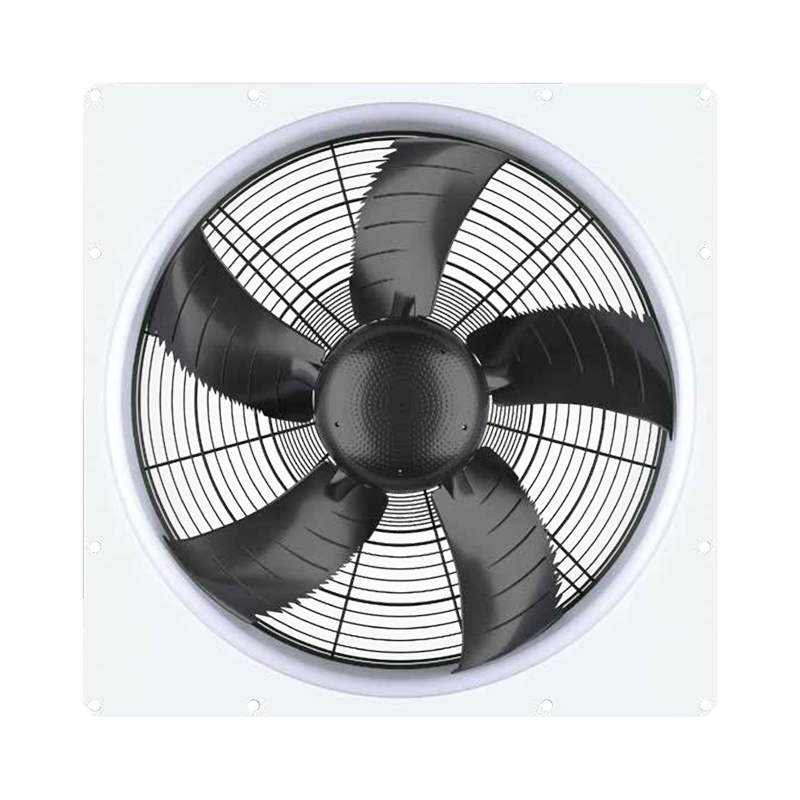
To understand the engineering behind axial fan motors, one must first analyze their specific functional relationship with the fan impeller. Unlike centrifugal fan motors, which often drive blowers that redirect air at right angles, axial fan motors are positioned directly in line with the straight path of the airflow. This coaxial placement introduces unique mechanical and thermal challenges that dictate how these motors are designed and constructed.
Because the motor housing is positioned directly in the air stream, it is constantly exposed to the air being moved by the fan. In clean air ventilation applications, this exposure can be highly beneficial, as the moving air acts as an external cooling medium, allowing the motor to run at lower internal temperatures. However, in applications exhausting hot, moist, or particulate-laden air, this direct exposure requires specialized protective enclosures to prevent contaminants from reaching the internal electrical windings.
The torque characteristics required by axial fan impellers also influence the electrical design of the motor. Axial fans present a variable torque load, meaning the torque required to turn the fan increases with the square of the rotational speed. This load profile requires the motor to have high running efficiency and precise speed control rather than exceptionally high starting torque. The motor must also be capable of handling the aerodynamic thrust load, which is the physical force exerted along the length of the motor shaft as the spinning blades push air forward.
What Core Technologies Power Heavy Duty Axial Fan Motors
Selecting the appropriate motor technology is essential for balancing system performance against electrical energy consumption. Modern industrial fan manufacturers utilize several distinct motor designs, each offering specific benefits depending on the application scale and control requirements.
Single Phase Versus Three Phase Induction Motors
Induction motors represent the traditional backbone of industrial air movement due to their rugged construction and mechanical simplicity. The choice between single-phase and three-phase induction designs is primarily determined by the available power infrastructure and the horsepower requirements of the ventilation system.
Single-phase induction motors are typically reserved for light-duty or commercial applications where power requirements remain below three horsepower. These motors utilize auxiliary start windings and capacitors to initiate rotation. While highly reliable and cost-effective for smaller installations, single-phase motors are inherently less efficient than their three-phase counterparts and do not support advanced variable-speed control as effectively.
Three-phase induction motors are the standard for industrial ventilation installations where power requirements exceed three horsepower. These motors utilize three separate alternating current phases to generate a rotating magnetic field in the stator, eliminating the need for starting capacitors or auxiliary windings. Three-phase motors offer superior starting torque, higher operating efficiency, and excellent compatibility with variable frequency drives, allowing facilities to modulate fan speeds in response to real-time environmental demands.
Electronically Commutated Motors for Energy Optimization
In applications where energy efficiency and precise speed modulation are paramount, electronically commutated motors have become increasingly common. These motors combine the mechanical simplicity of a brushless design with integrated electronic controls to achieve remarkable energy savings.
An electronically commutated motor utilizes permanent magnets on the rotor and stationary electromagnets on the stator. An integrated electronic circuit board continually monitors the position of the rotor and sequences the electrical current to the stator windings, achieving precise rotational control. Because these motors eliminate the slip losses inherent to standard induction designs, they maintain high efficiency levels even when operating at reduced speeds. This capability is highly beneficial in variable air volume systems where fans must run at low speeds during off-peak hours.
How Do Environmental Conditions Affect Axial Fan Motor Design
Because axial fan motors are frequently situated directly within the exhaust or supply air stream, they must be engineered to survive diverse and often hostile environmental conditions. Standard indoor motor enclosures will quickly fail if exposed to the humidity, dust, or chemicals found in industrial environments.
Thermal Load Management and Insulation Classes
The operating temperature of the motor windings is the single most critical factor in determining the overall lifespan of the electrical insulation. If a motor runs consistently above its designed thermal limit, the wire insulation will degrade, leading to short circuits and motor failure.
National Electrical Manufacturers Association standards classify motor insulation systems based on their ability to withstand specific operating temperatures. The most common classes used in industrial fan motors are Class F and Class H.
|
Insulation Class
|
Maximum Allowable Temperature
|
Typical Thermal Margin
|
Common Application Environments
|
|
Class B
|
One Hundred Thirty Degrees Celsius
|
Ten Degrees Celsius
|
Standard commercial HVAC, clean air supply, indoor workshops
|
|
Class F
|
One Hundred Fifty-Five Degrees Celsius
|
Ten Degrees Celsius
|
Industrial exhaust, commercial kitchens, processing plants
|
|
Class H
|
One Hundred Eighty Degrees Celsius
|
Fifteen Degrees Celsius
|
Emergency smoke extraction, glass manufacturing, industrial kilns
|
Class F insulation is the standard requirement for most heavy-duty axial fan applications, providing a safe operating limit of one hundred fifty-five degrees Celsius. For high-temperature environments, such as emergency smoke spill systems or industrial kiln exhaust, Class H insulation is specified to ensure the motor can operate reliably under extreme thermal stress without immediate electrical breakdown.
Ingress Protection and Corrosion Resistance Protocols
In addition to thermal management, axial fan motors must be sealed against the entry of solid particles and liquids. The Ingress Protection rating system provides a standardized method for classifying the sealing effectiveness of electrical enclosures.
A standard industrial axial fan motor often requires an IP55 or IP56 rating. An IP55 rating indicates that the motor is protected against dust ingress that could interfere with operation and is protected against water jets from any direction. For marine installations, coastal facilities, or outdoor roof-mounted exhaust systems, an IP56 or IP67 rating may be specified to protect the internal electrical components against heavy seas or temporary submersion.
Corrosion resistance is achieved through the careful selection of housing materials and surface coatings. Cast iron housings are highly favored for heavy-duty industrial applications due to their exceptional structural strength and natural dampening properties, which help reduce motor vibration. For highly corrosive chemical processing plants or food processing facilities that undergo frequent chemical washdowns, motor housings are fabricated from stainless steel or treated with specialized epoxy coatings that resist chemical degradation.
What Are the Primary Drive Configurations for Axial Fan Motors
The mechanical connection between the motor shaft and the fan impeller dictates the overall efficiency, maintenance profile, and physical footprint of the fan assembly. The two primary drive configurations are direct drive systems and belt drive systems.
Direct Drive Motor Systems and Mechanical Alignment
In a direct drive configuration, the fan impeller is mounted directly onto the extended shaft of the motor. This layout represents the simplest and most aerodynamically efficient design available, as it eliminates the mechanical transmission losses associated with belts, pulleys, and external bearings.
Direct drive configurations require virtually no drive maintenance, as there are no belts to tension or replace. This makes them ideal for installation in hard-to-reach locations, such as high-altitude ceiling mounts, roof exhaust stacks, or buried underground ducting. The absence of belts also eliminates the risk of belt slip, ensuring that the fan delivers consistent airflow over its entire operational lifespan.
However, direct drive systems offer less flexibility in terms of speed adjustment unless paired with a variable frequency drive. The fan speed is locked to the synchronous speed of the motor, meaning that any change in desired airflow requires modifying the electrical frequency supplied to the motor or replacing the motor entirely.
Belt Drive Arrangements and Variable Speed Isolation
Belt drive configurations locate the motor outside of the main air stream, transmitting power to the fan impeller shaft through a system of pulleys and V-belts. This arrangement is highly advantageous in applications where the air stream is extremely hot, moist, or contaminated with abrasive dust or corrosive chemicals.
By isolating the motor from the air stream, belt-driven designs protect the sensitive electrical windings and bearings from environmental damage. This configuration also allows facility engineers to adjust the fan speed by simply changing the size of the pulleys, providing a low-cost method for balancing the ventilation system during commissioning or subsequent facility renovations.
The primary disadvantage of belt drive systems is the requirement for ongoing mechanical maintenance. Belts will naturally stretch and wear over time, requiring periodic tensioning and eventual replacement. Belt slippage also introduces mechanical energy losses, typically reducing the overall drive efficiency by three to five percent compared to an equivalent direct-drive system.
How to Select and Size the Ideal Motor for Axial Ventilation Units
Specifying the correct motor size for an axial fan requires a precise calculation of the mechanical workload and an understanding of the electrical operating environment. Over-sizing a motor leads to unnecessary capital expenditure and poor electrical efficiency, while under-sizing results in frequent thermal overloads and premature motor failure.
The selection process begins with determining the brake horsepower required by the fan impeller at its design operating point. The brake horsepower represents the actual physical power that must be delivered to the fan shaft to move the required volume of air against the calculated static pressure of the duct system.
Once the brake horsepower is calculated, engineers must apply safety margins to account for potential system variations, such as changes in air density due to temperature or altitude fluctuations. Cold air is denser than warm air, meaning that a fan starting up in cold winter conditions will require significantly more power to move the same volume of air than it would during hot summer operation.
The duty cycle of the motor must also be specified. Most industrial ventilation fans are rated for continuous duty, which is designated as S1 operation. This means the motor is designed to operate continuously at its rated load without reaching thermal instability. For intermittent applications, such as emergency fire ventilation or periodic purge systems, a short-time duty rating may be acceptable, allowing for a more compact and cost-effective motor selection.
What Maintenance Procedures Ensure the Longevity of Axial Fan Motors
A structured and proactive maintenance program is essential to maximize the service life of axial fan motors and prevent unexpected process interruptions. Because these motors are often located in elevated or ducted positions, systematic inspection protocols are highly cost-effective.
Winding Insulation Testing and Electrical Maintenance
The electrical integrity of the motor windings must be verified regularly to detect insulation degradation before it leads to a catastrophic short circuit. The standard test for winding health is the measurement of insulation resistance, commonly performed using a megohmmeter.
Maintenance technicians should conduct insulation resistance tests on an annual basis, recording the measurements to track trends over time. A steady decline in resistance indicates that moisture, carbon dust, or chemical vapors are penetrating the winding insulation. If detected early, the motor can be removed, cleaned, baked to remove moisture, and revarnished, restoring its insulation properties at a fraction of the cost of a complete motor rewind or replacement.
Voltage imbalance between the three phases of the electrical supply must also be monitored. A voltage imbalance of only one percent can cause a disproportionate increase in motor operating temperature, leading to accelerated insulation wear. Technicians must check phase voltages at the motor terminal box under load, ensuring that the variation between any two phases does not exceed one percent.
Bearing Care and Mechanical Vibration Diagnosis
Bearings are the most common source of mechanical failure in axial fan motors. Because the bearings support both the radial load of the rotor and the axial thrust load of the fan impeller, they are subjected to continuous mechanical stress.
For motors equipped with greaseable bearings, regular lubrication is critical. The lubrication interval is determined by the motor operating speed, bearing temperature, and environmental conditions. Technicians must use the exact grease type specified by the motor manufacturer, as mixing incompatible greases can cause the lubricant to break down, leading to rapid bearing failure.
Vibration analysis is a powerful predictive maintenance tool that can identify bearing wear, rotor imbalance, and shaft misalignment before physical damage occurs. By placing vibration sensors on the motor bearing housings, technicians can measure the amplitude and frequency of mechanical vibrations. High-frequency vibrations typically indicate early-stage bearing race degradation, while vibrations at the rotational frequency of the shaft indicate impeller imbalance or shaft misalignment, allowing maintenance teams to schedule targeted repairs during planned shutdowns.
How to Troubleshoot Operational Issues in Axial Fan Motors
When an axial fan motor fails to operate correctly, a systematic troubleshooting approach is required to identify the root cause of the issue and implement effective corrective actions.
Addressing Startup Failures and Low Speed Conditions
If a motor fails to start when energized, technicians must first verify that correct voltage is present at the motor terminal box. If voltage is correct, the issue may be mechanical in nature, such as a locked rotor caused by seized bearings or an impeller rubbing against the fan casing. Disconnecting the power and attempting to rotate the fan shaft by hand will quickly determine if the motor is mechanically free to spin.
In single-phase motors, a failure to start is frequently caused by a degraded starting capacitor or a faulty centrifugal start switch. Replacing the capacitor with one of identical microfarad and voltage ratings will typically resolve startup issues on these smaller units.
For three-phase motors experiencing low rotational speeds or weak starting torque, the cause is often a single-phasing condition, which occurs when one of the three power phases is lost due to a blown fuse or a faulty contactor pole. Running a three-phase motor on two phases will cause rapid overheating and will quickly destroy the windings if the thermal overload protection fails to trip the circuit.
Diagnosing and Resolving Motor Overheating
Motor overheating is characterized by the thermal overload protection tripping consistently during normal operation. The primary causes of overheating can be divided into electrical, mechanical, and environmental categories.
Electrical causes of overheating include supply over-voltage or under-voltage, which forces the motor to draw excess current to deliver its rated horsepower. Technicians must measure the running current and compare it to the full load amperage listed on the motor nameplate.
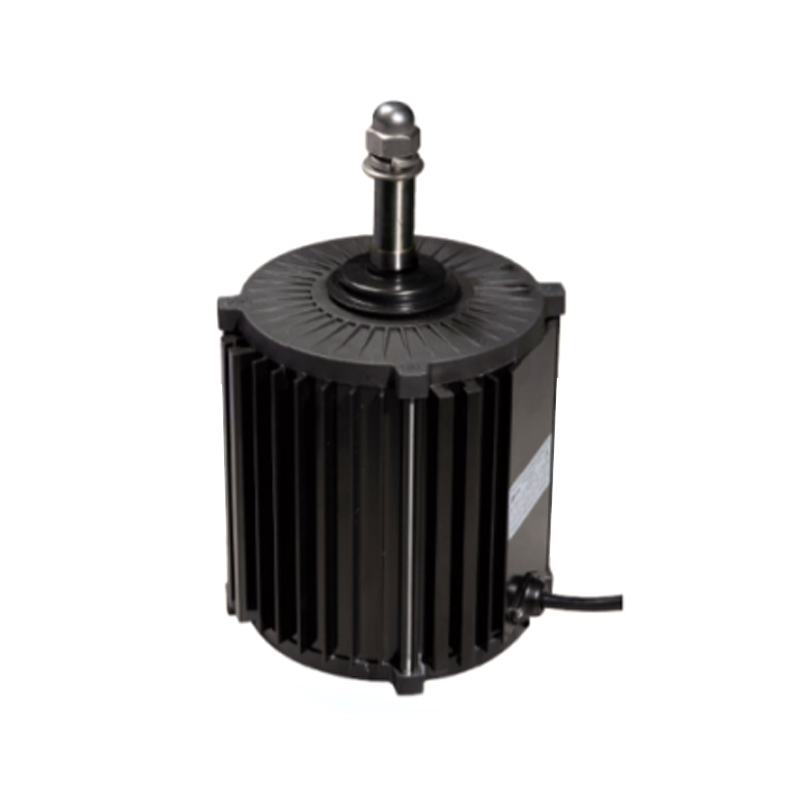
Mechanical causes of overheating include bearing degradation or excessive belt tension, both of which increase the friction torque that the motor must overcome. Environmental causes include a blocked airflow path or heavy accumulation of dust and grease on the exterior cooling ribs of the motor frame. Because these cooling ribs are designed to transfer heat from the stator to the passing air stream, any insulating layer of dirt will cause the internal winding temperature to rise rapidly. Cleaning the motor exterior with dry compressed air or specialized solvents will restore optimal heat transfer and resolve the overheating condition.
By utilizing these detailed engineering selection protocols, robust thermal management systems, and systematic maintenance procedures, facility engineers can ensure that axial fan motors provide highly efficient, continuous, and reliable power to their critical ventilation infrastructure.



 English
 中文简体
中文简体 русский
 Español

 OEM/ODM HVAC Axial Fan Manufacturers