Modern commercial buildings, industrial processing plants, and critical cleanroom environments require ventilation technologies that balance high volumetric airflow with exceptional energy efficiency. Among the diverse range of air moving systems available today, the high-efficiency backward-curved EC centrifugal fan represents a significant engineering achievement. By combining the aerodynamic advantages of backward-curved impeller blades with the precise electrical control of electronically commutated motors, these units deliver superior pressure development and minimal power consumption. This article provides a comprehensive and detailed analysis of the aerodynamic principles, motor technologies, application areas, selection guidelines, and operational maintenance strategies for these highly effective ventilation machines.
What Is the Core Aerodynamic Principle Behind Backward-Curved Impellers
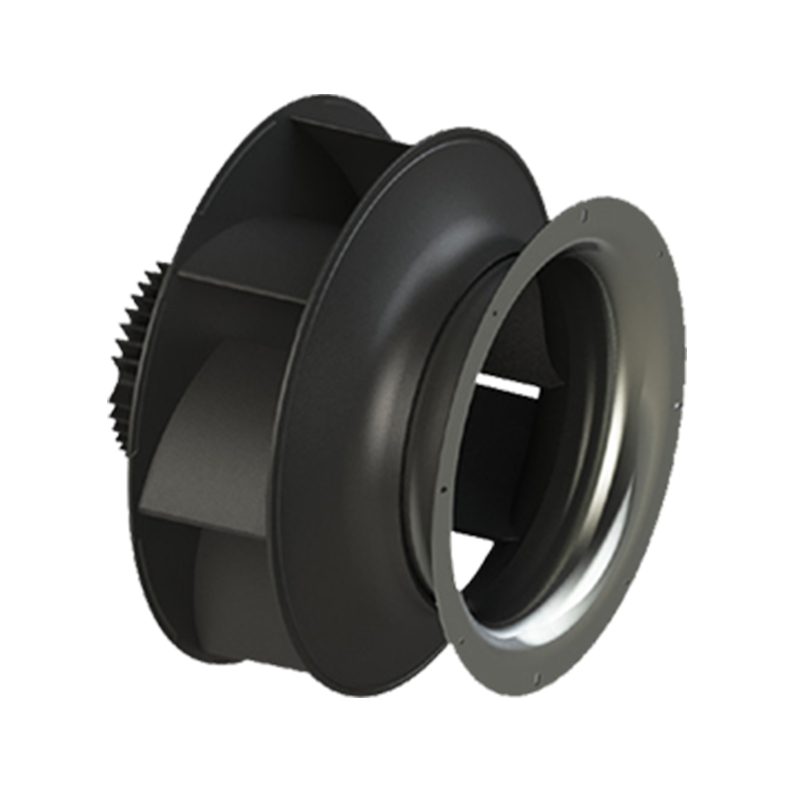
To appreciate the efficiency of a backward-curved centrifugal fan, it is necessary to examine the fluid dynamics that occur within the impeller as it rotates. Centrifugal fans accelerate air radially, drawing the intake stream axially through the center eye and discharging it at a ninety-degree angle. The shape and orientation of the blades during this process play a decisive role in determining the overall pressure development and energy signature of the fan.
Velocity Triangles and Pressure Conversion
As air enters the rotating impeller, the blades apply a mechanical force that increases both the kinetic energy and the static pressure of the fluid. In a backward-curved design, the blades curve away from the direction of rotation. This backward orientation means that the relative velocity of the air leaving the blade tip is directed opposite to the rotational velocity of the impeller.
This velocity relationship results in a smaller absolute discharge velocity compared to forward-curved designs. Because the air leaves the impeller at a lower velocity, a larger proportion of the energy transferred to the air is already in the form of static pressure rather than kinetic energy. Consequently, the fan requires less energy conversion within the surrounding housing, minimizing turbulent losses and maximizing static efficiency. The smooth deceleration of air along the backward-sloping blade surface prevents localized separation zones, ensuring a highly laminar flow profile.
Non-Overloading Power Characteristics
One of the most valuable mechanical attributes of the backward-curved impeller is its self-limiting or non-overloading power curve. In many fan designs, such as forward-curved centrifugal fans, the power consumed by the motor increases continuously as the system resistance decreases and the airflow volume rises. If a system damper is opened wide or a filter is removed, a forward-curved fan motor can easily draw excessive current and overheat.
In contrast, the power curve of a backward-curved centrifugal fan reaches a distinct peak near the middle of its operating range. As the system resistance drops to near zero and the airflow reaches its maximum, the power demand actually begins to decrease. This characteristic protects the electric motor from overloading during unexpected system changes, such as duct ruptures or open bypass dampers, ensuring safe and continuous operation under varying physical conditions.
How Does Electronically Commutated Technology Enhance Centrifugal Fan Performance
The aerodynamic efficiency of backward-curved impellers is further optimized when paired with an electronically commutated motor. Electronically commutated motors represent a fusion of alternating current and direct current motor technologies, delivering unmatched efficiency and control flexibility.
The Mechanics of Brushless Direct Current Power
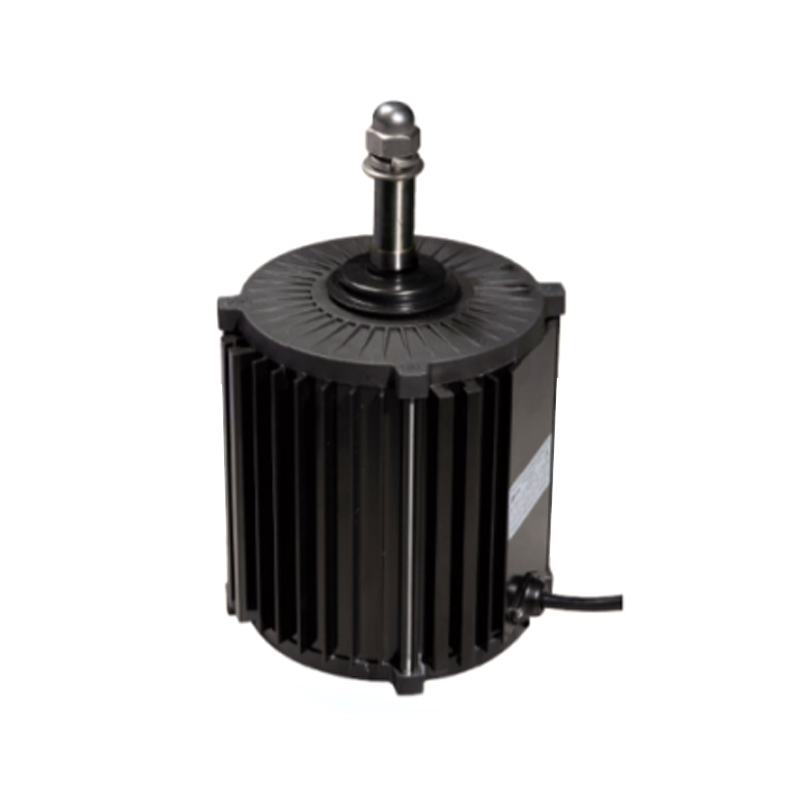
An electronically commutated motor is essentially a brushless direct current motor that operates on an alternating current power supply. Traditional alternating current induction motors rely on electromagnetic induction to create a magnetic field in the rotor, which inherently results in slip losses and heat generation. Electronically commutated motors eliminate these losses by utilizing high-strength permanent magnets on the rotor assembly.
The stator of the motor contains stationary electromagnetic coils that are energized in a precise sequence. Rather than relying on mechanical brushes to switch the current, an integrated electronic controller manages the power distribution to the stator windings. This electronic commutation eliminates the mechanical wear, friction, and sparking associated with traditional brushed motors, leading to a significantly longer operating life and reduced maintenance requirements.
Integrated AC to DC Power Conversion and Speed Control
The integrated electronic controller, or drive board, performs several critical functions within the fan assembly. It accepts standard alternating current power from the building electrical grid, converts it to direct current, and then modulates the frequency and voltage supplied to the motor windings to control the rotational speed.
Because the speed control is handled electronically, the motor can be adjusted continuously from zero to one hundred percent of its rated speed. This modulation is highly efficient, as the motor does not suffer from the magnetic and electrical losses common to standard induction motors when regulated by voltage controllers or variable frequency drives. The integrated electronics also allow for direct communication with building automation systems using standard control protocols, enabling real-time speed adjustments based on temperature, humidity, or air quality sensors.
What Are the Key Design Elements of a High-Efficiency Centrifugal Fan Assembly
A high-performance centrifugal fan is a complex system composed of multiple engineered parts that must work in perfect harmony. Every component, from the inlet cone to the outer support frame, is designed to reduce resistance and maximize energy conversion.
Aerodynamic Inlet Cones and Flow Optimization
The inlet cone serves as the gateway for air entering the fan impeller. It is designed with a precise, elliptical profile that accelerates the incoming air stream smoothly, distributing it evenly across the blade inlets. Any turbulence or uneven velocity profile at the inlet cone will lead to localized blade stalling, increased noise levels, and reduced operating pressure.
In high-efficiency setups, the inlet cone is engineered to overlap slightly with the impeller shroud. This overlap minimizes backflow, which is the tendency of pressurized air to leak back from the discharge side of the impeller to the low-pressure inlet side. By preventing this recirculation loop, the fan maintains a higher static pressure efficiency and operates with a lower overall acoustic footprint.
Premium Bearing Configurations and Rotor Balancing
Because backward-curved centrifugal fans often operate at high rotational speeds to generate substantial static pressure, the rotating assembly must be engineered with extreme precision. The impeller is statically and dynamically balanced in multiple planes to minimize residual imbalance forces that could lead to structural vibrations.
The motor bearings must support both the radial loads of the rotating rotor and the axial thrust loads generated by the movement of the air. Premium fan units utilize heavy-duty, sealed-for-life ball bearings lubricated with high-performance synthetic grease. These bearings are designed to handle continuous duty cycles in demanding industrial environments, providing thousands of hours of maintenance-free operation under wide temperature ranges.
|
Design Component
|
Standard Materials
|
Primary Aerodynamic and Mechanical Functions
|
|
Inlet Cone
|
Spun Aluminum, Galvanized Steel, composite polymers
|
Guides incoming air smoothly into the impeller eye with minimal turbulence
|
|
Impeller Blades
|
Reinforced Polyamide, Cast Aluminum, Welded Sheet Steel
|
Drives radial air acceleration and converts rotational energy to static pressure
|
|
Rotor and Shaft
|
High-carbon alloy steel, corrosion resistant coatings
|
Transmits rotational torque from the permanent magnet motor to the impeller
|
|
Integrated Drive
|
Printed circuit boards, heat sinks, industrial microprocessors
|
Converts power, manages commutation, and handles speed control signals
|
|
Support Frame
|
Galvanized structural steel, powder-coated steel plates
|
Secures the fan assembly to the building wall or duct housing
|
Where Are These Specialized Centrifugal Fan Units Deployed
The combination of high pressure development, compact design, and exceptional energy efficiency makes high-efficiency backward-curved EC centrifugal fans the preferred choice across a wide variety of critical applications.
Cleanroom Environments and Microelectronics Manufacturing
The production of semiconductors, pharmaceuticals, and precision optics requires strictly controlled cleanroom environments with exceptionally low particulate levels. These facilities utilize Fan Filter Units mounted in the ceiling grid to continuously circulate and filter the air.
Backward-curved EC centrifugal fans are the standard choice for Fan Filter Units due to their unique performance profile. They provide the high static pressure required to push air through thick High-Efficiency Particulate Air or Ultra-Low Penetration Air filters, which present substantial mechanical resistance. Additionally, the high energy efficiency of EC motors minimizes the heat rejected into the cleanroom, reducing the load on the building air conditioning system and lowering operational utility costs.
Commercial HVAC Systems and Variable Air Volume Units
In large commercial office buildings, hotels, and educational institutions, ventilation demands fluctuate continuously throughout the day as occupancy levels change. Variable Air Volume systems adjust the volume of conditioned air delivered to different zones based on local temperature demands.
High-efficiency backward-curved EC centrifugal fans excel in Variable Air Volume systems because they can adjust their rotational speed dynamically to match real-time flow requirements. When occupancy is low, the fan speed is reduced, leading to exponential savings in electrical energy consumption. The compact footprint of these direct-drive units also allows them to be integrated easily into ceiling-void air handling units, saving valuable floor space within the building core.
Industrial Dust Collection and Local Fume Extraction
Industrial manufacturing processes, such as woodworking, metal grinding, and chemical blending, generate airborne dust, shavings, and hazardous vapors that must be captured at the source to protect worker health. These local exhaust systems utilize containment hoods and extensive duct networks connected to baghouses or cartridge dust collectors.
The high static pressure capability of backward-curved centrifugal fans is vital for these extraction systems. The fan must generate enough suction to pull heavy particulate-laden air through the capture hoods and maintain transport velocities within the ductwork to prevent dust from settling inside the pipes. The non-overloading characteristic of the backward-curved impeller ensures that the system operates safely even if a duct blockage occurs or a filtration valve fails, preventing motor damage and system downtime.
Data Center and Server Room Precision Cooling
Modern data centers house thousands of high-density servers that generate tremendous amounts of heat. Maintaining optimal operating temperatures is critical to prevent server failure and guarantee data integrity. Precision cooling units, such as In-Row coolers and Computer Room Air Conditioners, are deployed directly adjacent to the server racks to manage this thermal load.
Backward-curved EC centrifugal fans are integrated into these precision cooling units to provide continuous, high-volume air circulation through the hot and cold aisles of the server room. The precise speed control of EC motors allows the cooling system to adjust airflow in response to real-time server processor loads. The high reliability and long bearing life of these fan units ensure that the data center cooling infrastructure operates continuously without unscheduled maintenance interruptions.
What Are the Critical Factors When Sizing and Selecting an EC Centrifugal Fan
Selecting the correct fan model for a specific application requires a detailed evaluation of several technical variables. Proper selection ensures that the system operates at peak efficiency, maintains low noise levels, and provides the required air volume over its designed lifespan.
Plotting the System Curve Against Fan Performance
The first step in the selection process is determining the required volumetric flow rate and the total static pressure resistance of the system. Once these two values are calculated, they represent the design operating point. This operating point is then plotted on the fan performance curve, which illustrates the relationship between airflow and static pressure at various rotational speeds.
To achieve optimal efficiency, the target operating point should lie within the high-efficiency region of the fan curve, typically between fifty percent and eighty percent of the maximum wide-open airflow. Selecting a fan that operates too close to its maximum pressure limit can lead to aerodynamic stall, where the air flow separates from the blades, causing severe vibration, increased acoustic emissions, and potential mechanical failure.
Acoustic Properties and Silent Operation Design
Acoustic comfort is a major consideration in commercial office and residential ventilation system designs. Centrifugal fans generate noise through mechanical vibration and aerodynamic turbulence. Because backward-curved fans often run at high rotational speeds to overcome system resistance, managing noise levels is critical.
When selecting a fan, design engineers must evaluate the sound power levels across different octave bands, from low frequencies to high frequencies. Low-frequency noise is typically generated by the structural rotation of the impeller and is difficult to attenuate using standard silencers. It must be managed by selecting a fan with a lower rotational speed or utilizing vibration isolation mounts. High-frequency noise, which is generated by blade tip turbulence, can be managed effectively by installing acoustic lining inside the ductwork or utilizing discharge silencers immediately downstream of the fan unit.
Electrical Input Compatibility and Control Signals
Because EC fans utilize integrated electronic drives, the selection process must also verify electrical compatibility with the building infrastructure. The designer must specify the incoming voltage, phase configuration, and frequency of the electrical supply.
The control interface must also be coordinated with the building management system. EC fans typically accept a variety of control inputs to regulate speed, including standard zero to ten volt analog signals, four to twenty milliampere current loops, or digital communication protocols such as Modbus RTU. Ensuring that the fan control interface matches the building automation system allows for seamless integration, enabling advanced control strategies such as demand-controlled ventilation and remote monitoring of fan status and energy consumption.
How to Establish an Effective Maintenance and Troubleshooting Protocol
While high-efficiency backward-curved EC centrifugal fans are designed for long, reliable service lives with minimal maintenance, a systematic inspection and servicing protocol is essential to prevent unexpected failures and preserve system efficiency.
Regular Cleaning and Aerodynamic Profiling
Over months of continuous operation, airborne dust, grease, and other particulates can accumulate on the surfaces of the impeller blades and the inlet cone. This accumulation is particularly problematic in industrial exhaust systems or commercial kitchens.
Even a thin layer of dust on the blades can alter their aerodynamic profile, increasing friction drag and reducing the static efficiency of the fan. More importantly, non-uniform dirt accumulation can create a rotational imbalance, leading to increased vibration levels that put excessive stress on the motor bearings. Maintenance teams must schedule regular inspections to clean the impeller blades and inlet cone using appropriate non-abrasive cleaning agents and soft brushes, ensuring that the original aerodynamic shape is maintained.
Addressing Controller Alarms and Communication Faults
Because EC fans incorporate advanced electronics, troubleshooting often involves diagnosing control signals and drive fault codes in addition to mechanical issues. Most EC fan controllers feature built-in self-diagnostic systems that can transmit error codes to the building management system or display them via integrated status LEDs on the drive board.
If a fan stops operating, the technician should first check the status of the incoming power supply and the control signal. If the control signal is missing or corrupted, the fan may remain in a standby state or run at a default safe speed. Verifying the continuity of the zero to ten volt control wiring or checking the Modbus communication registers will typically resolve these control-related issues. If the controller indicates a thermal overload or over-current fault, the technician must inspect the impeller for mechanical blockages or check for high ambient temperatures that could be overheating the electronic drive compartment.
Diagnosing Mechanical Vibrations and Bearing Wear
Mechanical vibration is a primary indicator of developing bearing wear or impeller imbalance. Technicians should monitor vibration levels regularly, using hand-held vibration meters or permanently installed sensors to track trends over time.
A gradual increase in vibration amplitude at the rotational frequency of the shaft indicates that the impeller has accumulated dirt or lost a balancing weight. A sudden increase in high-frequency vibration, accompanied by a grinding or squealing noise, is a classic symptom of bearing race degradation. If bearing wear is detected, the motor assembly should be serviced or replaced immediately to prevent the rotating impeller from contacting the stationary inlet cone, which would cause catastrophic structural damage to the fan housing.
Through careful design integration, accurate aerodynamic selection, and systematic maintenance practices, high-efficiency backward-curved EC centrifugal fans provide reliable, quiet, and exceptionally energy-efficient air movement solutions capable of meeting the most demanding ventilation challenges in modern industrial and commercial facilities.



 English
 中文简体
中文简体 русский
 Español

 OEM/ODM HVAC Axial Fan Manufacturers