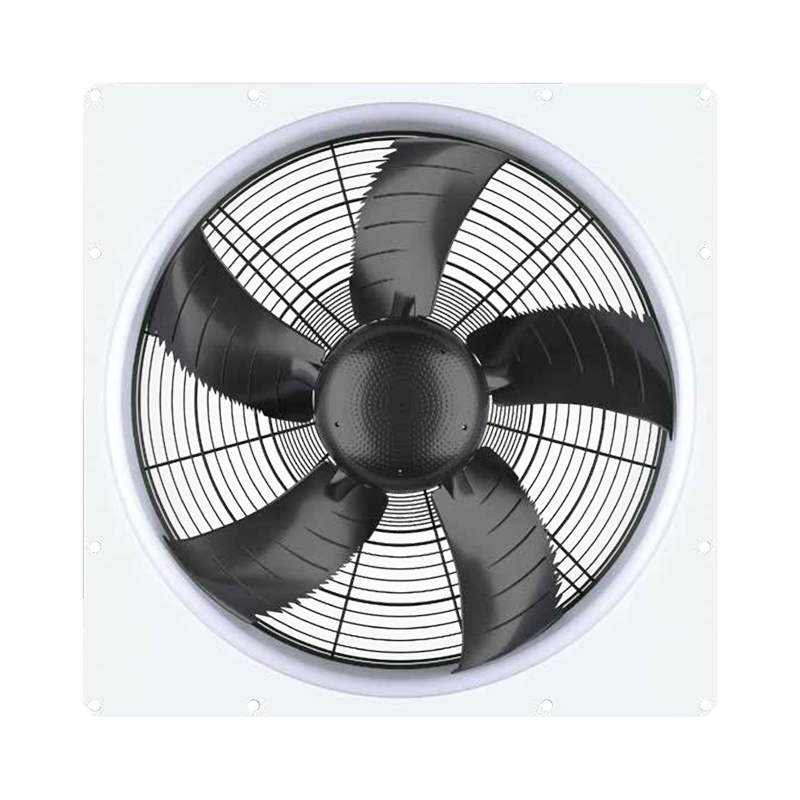
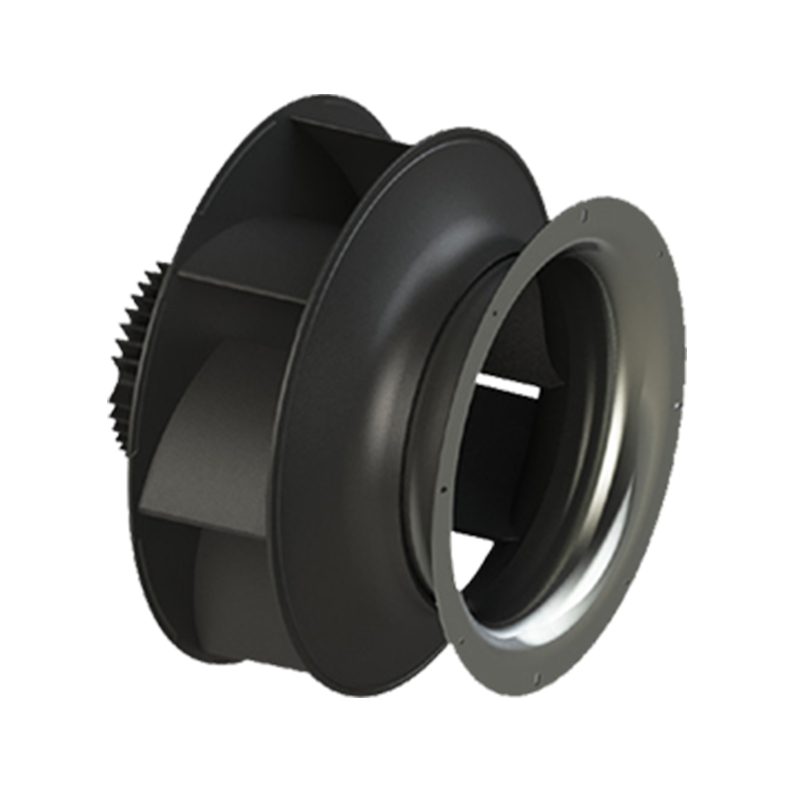
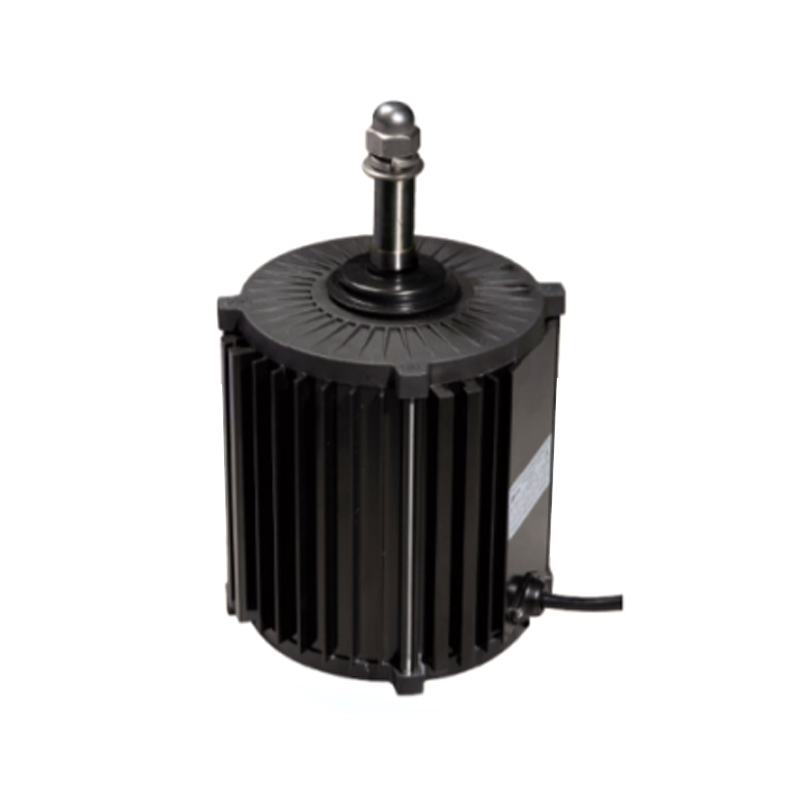
In the specialized field of mechanical ventilation, the performance of an Industrial Axial Fan is the primary benchmark for operational reliability and system longevity. The introduction of the K Series High Efficient External Rotor EC Axial Fans brings a sophisticated engineering approach to high-volume air movement. By integrating advanced materials such as PP plastic and Carbon steel with Electronically Commutated (EC) motor technology, this Axial Fan provides a robust solution for demanding cooling and exhaust requirements.
Advanced Material Composition for Heavy-Duty Use
The structural integrity of an Industrial Axial Fan is largely determined by its component materials. The K Series Axial Fan utilizes a specific combination of lightweight and heavy-duty elements to achieve peak aerodynamic efficiency.
The Wind leaf is manufactured from high-quality PP plastic. This selection is critical for reducing the rotational mass of the fan, allowing for faster acceleration and lower power consumption during start-up. Unlike traditional metal blades, these plastic blades are resistant to many forms of chemical corrosion and moisture, making this Industrial Fan suitable for diverse environments.
Protecting the rotating assembly is a heavy-duty Grid made of Carbon steel. To ensure long-term durability, the grid undergoes a surface electrophoresis treatment followed by a spray black finish. This dual-layer protection prevents oxidation even when the Axial Fan is exposed to humid air. Similarly, the Rotor—also constructed from Carbon steel with black surface electrophoresis—is designed to withstand the centrifugal forces of high-speed rotation while maintaining perfect balance.
High-Performance External Rotor EC Technology
What sets the K Series apart as a premium Industrial Axial Fan is its External Rotor motor configuration. In this design, the motor rotates around the stationary stator, which allows for a more compact form factor and superior heat dissipation. The Motor housing is made of Aluminum, which acts as a natural heat sink, ensuring the internal electronics remain cool during extended operation.
As an EC Axial Fan, this unit features integrated control electronics that allow for infinitely variable speed adjustment. This means the Industrial Axial Fan can be precisely tuned to meet the specific static pressure and airflow requirements of a facility, significantly reducing energy waste compared to fixed-speed AC fans.
Technical Specification Overview
The following table summarizes the core engineering parameters that define the reliability of the K Series Industrial Axial Fan:
|
Feature
|
Technical Specification
|
|
Product Model
|
K Series High Efficient External Rotor EC Axial Fan
|
|
Blade Material
|
High-Grade PP Plastic (Wind Leaf)
|
|
Grid Material
|
Carbon Steel (Electrophoresis + Spray Black)
|
|
Motor Housing
|
Die-Cast Aluminum
|
|
Rotor Construction
|
Carbon Steel (Surface Electrophoresis)
|
|
Protection Level
|
IP 54 (Dust & Splash Proof)
|
|
Insulation Level
|
Class “F” (155°C Heat Resistance)
|
|
Operational Mode
|
Continuous Work (S1)
|
|
Bearing System
|
Maintenance-free Ball Bearings
|
|
Certifications
|
CCC, CE, UKCA
|
Operational Resilience and Protection Ratings
Reliability in industrial environments is non-negotiable. The K Series Industrial Axial Fan is built to a Protection level: IP 54. This rating ensures that the internal components are protected against dust ingress and water splashes from any direction. Whether the fan is installed in a factory workshop or a commercial kitchen, the IP 54 rating guarantees consistent performance without the risk of electrical failure due to environmental contaminants.
Furthermore, the electrical system is rated at Insulation level: “F”. This high-level insulation allows the motor to operate safely at internal temperatures up to 155°C. This thermal overhead is essential for an Industrial Fan that may be required to run at full capacity during summer peaks or in high-heat manufacturing zones.
Continuous Duty Cycle and Bearing Technology
For many facilities, a Cooling Fan must operate without interruption. This model is rated for Working method: Continuous work (S1). An S1 rating implies that the fan has reached thermal equilibrium and can continue to run indefinitely at its rated load. This is vital for Industrial Axial Fans used in condenser units, refrigeration systems, or large-scale air exchange units where downtime is not an option.
To support this continuous duty cycle, the K Series utilizes Maintenance-free ball bearings. These high-precision bearings are permanently lubricated and sealed, eliminating the need for periodic re-greasing. This feature significantly reduces the Total Cost of Ownership (TCO) for the user, as the Industrial Axial Fan can be installed in hard-to-reach locations without the need for frequent maintenance access.
Aerodynamic Efficiency and Noise Control
The blade profile of the K Series High Efficient Axial Fan is optimized to maximize airflow while minimizing acoustic turbulence. By using PP plastic for the wind leaf, engineers have been able to design complex, efficient blade shapes that are difficult to replicate in metal. This results in an Industrial Axial Fan that moves more air with less noise, making it a preferred choice for environments where worker comfort is a priority.
The integration of the External Rotor means the fan blades are mounted directly to the rotor housing. This direct-drive configuration eliminates the need for belts or pulleys, further reducing mechanical noise and vibration. The result is a smooth-running EC Axial Fan that maintains its balance throughout its long service life.
Global Compliance and Certification
To support international engineering projects, the K Series Industrial Axial Fan holds multiple global certifications. The CCC certification ensures compliance for the Chinese market, while the CE mark guarantees adherence to European safety and environmental standards. Additionally, the inclusion of the UKCA (UK Conformity Assessed) certification makes this fan an ideal choice for projects in the United Kingdom.
These certifications provide peace of mind to facility managers and equipment manufacturers, confirming that the High Efficient Axial Fan has undergone rigorous testing for electrical safety, electromagnetic compatibility, and mechanical performance.
Implementation in Industrial Cooling Systems
The versatility of the Industrial Axial Fan allows it to be used in a wide range of mounting configurations. The Carbon steel grid is designed for easy installation into ducting, wall mounts, or specialized equipment enclosures. Because the Motor housing: Aluminum is lightweight, it places less structural stress on the mounting points compared to heavier cast-iron alternatives.
In applications such as heat exchangers or air-cooled condensers, the K Series External Rotor Fan provides the necessary static pressure to overcome resistance while maintaining high energy efficiency. The Continuous work (S1) capability ensures that temperature-sensitive processes remain stable regardless of the external environment.
Optimized Flow and Heat Management
The interaction between the Aluminum motor housing and the airflow generated by the PP plastic blades creates a self-cooling effect for the motor. This is a hallmark of a well-engineered Industrial Axial Fan. As the fan operates, a portion of the air passes over the aluminum fins, carrying away heat from the EC motor and ensuring that the Insulation level: “F” components are never stressed beyond their limits.
By combining the structural strength of Carbon steel with the precision and efficiency of EC technology, the K Series High Efficient External Rotor EC Axial Fans offer a comprehensive solution for modern industrial air movement. Every component, from the Maintenance-free ball bearings to the surface electrophoresis rotor, is chosen to provide a high-efficiency ventilation experience that meets the highest industrial standards.



 English
 中文简体
中文简体 русский
 Español

 OEM/ODM HVAC Axial Fan Manufacturers