Material Engineering: Blade Geometry and Rotor Coating
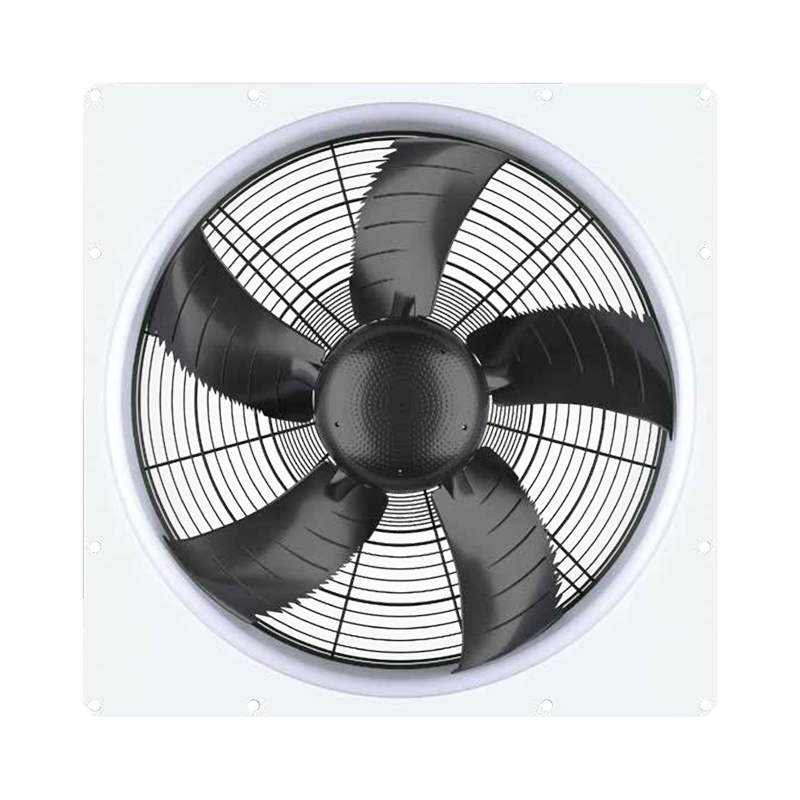
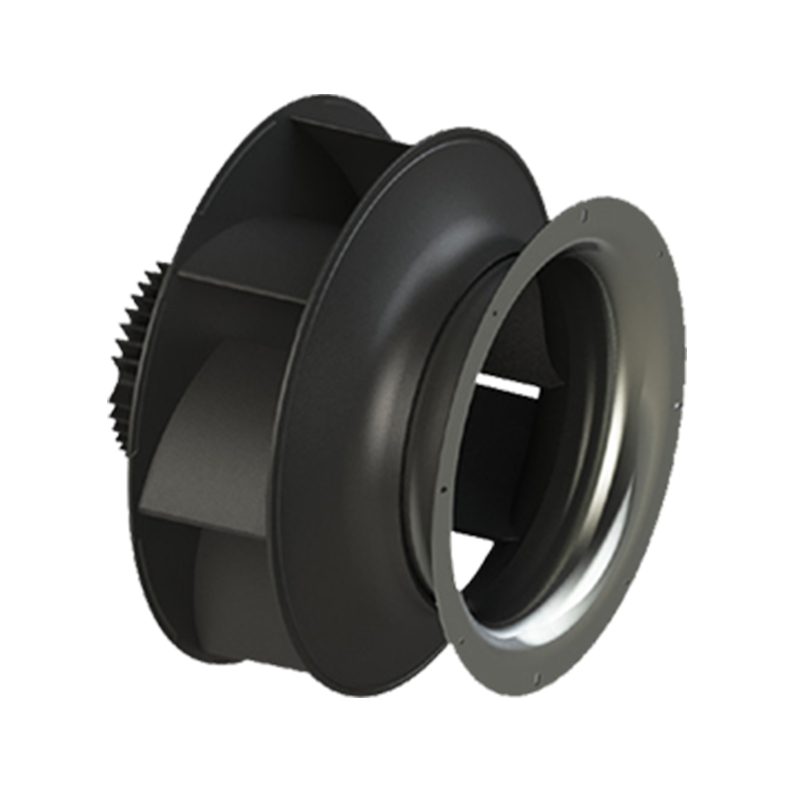
The core aerodynamic performance of the High-Efficiency Backward-Curved EC Centrifugal Fan is derived from its specialized blade and rotor assembly. The blades are crafted from high-strength plastic, engineered to maintain their profile under high rotational velocities while minimizing the overall mass of the impeller. The backward-curved design is inherently more efficient than forward-curved alternatives, as it allows for higher pressure development with a lower risk of motor overloading.
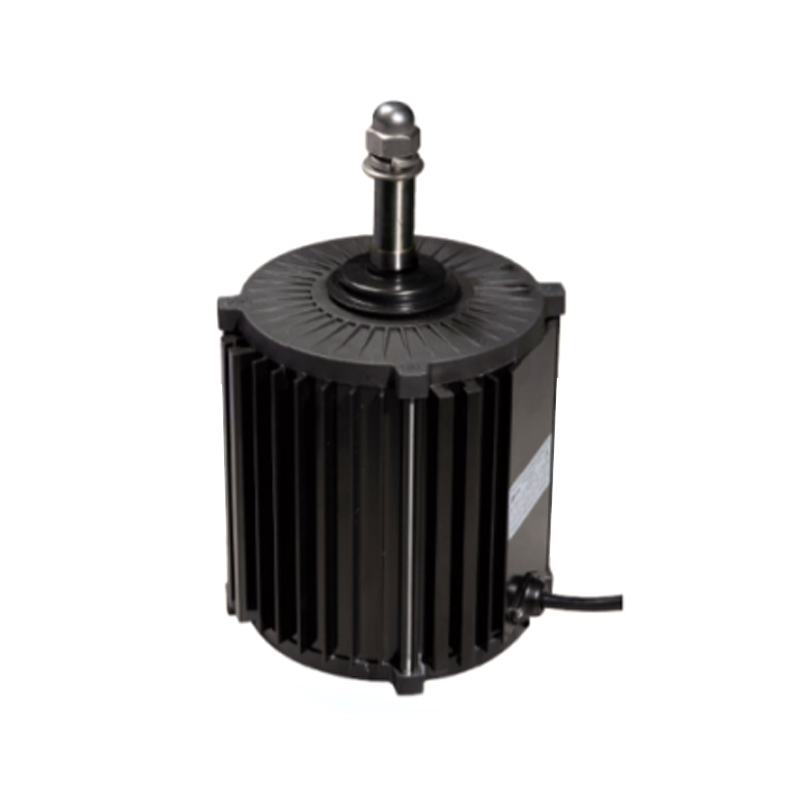
Supporting the impeller is a rotor constructed from high-grade steel. To protect against oxidation and environmental degradation, the rotor undergoes electrophoresis in black. This electrochemical coating process ensures a uniform, corrosion-resistant layer that penetrates even the most complex geometries of the rotor. Complementing this is the motor shell, manufactured from aluminum. Aluminum is selected for its superior thermal conductivity, allowing for rapid heat dissipation from the internal stator, which is essential for maintaining the "F" class insulation standards.
Thermodynamics and Continuous Operation (S1)
Industrial ventilation systems often require non-stop performance, a demand categorized as "Mode of operation: Continuous operation (S1)." The High-Efficiency Backward-Curved EC Centrifugal Fan is designed to maintain thermal equilibrium during these prolonged cycles. The combination of the aluminum motor shell and the high-efficiency EC motor reduces internal heat generation compared to traditional AC motors.
The insulation class "F" further reinforces this reliability, allowing the internal windings to withstand temperatures up to 155°C without compromising the dielectric integrity of the motor. This thermal resilience is critical in high-density server rooms or industrial processing plants where ambient temperatures can fluctuate significantly. By operating within the S1 mode, the fan provides a stable airflow that supports the consistent cooling requirements of sensitive electronic and mechanical equipment.
Protection Standards and Bearing Technology
Environmental resilience is a hallmark of the High-Efficiency Backward-Curved EC Centrifugal Fan, certified with a Type of protection: IP55. This rating ensures that the internal electrical components are protected against dust ingress and low-pressure water jets from any direction. Such a high level of sealing makes the fan suitable for demanding environments where airborne particulates or humidity might otherwise lead to premature motor failure.
Furthermore, the mechanical longevity of the system is ensured by the use of maintenance-free ball bearings. These bearings are pre-lubricated and sealed to prevent the entry of contaminants and the leakage of lubricant. This engineering choice eliminates the need for periodic re-greasing, significantly reducing the total cost of ownership and preventing the "chatter" or vibration that often accompanies bearing wear in lower-grade ventilation units.
Technical Performance Summary
The following table summarizes the material specifications and technical certifications for the High-Efficiency Backward-Curved EC Centrifugal Fan:
|
Component / Feature
|
High-Efficiency EC Centrifugal Fan Specification
|
|
Blade Material
|
High-Strength Engineered Plastic
|
|
Rotor Material
|
Steel, Electrophoresis in Black
|
|
Motor Shell
|
Thermal-Conductive Aluminium
|
|
Protection Rating
|
IP 55 (Dust and Water Protected)
|
|
Insulation Class
|
Class “F” (155°C Thermal Limit)
|
|
Operation Mode
|
Continuous Operation (S1)
|
|
Bearing System
|
Maintenance-Free Precision Ball Bearings
|
|
Safety Approvals
|
CCC, CE Certified
|
Aerodynamic Efficiency and Noise Management
The backward-curved geometry of the High-Efficiency Backward-Curved EC Centrifugal Fan is not only a matter of pressure but also of acoustics. Because the blades are designed to handle air with minimal turbulence, the noise profile is significantly lower than that of standard industrial blowers. When combined with the precise speed control offered by EC technology, the fan can be throttled to match specific demand, further reducing acoustic emissions and energy consumption during low-load periods.
The integration of the plastic blades with the electrophoresis-treated steel rotor creates a balanced assembly that minimizes vibration. This balance is verified through stringent factory testing to ensure that the fan operates smoothly across its entire speed range. This lack of vibration is vital for preserving the integrity of the maintenance-free ball bearings and ensuring that the mounting structures of the ventilation system do not suffer from fatigue stress.
Compliance and Quality Assurance
Safety and performance standards are validated through global certifications, specifically CCC and CE approvals. These marks confirm that the High-Efficiency Backward-Curved EC Centrifugal Fan meets rigorous international requirements for electrical safety, electromagnetic compatibility, and mechanical stability. For engineers and facility managers, these approvals provide the necessary assurance that the equipment will integrate safely into complex industrial grids.
The "F" insulation class and S1 operation mode are benchmarks of quality that distinguish this fan from consumer-grade products. Every aspect of the design—from the electrophoresis coating on the rotor to the aluminum shell’s heat dissipation properties—is optimized to ensure that the fan delivers high-efficiency performance without the need for frequent intervention or replacement.
The High-Efficiency Backward-Curved EC Centrifugal Fan represents a synergy of advanced material science and electronic control. By utilizing a high-durability steel rotor and aluminum motor shell, it provides the structural and thermal foundation necessary for continuous, high-performance operation.
The inclusion of maintenance-free bearings and an IP55 protection rating ensures that the system remains reliable in even the most challenging environments. Through its backward-curved blade design and "F" class insulation, this technology delivers a stable, efficient, and quiet solution for modern industrial ventilation needs. As industries continue to prioritize energy conservation and operational longevity, the precision engineering of the EC centrifugal fan remains an essential component for achieving high-efficiency thermal management.



 English
 中文简体
中文简体 русский
 Español

 OEM/ODM HVAC Axial Fan Manufacturers