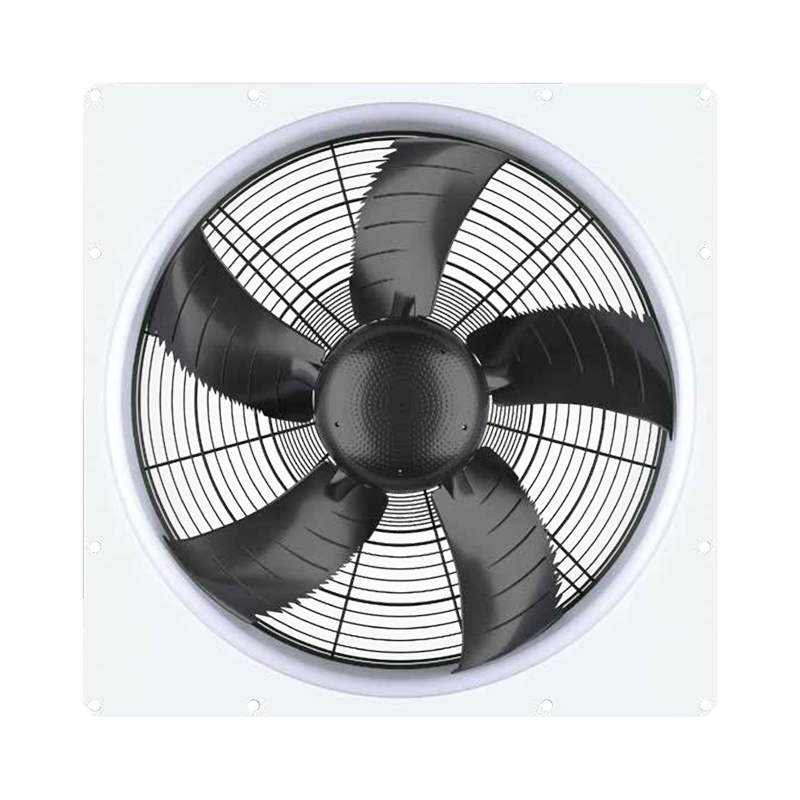
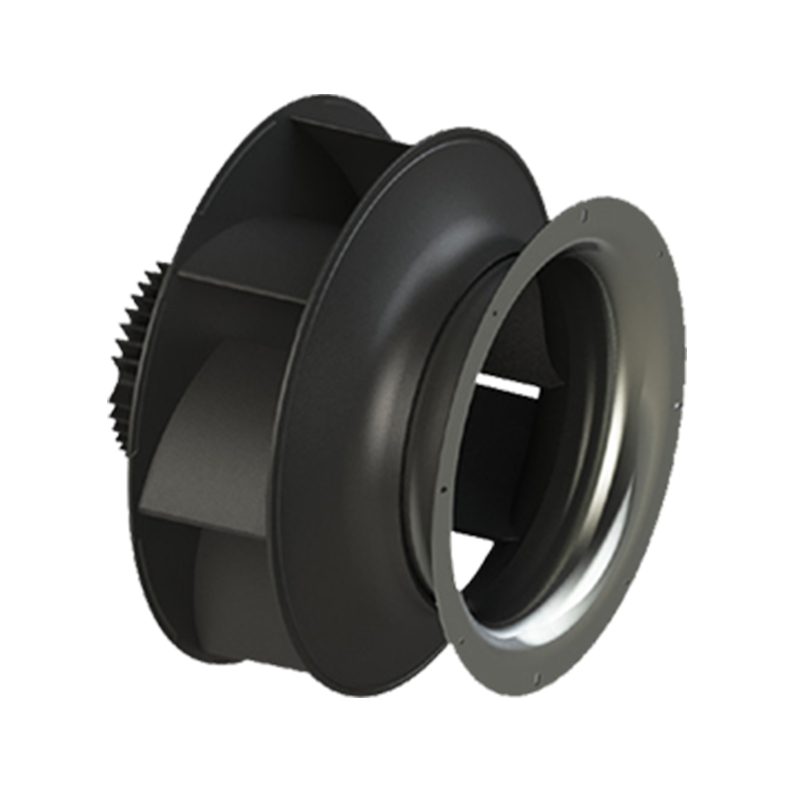
In modern thermal management and air movement systems, the Centrifugal Fan remains a critical component for ensuring consistent airflow and pressure. Specifically, the High-Efficiency Backward-Curved EC Centrifugal Fan represents a significant leap in precision engineering. By combining Electronically Commutated (EC) motor technology with a backward-curved blade geometry, this fan provides a solution that prioritizes energy conservation and mechanical reliability without compromising on power.
What Material Innovations Define the Backward-Curved EC Centrifugal Fan?
The physical composition of a Centrifugal Fan determines its durability and its ability to handle high-velocity air movement over long periods.
Why is the choice of plastic for blades advantageous? The blades of this specific model are crafted from high-grade plastic. This selection is intentional; plastic blades are lightweight, which reduces the inertia the motor must overcome during startup. Furthermore, plastic is naturally resistant to corrosion and allows for complex aerodynamic shaping that is difficult to achieve with traditional sheet metal. This aerodynamic precision directly translates to quieter operation and reduced turbulence.
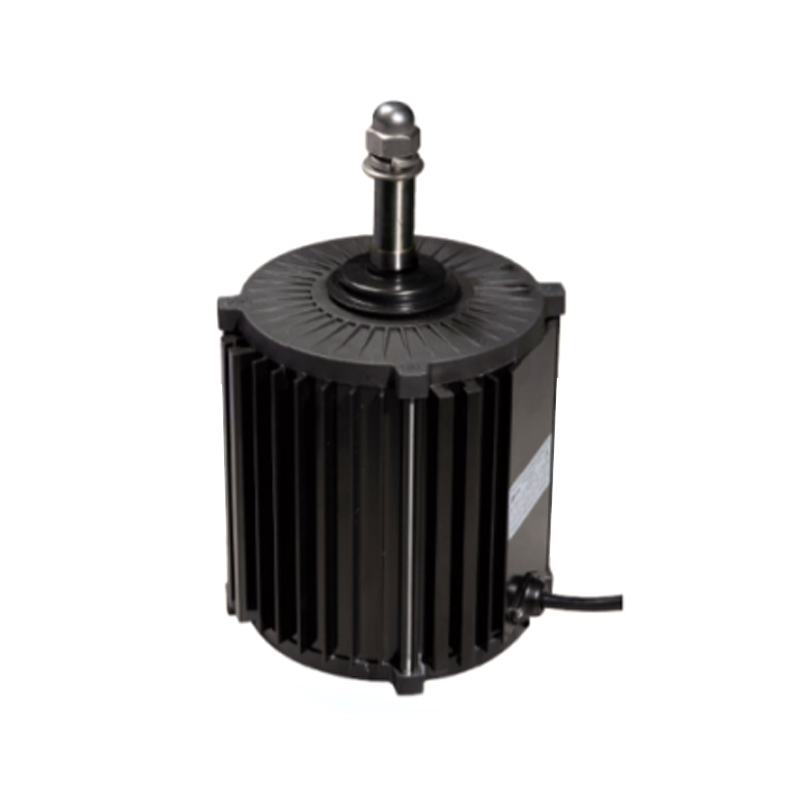
What ensures the longevity of the rotor and motor shell? While the blades focus on airflow, the structural core relies on robust metals. The rotor is constructed from high-strength steel, treated with electrophoresis in black. This coating provides a superior barrier against moisture and oxidation. To complement this, the motor shell is made of high-grade aluminium, which offers excellent thermal conductivity. By dissipating heat rapidly from the motor windings, the aluminium shell prevents overheating and extends the functional lifespan of the internal electronics.
How Does the "IP 55" Protection Rating Enhance Operational Safety?
In industrial environments, equipment is often exposed to dust, moisture, and debris. The protection level of a Centrifugal Fan is a vital metric for assessing its suitability for harsh conditions.
What does IP 55 mean for the High-Efficiency EC Centrifugal Fan? The Type of protection: IP 55 indicates a high level of resistance. The first digit "5" signifies that the fan is protected against dust ingress that could interfere with operation. The second digit "5" ensures protection against water jets projected by a nozzle from any direction. This makes the High-Efficiency Backward-Curved EC Centrifugal Fan ideal for environments where cleaning or humidity is a factor.
Is the insulation class "F" sufficient for high-heat applications? The motor utilizes Insulation class: “F”. This classification means the materials used in the motor windings can withstand a maximum operating temperature of 155°C. This high thermal ceiling provides a safety buffer during intensive use, ensuring that the electrical integrity of the Centrifugal Fan remains intact even when ambient temperatures rise.
Why Is Continuous Operation (S1) Critical for Modern Systems?
Many industrial processes require 24/7 ventilation, making the duty cycle of the motor a primary concern for facility managers.
What is the significance of the "S1" mode of operation? The Mode of operation: Continuous operation(S1) means the fan is designed to run at a constant load for an indefinite period until it reaches thermal equilibrium. Unlike fans designed for intermittent use (S3 or S6), an S1-rated Centrifugal Fan does not require cooling-down periods. This makes it the perfect choice for server room cooling, industrial exhaust, and constant-volume HVAC systems.
|
Component / Feature
|
Specification Details
|
|
Blade Material
|
High-Grade Aerodynamic Plastic
|
|
Rotor Finish
|
Steel with Black Electrophoresis
|
|
Motor Housing
|
Die-cast Aluminium Shell
|
|
Protection Class
|
IP 55 (Dust & Water Jet Resistant)
|
|
Thermal Insulation
|
Class “F” (Up to 155°C)
|
|
Operation Duty
|
S1 (Continuous Constant Load)
|
|
Bearing Type
|
Maintenance-Free Ball Bearings
|
|
Certifications
|
CCC, CE Approved
|
How Do Maintenance-Free Ball Bearings Reduce Total Cost of Ownership?
Mechanical friction is the enemy of efficiency. In a Centrifugal Fan, the bearings are the primary point of wear.
Why choose maintenance-free ball bearings? The inclusion of Maintenance-free ball bearings is a major benefit for end-users. These bearings are factory-lubricated and sealed for life. This eliminates the need for periodic re-greasing, which is often a labor-intensive and messy process. By reducing friction, these bearings also contribute to the overall energy efficiency of the EC motor, ensuring that more power is converted into air movement rather than heat.
Do these bearings contribute to a quieter environment? Yes. Precision-engineered ball bearings minimize vibration. In a High-Efficiency Backward-Curved EC Centrifugal Fan, low vibration levels are essential not only for noise reduction but also to prevent mechanical fatigue in the mounting structures and ductwork.
What Does the Backward-Curved Design Offer Over Forward-Curved Alternatives?
The geometry of the blades is what defines the performance curve of the fan.
How does backward-curved geometry handle pressure? Backward-curved blades are designed to handle higher static pressures more efficiently than forward-curved models. In a Centrifugal Fan, this design allows the air to leave the impeller at a lower velocity but with higher pressure potential. This is particularly useful in systems with complex ducting or high-efficiency filters that create significant resistance.
Is there a risk of motor overload? One of the key advantages of the backward-curved design is its non-overloading characteristic. As the airflow increases, the power consumption reaches a peak and then stabilizes or even drops. This protects the motor from burning out if the system's static pressure changes unexpectedly, making the High-Efficiency Backward-Curved EC Centrifugal Fan a very "forgiving" component in dynamic air systems.
Why Are CCC and CE Approvals Essential for Global Compliance?
When integrating a Centrifugal Fan into a larger machine or building, regulatory compliance is non-negotiable.
What do CCC and CE markings signify? The Approval: CCC.CE indicates that the product meets stringent safety and quality standards. The CE mark confirms compliance with European Union health, safety, and environmental protection standards. The CCC (China Compulsory Certificate) is a mandatory safety mark for many products sold on the Chinese market.
Does certification guarantee performance consistency? These approvals ensure that every High-Efficiency Backward-Curved EC Centrifugal Fan has undergone rigorous testing regarding electromagnetic compatibility (EMC), electrical safety, and mechanical integrity. For engineers and purchasers, these marks serve as a guarantee that the fan will perform as specified and integrate safely into global power grids.
How Does EC Technology Enhance the Control of the Centrifugal Fan?
The "EC" in EC Centrifugal Fan stands for Electronically Commutated, which is the heart of its efficiency.
Can the fan speed be precisely modulated? Unlike traditional AC fans that often require external frequency inverters, the EC motor has integrated electronics. This allows for seamless speed control via a 0-10V or PWM signal. Users can adjust the Centrifugal Fan speed to match the exact demand of the system, which drastically reduces energy consumption during off-peak hours.
How does integrated control improve reliability? Because the control electronics are integrated into the aluminium motor shell, they are protected by the same IP 55 rating as the motor itself. This integrated approach reduces the complexity of external wiring and eliminates the compatibility issues that often arise between separate motors and drives. The result is a more compact, more reliable, and more efficient air-moving solution.



 English
 中文简体
中文简体 русский
 Español

 OEM/ODM HVAC Axial Fan Manufacturers